Are Flamingos Still Common at Lake Nakuru?
Flamingos still visit Lake Nakuru, but the enormous flocks once consistently associated with the lake are no longer present throughout the year. Their numbers can change dramatically because of fluctuating water levels, salinity, algae growth and conditions at other soda lakes across the Great Rift Valley. Visitors may encounter hundreds or thousands of flamingos during favorable periods, but large concentrations should never be guaranteed.
For decades, photographs of a pink shoreline made Lake Nakuru National Park one of Africa’s most recognizable birdwatching destinations. Lesser and greater flamingos gathered in the lake’s shallow alkaline waters to feed, rest and move between different parts of the Rift Valley lake system.
Environmental changes, especially rising water levels, have altered the feeding conditions that previously supported exceptionally large congregations. Flamingos now move between Lake Nakuru, Lake Bogoria, Lake Elementaita and other suitable wetlands in response to food availability and lake chemistry.
This movement is natural. It does not mean that flamingos have disappeared permanently from Lake Nakuru. It means that travelers should visit with realistic expectations and appreciate the park as a diverse wildlife and birding destination rather than treating it as a guaranteed flamingo spectacle.
Even when flamingo numbers are low, Lake Nakuru remains a rewarding stop on professionally planned Kenya Safaris. The park protects black and white rhinos, Rothschild’s giraffes, buffaloes, lions and hundreds of bird species within one of the Great Rift Valley’s most distinctive landscapes.
Why Do Flamingo Numbers at Lake Nakuru Change?
Flamingos are highly mobile birds whose movements are closely connected to environmental conditions. They travel between suitable lakes in search of food and appropriate water conditions rather than remaining at one location throughout the year.
Lake Nakuru is an alkaline or soda lake. Under suitable conditions, its waters support microorganisms that provide food for flamingos. Lesser flamingos feed mainly on microscopic organisms, including cyanobacteria commonly described as blue-green algae. Greater flamingos have a more varied diet that may include small aquatic organisms and other material filtered from the water.
When the lake becomes too deep, diluted or otherwise unsuitable for productive feeding, flamingos move to another lake. These changes can occur following prolonged rainfall, rising water levels, shifts in salinity or alterations in the availability of algae.
Flamingo movements are therefore influenced by conditions across the entire Rift Valley system rather than Lake Nakuru alone. Lake Bogoria, Lake Elementaita and other East African wetlands can become more attractive feeding areas at different times.
This is why flamingo numbers cannot be predicted simply by selecting a particular month. Conditions can change, and information from previous seasons may not accurately describe what travelers will encounter during their visit.
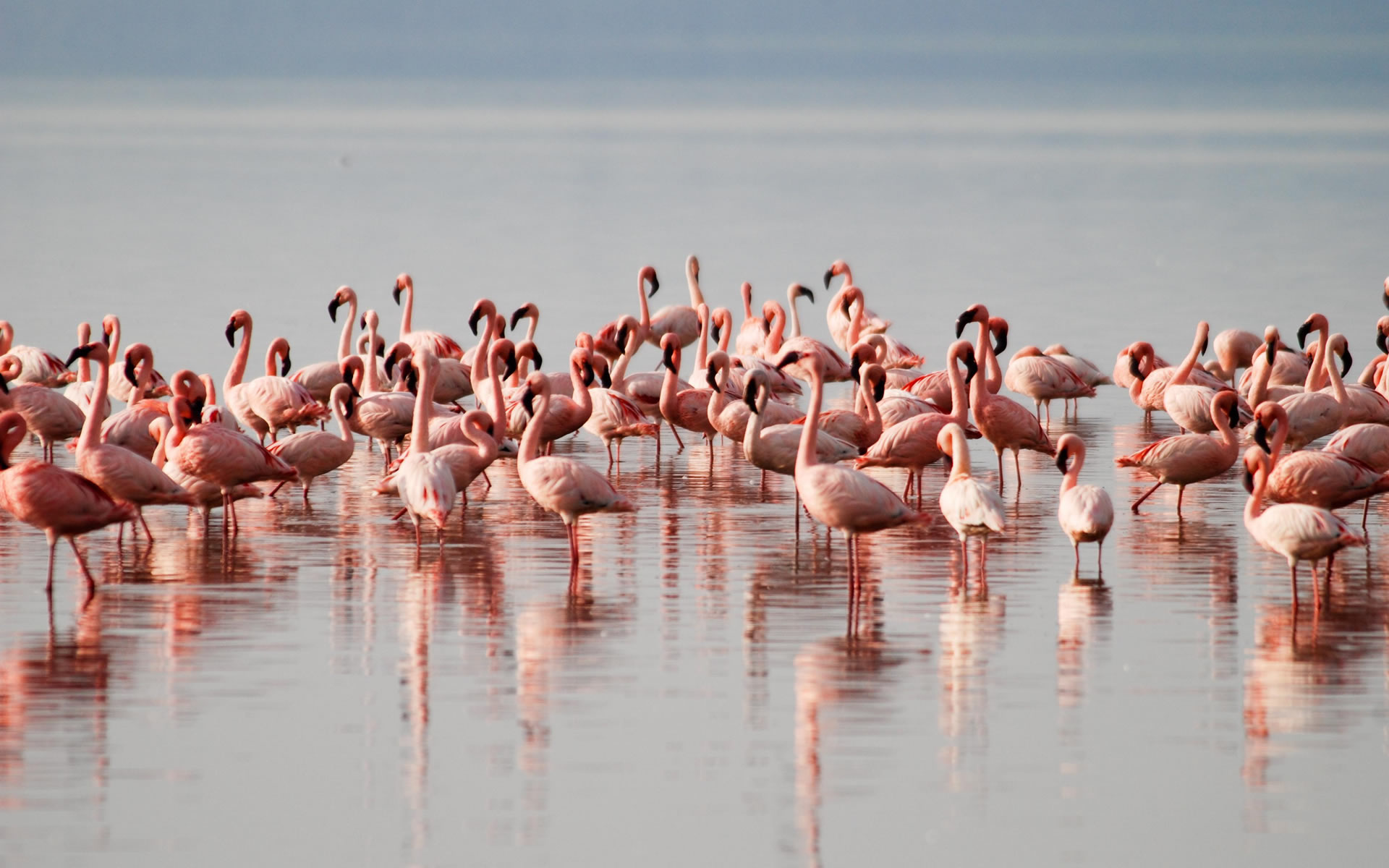
What Happened to Lake Nakuru’s Famous Flamingo Flocks?
Lake Nakuru became internationally famous for extraordinary flamingo gatherings that sometimes transformed its shoreline into a wide ribbon of pink. These images appeared in documentaries, travel magazines and safari advertisements, establishing the lake as a symbol of African birdlife.
Over time, substantial increases in water levels changed sections of the shoreline and affected the ecological conditions needed for productive flamingo feeding. As suitable feeding areas declined or moved, many birds relocated to other Rift Valley lakes.
The movement of flamingos should not be interpreted as a complete or permanent disappearance. These birds naturally respond to environmental conditions, and they may return in greater numbers when the lake again provides suitable food and water depth.
However, historic photographs should not be used to promise visitors that they will see the same enormous flocks today. Responsible safari planning requires honest communication about the lake’s changing ecology.
Travelers whose main objective is to see large concentrations of flamingos may benefit from an itinerary that includes more than one Rift Valley lake. Current local observations should be checked before departure, but even recent reports cannot guarantee where wild birds will be when the traveler arrives.
What Is the Difference Between Lesser and Greater Flamingos?
Both lesser and greater flamingos may be observed within Kenya’s Rift Valley lake system. Although they share a similar overall appearance, several features can help visitors distinguish them.
| Characteristic | Lesser flamingo | Greater flamingo |
|---|---|---|
| General size | Smaller and more compact | Taller and heavier |
| Bill appearance | Darker bill with extensive black coloration | Paler bill with a black tip |
| Plumage | Often appears more intensely pink | Generally paler pink or whitish |
| Feeding | Specialized in filtering microscopic food | Consumes a broader range of aquatic food |
| Typical numbers | Can form extremely large flocks | Often observed in smaller groups |
A knowledgeable birding guide can help travelers identify the two species while explaining their feeding methods, social behavior and ecological importance. Binoculars are particularly useful because visitors must observe birds from a respectful distance.
When Is the Best Time to See Flamingos at Lake Nakuru?
There is no single month that guarantees large flamingo flocks at Lake Nakuru. Their presence is determined more by water conditions and food availability than by a simple dry-season or wet-season calendar.
The drier periods, generally experienced from January to February and June to October, can provide easier road conditions and comfortable wildlife viewing. Lower rainfall may influence the lake’s water level, but this does not automatically mean that large flamingo concentrations will be present.
The greener months can bring lush scenery, migratory birds and dramatic photography conditions. Rainfall may raise water levels and change feeding areas, although the effect varies between seasons. These months remain rewarding for visitors interested in the park’s wider birdlife.
Before traveling, visitors can ask Ngeye Uganda Tours for recent local observations. This information can help shape a suitable itinerary, but reports should be treated as guidance rather than a promise.
Where Else Can Flamingos Be Seen in Kenya?
Travelers whose main priority is flamingo viewing can consider combining Lake Nakuru with other Rift Valley lakes. Flamingos move between different wetlands according to ecological conditions, so a broader route can improve the chances of encountering them.
Lake Bogoria
Lake Bogoria is internationally significant for lesser flamingos and can support impressive concentrations when feeding conditions are favorable. Its geothermal landscapes, hot springs and escarpment scenery create a very different experience from Lake Nakuru.
Lake Elementaita
Lake Elementaita forms part of the UNESCO-listed Kenya Lake System alongside Nakuru and Bogoria. The lake and its surrounding habitats support flamingos, pelicans and other birdlife, although abundance changes with local conditions.
Other Rift Valley Wetlands
Flamingos can also use additional lakes and wetlands across Kenya and neighboring Tanzania. Their regional movement demonstrates why protecting interconnected habitats is essential to their survival.
A professional Kenya Birding Safari can be designed around several habitats rather than relying on one lake. This provides a more complete experience and introduces travelers to a wider variety of birds and landscapes.
Is Lake Nakuru Worth Visiting When Flamingo Numbers Are Low?
Lake Nakuru remains worth visiting even when only a small number of flamingos are present. Its protected landscape supports valuable wildlife populations and some of the Great Rift Valley’s most attractive viewpoints.
The park is particularly important for rhino conservation and protects both black and white rhinos. Visitors may encounter these animals in grassland or woodland habitats, although their movement and visibility can never be guaranteed.
Rothschild’s giraffes are another major attraction. Their distinctive markings, tall stature and conservation history make them rewarding subjects for observation and photography.
Buffaloes, zebras, waterbucks, impalas, warthogs, baboons and vervet monkeys also inhabit the park. Predators such as lions and leopards are present but may be difficult to locate, especially when they rest in dense vegetation.
Travelers interested in elephants should understand that Lake Nakuru is not one of Kenya’s main elephant destinations. An itinerary that includes Amboseli National Park is more suitable for extensive elephant viewing.
What Other Birds Can Be Seen at Lake Nakuru?
Focusing exclusively on flamingos can cause travelers to overlook the park’s remarkable avian diversity. The lake, wetlands, woodland and grassland habitats support numerous resident and migratory species.
Depending on the season and ecological conditions, visitors may observe great white pelicans, cormorants, herons, egrets, African fish eagles, kingfishers, storks, pied avocets and black-winged stilts.
Raptors can be seen searching for prey above the grasslands, while woodland areas introduce travelers to smaller and often more challenging species. Each habitat contributes something different to the birding experience.
A dedicated birding itinerary allows more time for quiet observation than a general wildlife game drive. Birdwatchers should carry binoculars, field guides where useful and a camera with an appropriate zoom lens. Neutral clothing, sun protection and sufficient drinking water also improve comfort.
Photography should never involve disturbing birds, approaching nesting areas or pressuring guides to leave approved routes. Ethical viewing protects wildlife while creating more natural and rewarding encounters.
How Is Lake Nakuru Connected to the Wider Rift Valley Ecosystem?
Lake Nakuru is part of the UNESCO World Heritage Site known as the Kenya Lake System in the Great Rift Valley. This serial property includes Lake Nakuru, Lake Bogoria and Lake Elementaita.
UNESCO recognizes the system for its exceptional scenery, soda-lake ecology and international importance to birdlife. The three lakes support globally significant populations of lesser flamingos, great white pelicans and many other resident and migratory birds.
The movement of flamingos between lakes illustrates how closely connected these habitats are. Protecting a single lake is not sufficient if feeding, breeding and resting environments elsewhere are degraded.
Water quality, catchment protection, pollution control, settlement growth and responsible tourism all influence the future of this ecosystem. Visitors can contribute by following park regulations, avoiding litter, reducing unnecessary waste and choosing responsible safari operators.
How Far Is Lake Nakuru from Nairobi?
Lake Nakuru National Park can usually be reached from Nairobi in approximately three to four hours by road. Actual travel time depends on traffic, departure location, road conditions and planned stops.
The park’s accessibility makes it suitable for shorter Kenya Safaris and longer journeys continuing toward the Masai Mara. A day trip is possible, but staying for at least one night produces a more relaxed safari.
One night can provide an afternoon and morning game drive. Two nights are preferable for serious birdwatchers, photographers and travelers who want additional time at the park’s viewpoints.
Can Lake Nakuru Be Combined With Other Destinations?
Lake Nakuru is frequently combined with the Masai Mara National Reserve, Lake Naivasha and Amboseli. These combinations allow travelers to experience soda-lake birdlife, savannah wildlife, wetland environments and different conservation areas within one journey.
Visitors interested in seasonal herd movements can add a Great Wildlife Migration Safari in the Masai Mara. Migration timing depends on rainfall and grazing conditions, and river crossings cannot be guaranteed.
A longer East African holiday can connect Kenya with Uganda Safaris or Rwanda Safaris. This gives travelers opportunities to combine flamingos and savannah wildlife with gorilla trekking, chimpanzee tracking and authentic cultural experiences.
Why Book a Lake Nakuru Safari With Ngeye Uganda Tours?
A successful flamingo safari requires honest expectations and flexible planning. Ngeye Uganda Tours provides current destination guidance while recognizing that wild birds, water levels and weather cannot be controlled.
Our itineraries are designed to reveal the complete value of Lake Nakuru rather than focusing on one uncertain sighting. Travelers experience birdlife, rhino conservation, Rift Valley scenery, photography opportunities and professionally guided game drives.
Guests with a special interest in flamingos can request a wider birding route incorporating other suitable Rift Valley lakes. Our safari specialists can also combine Lake Nakuru with Amboseli, the Masai Mara or destinations across Uganda and Rwanda.
Transparent communication, suitable transportation, knowledgeable guides and carefully selected accommodation ensure that every journey is comfortable and professionally managed. Whether you are an experienced birder or visiting Africa for the first time, we will tailor your African Safari Experience around your interests.
Plan Your Lake Nakuru Birding Safari
Tell us your travel dates, preferred comfort level and the wildlife or bird species you hope to see. We will design a flexible Kenya safari featuring Lake Nakuru and other complementary destinations.
Request a Personalized SafariFrequently Asked Questions About Flamingos at Lake Nakuru
Are flamingos still common at Lake Nakuru?
Flamingos still visit Lake Nakuru, but their numbers vary. Water levels, salinity, algae and conditions at other Rift Valley lakes influence whether visitors see small groups or larger flocks.
Why did many flamingos leave Lake Nakuru?
Rising water levels and changing lake chemistry affected feeding conditions, encouraging many flamingos to move to other lakes where food was more abundant.
When is the best time to see flamingos at Lake Nakuru?
No month guarantees large flamingo flocks. Their presence depends primarily on current ecological conditions rather than a fixed travel season.
Which other Kenyan lakes have flamingos?
Lake Bogoria and Lake Elementaita are important flamingo habitats. The birds move between different Rift Valley lakes according to water conditions and food availability.
Is Lake Nakuru worth visiting without flamingos?
Yes. Lake Nakuru protects black and white rhinos, Rothschild’s giraffes, buffaloes, predators and diverse birdlife. It also offers excellent Great Rift Valley scenery.
How many nights should visitors spend at Lake Nakuru?
One night is suitable for many general itineraries. Two nights offer a more relaxed experience for photographers and serious birdwatchers.
Can flamingo sightings be guaranteed?
No. Flamingos are wild, mobile birds responding to changing environmental conditions. No responsible safari operator should guarantee a particular flock size or sighting.