Best Time to Visit Tsavo National Parks
The best time to visit Tsavo National Parks depends on whether your priority is wildlife viewing, birdwatching, landscape photography, fewer visitors, comfortable road conditions, or combining a safari with Kenya’s Indian Ocean coast. For classic wildlife viewing, the generally drier periods from June to October and January to February are often the most rewarding. Animals may concentrate near dependable water sources, vegetation can become less dense, and many park roads are easier to navigate.
Travelers interested in green scenery, migratory birds, dramatic skies, and a quieter safari may prefer parts of the wetter periods from March to May and November to December. Rain transforms Tsavo’s dry landscapes, stimulates plant growth, fills seasonal water sources, and supports increased insect and bird activity. Wildlife can become more widely distributed, however, making some animals more challenging to locate.
Tsavo East and Tsavo West remain compelling throughout the year, but the two parks respond differently to seasonal conditions. Tsavo East’s open plains, red soil, rivers, and dams provide classic wildlife-viewing environments. Tsavo West adds permanent springs, volcanic hills, wooded habitats, wetlands, and elevated viewpoints. Understanding these differences helps travelers choose the right month and itinerary.
This complete seasonal guide from Ngeye Uganda Tours explains what to expect throughout the year, including wildlife conditions, bird migration, photography, road access, accommodation, packing, and recommended safari durations.
Quick answer: June to October and January to February are generally best for classic wildlife viewing and easier road conditions. Approximately October to April can be rewarding for migratory birds. March to May offers green landscapes and potentially fewer visitors but may bring heavier rain and more challenging roads.
Best Time to Visit Tsavo at a Glance
| Travel Interest | Recommended Period | Why Visit Then? | Important Consideration |
|---|---|---|---|
| General wildlife viewing | June–October and January–February | Less vegetation and possible wildlife concentration near water | Popular periods can have greater demand and higher prices |
| Birdwatching | October–April | Resident birds may be joined by seasonal migrants | Rain can affect roads and outdoor plans |
| Green landscapes | November–December and March–May | Fresh vegetation, dramatic skies, and colorful scenery | Wildlife may spread away from permanent water sources |
| Lower visitor numbers | Parts of March–May and November | Quieter game drives and a more private atmosphere | Some facilities or routes may be affected by rain |
| Safari and beach combination | January–February and June–October | Generally favorable conditions for park travel and coastal relaxation | Coastal weather and holiday demand should also be considered |
Understanding Tsavo’s Climate and Seasons
Tsavo lies in southeastern Kenya and generally experiences warm temperatures throughout the year. Conditions vary between the lower, drier plains of Tsavo East and the more elevated, topographically diverse landscapes of Tsavo West.
Rainfall usually follows two broad patterns. The “long rains” commonly occur between March and May, while the “short rains” often arrive from approximately October or November into December. The main dry period usually extends from June to October, with another shorter dry interval around January and February.
These descriptions are useful for planning but should not be interpreted as fixed promises. Rainfall can begin early, arrive late, fall unevenly, or fail in some years. Climate variability affects vegetation, wildlife distribution, water availability, road conditions, and the appearance of the landscape.
Travelers should therefore select a season according to their interests while maintaining realistic expectations. A professional itinerary should remain flexible enough to respond to actual conditions on the ground.
June to October: The Main Dry Safari Season
June to October is widely considered one of the best periods for wildlife viewing in Tsavo. Rainfall is generally limited, temporary water sources may begin to dry, and vegetation can become thinner. These conditions may encourage animals to spend more time near permanent rivers, springs, dams, and waterholes.
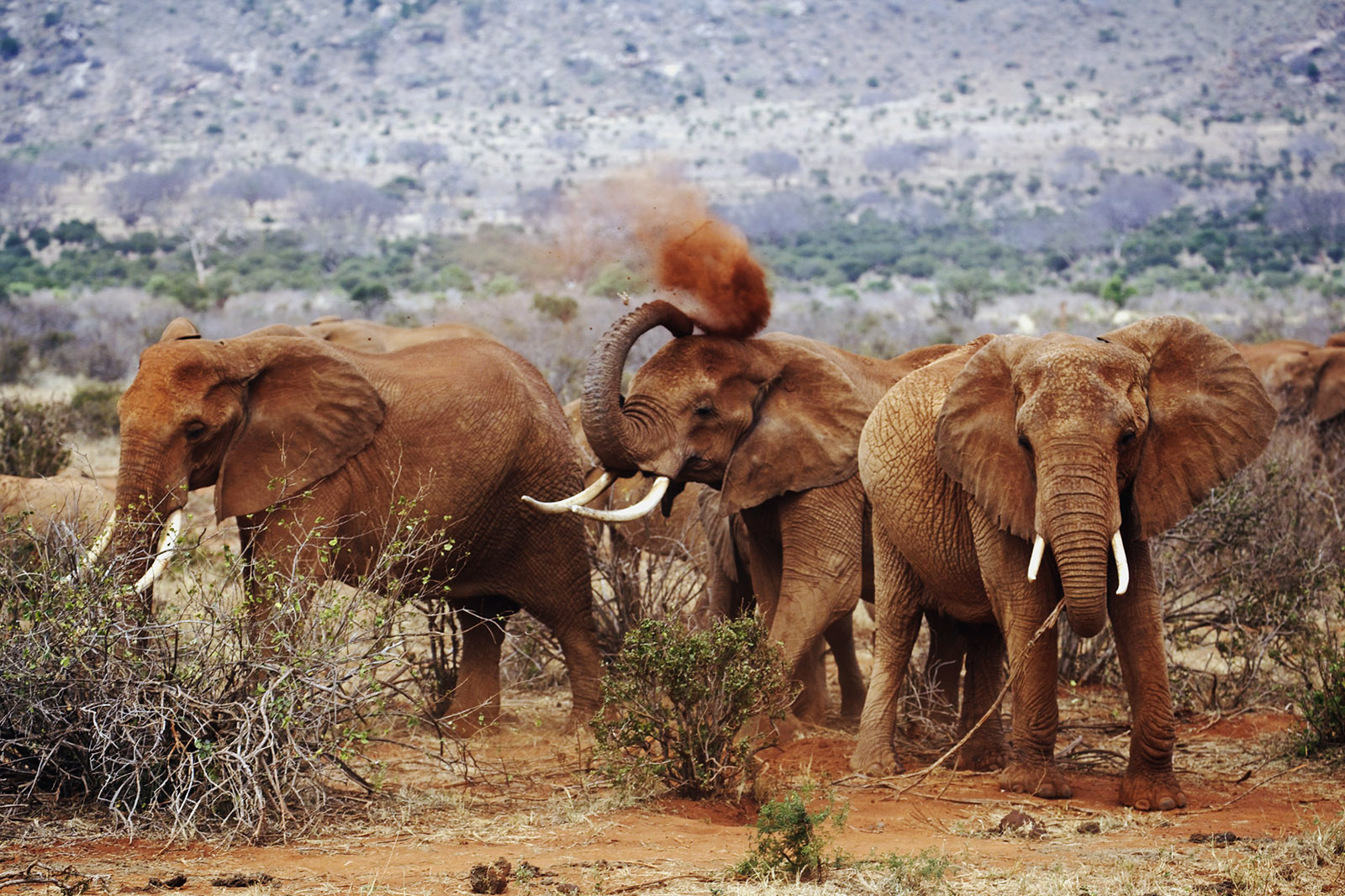
Tsavo East can be particularly rewarding during this period. Elephants, buffaloes, giraffes, zebras, antelopes, and other wildlife may be found along the Galana River, around Aruba Dam, and within productive game-drive areas. Predators also inhabit these environments, although lion, leopard, cheetah, and hyena sightings cannot be guaranteed.
In Tsavo West, Mzima Springs remains an important permanent water system. Wildlife may also gather near other dependable sources, while reduced vegetation can improve visibility in some areas. Nevertheless, Tsavo West remains more densely vegetated than Tsavo East, requiring patient observation.
Road conditions are often more manageable during the dry season, although dust can become considerable. Days may be warm, while early mornings and evenings can feel cool, particularly in open vehicles or higher areas.
Advantages of Visiting from June to October
Wildlife can be easier to locate when animals depend more heavily on permanent water. Vegetation may obstruct fewer views, and many park roads are less affected by mud.
The season is also suitable for travelers combining Tsavo with Amboseli, Nairobi, or Kenya’s coast. Clearer conditions may support landscape photography, although haze and dust can still affect distant views.
Considerations During the Main Dry Season
Popular travel months can increase demand for well-positioned lodges and camps. Booking early is advisable, particularly when travel coincides with school holidays or international vacation periods.
Dry conditions also produce dust, which can affect cameras, binoculars, contact lenses, and respiratory comfort. Travelers should carry suitable protection for sensitive equipment.
January and February: Warm, Dry, and Excellent for Safaris
January and February often provide another favorable window for visiting Tsavo. Conditions are usually warm, and rainfall may be limited following the short rains. Vegetation can retain some color while roads are generally more manageable than during heavy rain.
This period can offer a balance between wildlife viewing and attractive scenery. Animals may use remaining water and fresh vegetation, while the landscape can be greener than during the later dry-season months.
January and February are also convenient for combining Tsavo with Kenya’s coast. Travelers can begin with game drives in Tsavo East and Tsavo West before continuing to Mombasa or another Indian Ocean destination.
Temperatures can become hot during the middle of the day. Early-morning and late-afternoon game drives are consequently valuable for comfort, photography, and observing wildlife during cooler periods.
March to May: Long Rains and Green-Season Safaris
March to May is traditionally associated with Kenya’s long rains. Tsavo can change dramatically as vegetation responds to moisture, seasonal streams flow, and temporary pools form across the landscape.
The scenery can be beautiful, with green vegetation, clear air after rain, dramatic cloud formations, and strong color contrast against Tsavo’s red soil. This period is particularly appealing to landscape photographers and travelers who value atmosphere over predictable wildlife concentration.
Birdlife may also become active as insects, seeds, flowers, and fresh vegetation increase. Resident birds may display breeding behavior, while some migratory species can still be present during part of this period.
Advantages of the Long-Rain Period
Visitor numbers may be lower, producing quieter game drives and a greater sense of wilderness. Some accommodation providers may offer seasonal value, although discounts should be confirmed rather than assumed.
The green landscape can create attractive photographic backgrounds. Young vegetation, flowering plants, full water sources, and dramatic skies provide a different visual experience from the dry season.
Challenges from March to May
Heavy or prolonged rain can make some park roads muddy, slippery, or temporarily difficult. Journey times may increase, and particular routes can become inaccessible depending on vehicle type and current conditions.
Wildlife may disperse when water becomes widely available. Dense vegetation can also make animals more difficult to see, especially in Tsavo West.
Travelers choosing this period should allow flexibility and use an appropriate safari vehicle. Lodge operations and access should be confirmed before booking.
November and December: Short Rains and Migratory Birds
November and December are commonly associated with the short rains, although their timing and intensity vary. These rains refresh the vegetation following the dry season and can transform dusty landscapes into green wilderness within a relatively short period.
The period is attractive to birdwatchers because migratory species may be present alongside Tsavo’s resident birds. The Ngulia area of Tsavo West is internationally known for seasonal bird migration and long-term bird-monitoring activities.
Rain can fall in localized showers, sometimes followed by clear weather. However, heavier storms may affect roads and game-drive plans. Travelers should avoid assuming that the “short rains” will always be light or predictable.
December holiday travel can increase demand despite the possibility of rain. Accommodation and transport should be reserved early when traveling near Christmas and New Year.
Month-by-Month Guide to Visiting Tsavo
| Month | Typical Conditions | Safari Highlights | Planning Notes |
|---|---|---|---|
| January | Generally warm with drier conditions | Wildlife, birding, green scenery, and coast combinations | Midday temperatures can be high |
| February | Often hot and relatively dry | Game viewing and photography | Prioritize cooler morning and afternoon drives |
| March | Transitional conditions with possible increasing rain | Changing landscapes and bird activity | Conditions can vary considerably |
| April | Often among the wetter months | Green landscapes, dramatic skies, and quieter travel | Road disruptions are more likely |
| May | Rain may continue before conditions begin drying | Lush vegetation and birdwatching | Confirm accommodation and route conditions |
| June | Beginning of the main dry period | Comfortable game drives and improving visibility | Mornings can feel cool |
| July | Generally dry with cooler mornings | Classic wildlife viewing and accessible roads | Higher seasonal demand is possible |
| August | Dry and increasingly dusty | Wildlife near dependable water sources | Protect cameras and binoculars from dust |
| September | Warm, dry, and potentially dusty | Strong game viewing and open landscapes | Heat may increase toward midday |
| October | Transition toward the short rains | Wildlife viewing and arriving migrants | Rainfall timing is unpredictable |
| November | Short-rain period with greener scenery | Bird migration, dramatic skies, and photography | Some roads may become muddy |
| December | Mixed rain and sunshine with holiday demand | Birding, green landscapes, and family travel | Reserve accommodation early |
Best Time to Visit Tsavo East
Tsavo East is particularly rewarding during the dry periods from June to October and January to February. Its open terrain already provides relatively good visibility, and thinner vegetation can make wildlife observation easier.
The Galana River, Aruba Dam, and other dependable water sources may become focal points for wildlife during dry conditions. Elephants, giraffes, buffaloes, zebras, antelopes, and various predators inhabit the park, but no particular species can be guaranteed.
Green-season travel introduces colorful scenery, fresh vegetation, bird activity, and potentially fewer vehicles. The red soil contrasts beautifully with new plant growth, producing strong landscape photographs.
Travelers can discover more about Tsavo and other destinations through our guide to Kenya’s national parks.
Best Time to Visit Tsavo West
Tsavo West can also be visited throughout the year. Drier months may improve general wildlife visibility and road access, but the park retains dense vegetation in many areas. Patience remains essential regardless of season.
Mzima Springs is supplied by underground water originating in the neighboring Chyulu Hills and remains a significant attraction throughout the year. Water clarity, wildlife visibility, pathways, and viewing facilities can still vary with current conditions.
The November migration period around Ngulia can be particularly interesting for specialist birdwatchers. Meanwhile, the green season highlights Tsavo West’s hills, wooded valleys, wetlands, and volcanic scenery.
Views from Poacher’s Lookout, Roaring Rocks, and other elevated areas depend on cloud, rain, haze, and dust. Clear views of distant landscapes or Mount Kilimanjaro should never be guaranteed.
When Is the Best Time for Birdwatching?
Birdwatching is productive throughout the year because Tsavo supports hundreds of resident species across its plains, rivers, springs, woodland, hills, wetlands, and rocky habitats.
Approximately October to April can be particularly rewarding because seasonal migrants may join resident species. Rain can stimulate insect activity, flowering, fruiting, nesting, and breeding behavior among some birds.
The dry season remains valuable for birding. Reduced vegetation may improve visibility, while rivers, springs, dams, and waterholes can concentrate activity. Travelers primarily interested in birds should request a guide with specialist knowledge and allow more time in each habitat.
When Is the Best Time for Photography?
Wildlife photographers often prefer the dry season because open vegetation and wildlife concentration can create more predictable viewing opportunities. Tsavo East’s red dust, large skies, and open plains are particularly photogenic.
Landscape photographers may favor the green seasons. Fresh vegetation, rain clouds, reflections, flowering plants, and clear air after storms create dramatic compositions.
No single season is universally best. Dry conditions favor classic wildlife images, while wetter periods often provide stronger color and atmosphere. Photographers with flexible schedules can combine the advantages by traveling during transitional months such as June or October.
When Should Families Visit Tsavo?
Families often find June to October, January, February, and the December holiday period convenient because these months coincide with common school breaks. Drier roads can also simplify travel with younger children.
Parents should avoid overloading each day with long game drives. A well-located lodge, private vehicle, flexible meal arrangements, family rooms, and midday rest can improve the experience considerably.
Weather is only one planning factor. Children’s ages, driving tolerance, swimming-pool supervision, dietary needs, medical requirements, and lodge age policies should also be considered.
How Long Should You Spend in the Tsavo Parks?
Two nights in either Tsavo East or Tsavo West provide an introduction. Three nights in one park create a more relaxed experience and increase opportunities to explore different habitats.
Travelers combining both parks should generally allocate four to six nights. This duration provides time for game drives, Mzima Springs, volcanic attractions, rivers, viewpoints, birdwatching, and transfers without excessive rushing.
Photographers and birdwatchers may prefer six or seven nights because additional time allows repeat visits, changing light, seasonal observation, and patience around productive areas.
What Should You Pack for Each Season?
Dry-Season Packing
Pack lightweight clothing, a warm morning layer, closed shoes, a hat, sunglasses, sunscreen, moisturizer, and sufficient hydration. Dust protection is important for cameras, binoculars, contact lenses, and electronic equipment.
Wet-Season Packing
Add a lightweight waterproof jacket, quick-drying clothing, waterproof protection for electronics, and suitable footwear. A compact umbrella may be useful around accommodation, although it is not always practical during game drives.
Year-Round Essentials
Bring binoculars, a reusable water bottle, insect repellent, personal medication, travel documents, chargers, spare batteries, memory cards, and a small day bag. Travelers using light aircraft must confirm luggage restrictions before departure.
Where Should You Stay in Tsavo?
Both parks offer lodges and permanent tented camps across several comfort categories. The best property should be chosen according to park gate, priority attractions, budget, onward destination, and preferred travel pace.
Location can affect wildlife-viewing time significantly. A lodge may be inside Tsavo but still far from a particular spring, river, viewpoint, or game-drive circuit.
Travelers should also confirm seasonal operating dates, road access, family policies, meal arrangements, and available activities. Wildlife around a lodge or waterhole remains unpredictable and should not be guaranteed.
Why Plan Your Tsavo Safari with Ngeye Uganda Tours?
Choosing the right travel month requires balancing weather, wildlife, bird migration, visitor numbers, accommodation, road conditions, and the broader itinerary. Online climate charts alone cannot account for individual interests or current local conditions.
Ngeye Uganda Tours creates personalized itineraries based on travel dates, budget, comfort, group size, photography goals, birding interests, and onward destinations. We can combine Tsavo East and Tsavo West with Amboseli, Nairobi, Mombasa, or Kenya’s coast.
Learn more about Ngeye Uganda Tours, explore our safari packages, or contact our specialists for a seasonal recommendation.
Choose the Right Time for Your Tsavo Safari
Let us match your travel dates with the best possible route for wildlife, birding, photography, family travel, or a safari-and-beach holiday.
Frequently Asked Questions About Visiting Tsavo
What is the overall best time to visit Tsavo?
June to October and January to February are generally the best periods for classic wildlife viewing, drier roads, and thinner vegetation. The ideal time still depends on individual interests.
Can I visit Tsavo during the rainy season?
Yes. Rainy-season visits offer green scenery, active birdlife, dramatic skies, and potentially fewer visitors. Some roads may become difficult, so flexible planning and an appropriate vehicle are important.
What is the best time for birdwatching in Tsavo?
Birdwatching is possible year-round, but approximately October to April can be especially rewarding because migratory birds may join resident species.
What is the hottest time in Tsavo?
January, February, September, and October can feel particularly warm, although daily conditions vary. Early-morning and late-afternoon activities provide greater comfort.
Is April a bad month for Tsavo?
April is not necessarily a bad month, but it is often among the wetter periods. Travelers should expect possible road disruption, dispersed wildlife, and itinerary changes alongside lush scenery and fewer visitors.
Which season is best for photography?
The dry season is excellent for classic wildlife photography, while wetter months provide greener landscapes, dramatic clouds, and strong color. The best choice depends on the photographer’s preferred style.
Is Tsavo crowded during the dry season?
Demand can increase during popular dry-season and holiday months, but Tsavo’s immense size often creates a more spacious atmosphere than smaller reserves. Visitor concentration varies by lodge and game-viewing area.
How many nights should I spend in Tsavo?
Allow two or three nights for one park or four to six nights when combining Tsavo East and Tsavo West. Specialist photographers and birdwatchers may benefit from longer stays.
Are wildlife sightings guaranteed during the best season?
No. Even during favorable periods, animals move freely according to water, food, temperature, vegetation, weather, and natural behavior. No ethical safari operator can guarantee particular sightings.