Between Tsavo East and Tsavo West, Which Is Better for Wildlife Viewing?
Between Tsavo East and Tsavo West, which is better for wildlife viewing? For travelers whose main priority is seeing animals across open landscapes, Tsavo East is generally the better choice. Its broad plains, river corridors, waterholes, and less obstructed views can make elephants, giraffes, buffaloes, zebras, antelopes, and other wildlife easier to locate.
Tsavo West, however, offers a more varied combination of wildlife, volcanic scenery, permanent springs, wooded habitats, hills, wetlands, and panoramic viewpoints. Its denser vegetation can make animals more challenging to find, but the park rewards patient visitors with a richer landscape experience and memorable attractions such as Mzima Springs and Shetani Lava Flow.
The best choice therefore depends on the kind of safari you want. Choose Tsavo East for expansive scenery, red elephants, panoramic wildlife photography, and potentially easier game viewing. Choose Tsavo West for geological attractions, natural springs, birdwatching, varied habitats, conservation experiences, and a stronger sense of exploration. Travelers with at least four nights should consider combining both parks because their differences create a more complete Tsavo safari.
This expert guide from Ngeye Uganda Tours compares wildlife visibility, landscapes, attractions, photography, birdwatching, accommodation, seasonality, and recommended safari durations to help you make the right decision.
Quick verdict: Tsavo East is generally better for straightforward wildlife viewing because its landscapes are more open. Tsavo West is better for travelers who want wildlife combined with springs, volcanic formations, hills, viewpoints, and varied scenery. Combining both parks delivers the most complete experience.
Tsavo East vs Tsavo West: Quick Comparison
| Safari Feature | Tsavo East | Tsavo West | Better Choice |
|---|---|---|---|
| General wildlife visibility | Broad plains and relatively open habitats | Thicker vegetation and more enclosed habitats | Tsavo East |
| Landscape diversity | Open plains, river systems, dams, rocky outcrops, and red soil | Springs, hills, lava flows, craters, woodland, wetlands, and viewpoints | Tsavo West |
| Elephant viewing | Excellent opportunities in open red-soil landscapes | Good opportunities, although vegetation can reduce visibility | Tsavo East |
| Scenic attractions | Galana River, Mudanda Rock, Lugard Falls, and Yatta Plateau | Mzima Springs, Shetani Lava Flow, Chaimu Crater, and scenic viewpoints | Tsavo West |
| Panoramic wildlife photography | Open horizons and dramatic red-earth compositions | More layered landscapes and environmental portraits | Tsavo East |
| Geological exploration | Notable but less dominant in the visitor experience | Volcanic cones, lava flows, rocky hills, and springs | Tsavo West |
| Recommended duration | Two to three nights | Two to three nights | Combine both |
Why Is Tsavo East Better for Open Wildlife Viewing?
Tsavo East is characterized by vast horizons, semi-arid plains, scattered trees, river corridors, and large stretches of open country. Although parts of the park contain bush and woodland, its generally expansive character can make wildlife easier to notice from a safari vehicle.
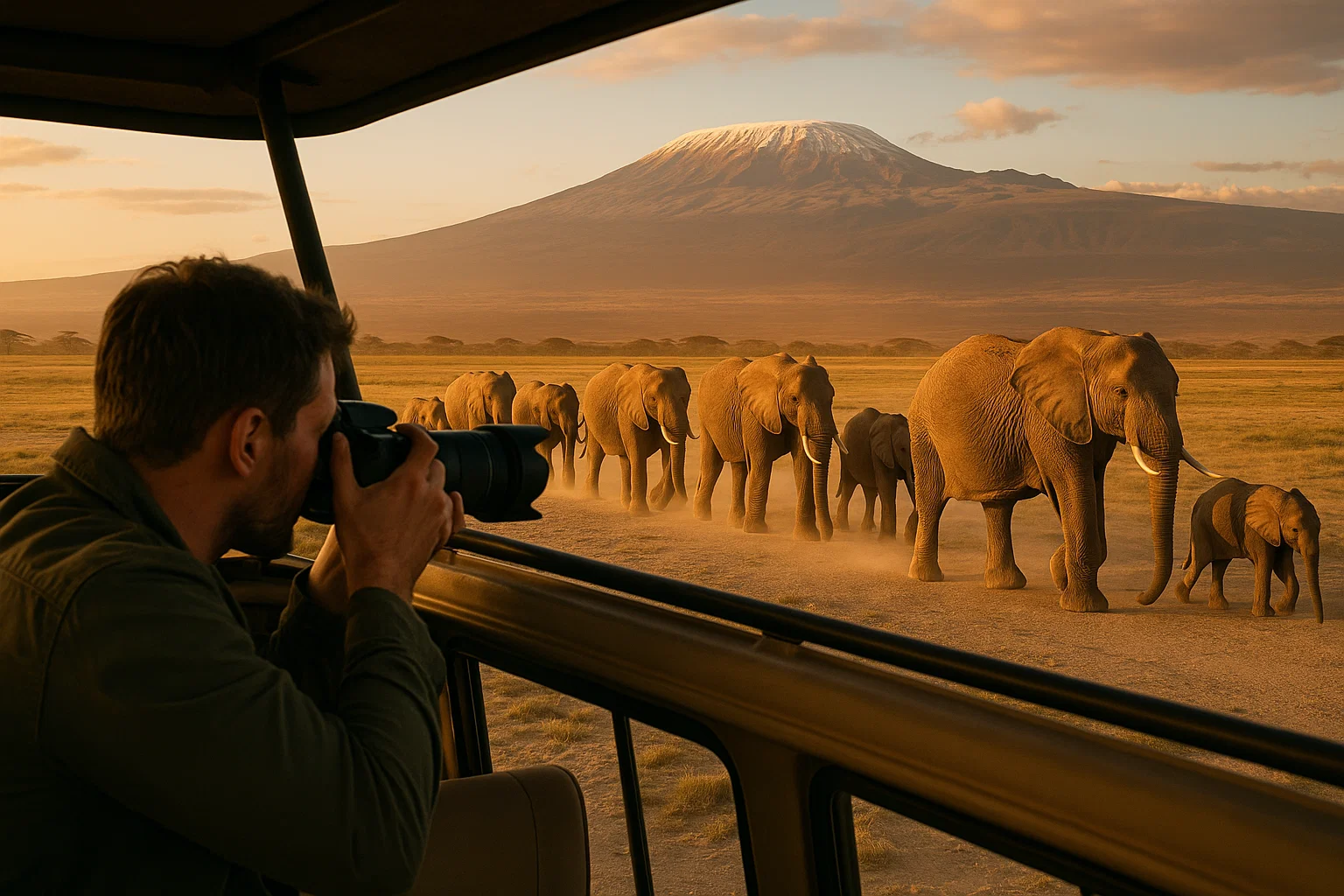
Elephants are among the park’s most famous inhabitants. After spraying themselves with the iron-rich soil, their skin takes on the reddish appearance associated with the “red elephants of Tsavo.” Seeing an elephant herd move across the red landscape is one of the park’s signature photographic experiences.
Other animals that may be encountered include buffaloes, giraffes, zebras, waterbucks, impalas, lesser kudus, gerenuks, warthogs, baboons, and several smaller species. Lions, leopards, cheetahs, spotted hyenas, and other predators also inhabit the ecosystem, although their movements remain unpredictable.
Open terrain does not guarantee sightings, but it can improve the chance of detecting animals from a distance. This quality makes Tsavo East particularly suitable for first-time safari travelers, families, photographers, and visitors with limited time.
Which Attractions Improve Wildlife Viewing in Tsavo East?
The Galana River
The Galana River is one of Tsavo East’s most important landscape features. Its water and riverine vegetation support wildlife throughout the year, creating productive areas for game viewing and birdwatching.
Elephants, antelopes, monkeys, crocodiles, hippos, and numerous birds may be encountered along the river system. Actual sightings depend on water levels, season, time of day, vegetation, and natural animal movements.
Aruba Dam
Aruba Dam can attract wildlife to its surrounding water and grassland habitats. During drier periods, animals may concentrate near dependable water sources, improving viewing opportunities. Conditions vary, and water levels can change considerably between seasons.
Mudanda Rock
Mudanda Rock is a prominent rock formation that overlooks the surrounding country and a natural water catchment below. When current access conditions allow, it provides an elevated perspective over parts of the park and may reveal wildlife visiting the nearby water.
Lugard Falls
Lugard Falls is a series of rapids and channels where the Galana River passes through sculpted rock. It is primarily a scenic and geological attraction, although wildlife and birds may occur in the surrounding river environment.
Yatta Plateau
The Yatta Plateau is a remarkable geological feature extending through the wider Tsavo landscape. It contributes to Tsavo East’s distinctive scenery and helps demonstrate the volcanic history that shaped the region.
Why Choose Tsavo West for a More Varied Safari?
Tsavo West presents a contrasting landscape of hills, rocky ridges, woodland, dense bush, volcanic formations, springs, and wetlands. Instead of concentrating only on open game viewing, the park invites visitors to appreciate the relationship between wildlife, geology, water, and vegetation.
Elephants, buffaloes, giraffes, zebras, antelopes, baboons, warthogs, lions, leopards, and other animals inhabit Tsavo West. However, its denser vegetation can hide wildlife even when animals are nearby. Sightings may require patience, careful observation, and several game drives.
This element of discovery appeals to experienced safari travelers who enjoy searching rather than simply seeing animals across open grassland. The park’s scenery also remains rewarding during quieter game drives because volcanic hills, lava fields, springs, and distant ridges provide continuous visual interest.
Which Attractions Make Tsavo West Special?
Mzima Springs
Mzima Springs is one of Tsavo West’s best-known attractions. Rainwater falling over the neighboring Chyulu Hills filters underground through volcanic rock before emerging as clear spring water inside Tsavo West.
The springs support fish, birds, monkeys, hippos, crocodiles, and riverine vegetation. Wildlife presence, water clarity, visitor paths, and viewing facilities vary, so no particular animal or underwater view should be guaranteed.
Shetani Lava Flow
Shetani Lava Flow is a dramatic expanse of dark volcanic rock formed by historical eruptions. The attraction provides a striking contrast with the greener areas around Mzima Springs and demonstrates the geological forces that shaped Tsavo West.
Chaimu Crater
Chaimu Crater is another volcanic landmark rising above the surrounding landscape. Any walking access must follow current park rules because loose rock, heat, steep terrain, and wildlife can create safety concerns.
Roaring Rocks and Poacher’s Lookout
These elevated locations offer broad views across the surrounding wilderness. On a clear day, visitors may see distant hills and, from selected areas, possible views toward Mount Kilimanjaro. Visibility depends on cloud, haze, dust, and other atmospheric conditions.
Ngulia Hills and Rhino Conservation
Ngulia is associated with important black-rhino conservation within Tsavo West. The protected rhino landscape was substantially expanded in 2025, providing more connected habitat for conservation and population recovery.
Rhinos can be extremely difficult to locate because of the landscape’s size, thick vegetation, animal movements, and necessary security controls. Visitors should appreciate the area’s conservation value without expecting a guaranteed sighting.
Which Tsavo Park Is Better for Elephants?
Both parks support elephants, but Tsavo East generally provides the stronger experience for travelers specifically interested in open elephant viewing. Its broad landscapes can make individuals and herds easier to observe, particularly around rivers, dams, and other dependable water sources.
The red soil also creates distinctive photographic conditions. Elephants frequently dust themselves to protect their skin from insects and sunlight, coating their bodies in the red earth associated with Tsavo East.
Tsavo West also offers rewarding elephant encounters, but vegetation and terrain can conceal animals. Elephants may emerge suddenly from woodland or appear near water, creating exciting but less predictable encounters.
Which Park Is Better for Lions and Other Predators?
Lions occur in both parks, and neither destination can guarantee predator sightings. Tsavo East’s more open terrain may make lions easier to detect when they are resting or moving across exposed areas. Tsavo West’s dense bush provides more cover, making predators harder to locate.
Leopards inhabit both parks but are naturally secretive and often difficult to see. Cheetahs generally benefit from open terrain, giving Tsavo East a possible visibility advantage, although encounters remain unpredictable.
Spotted hyenas, jackals, and smaller carnivores also occur within the Tsavo ecosystem. The quality of predator viewing depends on guide experience, time of day, recent wildlife activity, and good fortune.
Which Park Is Better for Birdwatching?
Both parks offer rewarding birdwatching, but they appeal in different ways. Tsavo East supports species associated with dry plains, acacia woodland, rivers, dams, and rocky areas. Its open habitats can make large birds and raptors easier to detect.
Tsavo West provides greater habitat variation through springs, wooded areas, volcanic hills, wetlands, open savannah, and seasonal migration routes. Mzima Springs, Lake Jipe, and the Ngulia area are particularly interesting to bird enthusiasts.
Specialist birdwatchers may prefer Tsavo West because of its varied environments, while casual birders can enjoy excellent sightings in either park. Combining both creates the strongest overall birding itinerary.
Which Park Is Better for Wildlife Photography?
Tsavo East generally performs better for photographers seeking unobstructed wildlife compositions, distant subjects, red-earth backgrounds, and large skies. Its open landscapes make it easier to track moving animals visually and photograph herds within their environment.
Tsavo West is especially rewarding for landscape photography and environmental wildlife portraits. Springs, lava formations, wooded valleys, hills, viewpoints, and layered terrain create greater scenic variety.
Photographers should ideally spend at least two or three nights in each park. This provides repeated morning and afternoon sessions, varied lighting, and the flexibility to wait rather than rushing between attractions.
Which Park Is Better for First-Time Safari Travelers?
Tsavo East may be easier for first-time safari travelers because its open terrain can deliver more immediate wildlife-viewing opportunities. It also represents the classic image of a safari: elephants crossing red plains, giraffes moving along the horizon, and wildlife gathering near water.
Tsavo West suits first-time visitors who value scenery and exploration as much as animal numbers. Even when wildlife is concealed, its springs, lava flows, hills, viewpoints, and diverse vegetation keep the experience engaging.
A first-time traveler with four to six nights should combine both. The contrast helps visitors understand how different habitats influence animal visibility and safari style.
Which Park Is Better for Families?
Tsavo East’s open wildlife viewing can be appealing to children because animals may be easier to notice. However, its size means game drives can still involve long distances.
Tsavo West offers varied stops that can break up time in the vehicle. Mzima Springs and volcanic attractions introduce educational dimensions beyond conventional wildlife viewing. Families must follow safety guidance closely, particularly around water, walking areas, and wild animals.
The best family choice depends on children’s ages, accommodation facilities, preferred activity length, and tolerance for driving. A customized itinerary should include rest periods and avoid packing every attraction into a single day.
When Is the Best Time for Wildlife Viewing in Tsavo?
Tsavo East and Tsavo West can be visited throughout the year. The generally drier periods from approximately June to October and January to February are popular for wildlife viewing. Vegetation may be less dense, roads are often easier to navigate, and animals may spend more time near dependable water sources.
The greener periods introduce lush vegetation, active birdlife, dramatic clouds, and potentially fewer visitors. Wildlife can become more widely distributed when temporary water is available, and thick vegetation may make some animals more difficult to see.
Rainfall patterns vary between years, and the terms “dry season” and “wet season” should be treated as general guidance rather than guarantees. A longer stay improves flexibility regardless of season.
How Many Nights Do You Need in Each Park?
Two nights in one park provide a useful introduction, while three nights allow a more relaxed experience. Travelers combining Tsavo East and Tsavo West should ideally allocate four to six nights across the two destinations.
| Available Time | Recommended Choice | Expected Experience |
|---|---|---|
| One night | Choose one park based on the travel route | A brief introduction with limited flexibility |
| Two nights | Explore either Tsavo East or Tsavo West | Several game drives and selected attractions |
| Three nights | One park in depth or a fast combination | More wildlife opportunities but limited relaxation if combining |
| Four to six nights | Combine Tsavo East and Tsavo West | The most balanced wildlife and landscape experience |
Where Should You Stay for the Best Wildlife Viewing?
Accommodation location can influence safari quality as much as the choice of park. A lodge or camp positioned near productive game-drive circuits, water sources, or priority attractions can reduce unnecessary travel and improve access during cooler wildlife-viewing hours.
In Tsavo East, travelers interested in elephants and open game viewing should choose accommodation that offers convenient access to established wildlife circuits. In Tsavo West, the best location depends on whether the priority is Mzima Springs, volcanic attractions, Ngulia, viewpoints, or onward travel toward Amboseli or the coast.
Animals move naturally, so accommodation near a waterhole cannot guarantee sightings. Travelers should also avoid assuming that every property described as being “in Tsavo” is conveniently located for every attraction.
Ngeye Uganda Tours helps guests compare accommodation according to route, budget, comfort, interests, and travel direction.
What Should You Pack for a Tsavo Safari?
Pack lightweight, breathable clothing in neutral colors together with a warm layer for early mornings and evenings. Comfortable closed shoes, a hat, sunglasses, sunscreen, insect repellent, and prescribed medication are important.
Binoculars greatly improve wildlife and bird observation. Photographers should carry spare batteries, memory cards, dust protection, and suitable lenses for both wildlife and landscapes.
A reusable water bottle, personal documents, chargers, and a compact day bag should remain easily accessible. Travelers using small safari aircraft must confirm luggage size and weight restrictions before departure.
Should You Combine Tsavo East and Tsavo West?
Combining the two parks is the best option for travelers with enough time. Tsavo East provides expansive plains, red elephants, river environments, and open photography. Tsavo West adds springs, volcanic formations, hills, conservation landscapes, wetlands, and viewpoints.
The two parks can also be combined with Amboseli, Nairobi, Mombasa, or the wider Kenyan coast. Browse our safari packages or explore other destinations through the Kenya national parks guide.
Final Verdict: Tsavo East or Tsavo West?
Choose Tsavo East if your highest priority is open wildlife viewing, elephant photography, classic savannah scenery, and potentially easier animal detection.
Choose Tsavo West if you want wildlife combined with springs, volcanic landscapes, hills, birdwatching, conservation, and scenic viewpoints.
Choose both if you have four to six nights and want the most complete Tsavo experience. Their differences complement each other, creating a safari with stronger ecological, photographic, and scenic variety.
Why Explore Tsavo with Ngeye Uganda Tours?
Selecting the right Tsavo park requires more than comparing wildlife lists. Travel time, gates, accommodation locations, seasons, photography priorities, family needs, and onward destinations all affect the final decision.
Ngeye Uganda Tours creates customized itineraries that balance wildlife viewing with realistic travel times. We help travelers decide whether to focus on one park, combine both, or connect Tsavo with Amboseli and Kenya’s coast.
Learn more about Ngeye Uganda Tours, explore our East African safari packages, or contact our team for a personalized recommendation.
Plan Your Tsavo Wildlife Safari
Let us create a balanced journey combining the open wildlife landscapes of Tsavo East with the springs, hills, and volcanic scenery of Tsavo West.
Frequently Asked Questions About Tsavo East and Tsavo West
Which is better for wildlife viewing, Tsavo East or Tsavo West?
Tsavo East is generally better for straightforward wildlife viewing because much of its terrain is more open. Tsavo West offers greater landscape diversity, but its thicker vegetation can make animals more difficult to locate.
Which Tsavo park is better for elephants?
Both parks support elephants, but Tsavo East generally offers better open viewing and photography. Its elephants are famous for the reddish appearance created by dusting in the park’s iron-rich soil.
Which park is better for seeing lions?
Lions inhabit both parks. Tsavo East’s open terrain may make them easier to detect, but sightings in either park depend on animal movements, time of day, weather, and guide experience.
Which park is more scenic?
Tsavo West is generally considered more scenically varied because it contains springs, volcanic hills, lava flows, wooded valleys, wetlands, and panoramic viewpoints.
Which Tsavo park is better for photography?
Tsavo East is excellent for open wildlife photography and red-earth landscapes. Tsavo West is particularly rewarding for landscape photography, geological features, and environmental wildlife images.
Which park is better for birdwatching?
Both parks provide excellent birdwatching. Tsavo West may have an advantage for habitat variety, while Tsavo East’s open areas can make raptors and larger birds easier to observe.
How many nights should I spend in Tsavo?
Allow two or three nights in one park or four to six nights when combining Tsavo East and Tsavo West. Photographers and birdwatchers may benefit from a longer stay.
Can I combine Tsavo East and Tsavo West?
Yes. Combining both parks produces the most varied experience, bringing together open plains, red elephants, river habitats, springs, volcanic formations, viewpoints, and conservation areas.
Are wildlife sightings guaranteed in Tsavo?
No. Tsavo is an unfenced natural ecosystem, and animal sightings depend on water, weather, vegetation, season, time of day, and natural behavior.