Uganda Gorilla Trekking Guide
How Long Does a Gorilla Trek Usually Take?
A gorilla trek in Uganda commonly takes between two and seven hours, although it can be shorter or longer depending on the gorillas’ location, terrain, weather and the group’s pace. After the family is located, visitors are normally allowed up to one hour with the gorillas. Registration, the ranger briefing and transfers from your lodge add more time, so you should keep the entire trekking day free.
What Does a Typical Gorilla Trekking Day Look Like?
Gorilla trekking is a carefully managed forest experience rather than an attraction that follows an exact hourly timetable. Your safari guide will confirm the departure time from the lodge and the correct briefing location. A typical day may follow this general pattern:
| Approximate stage | What happens | Important detail |
|---|---|---|
| Early morning | Breakfast and transfer from the lodge | Your accommodation must match the correct trekking sector. |
| Before the forest walk | Registration, health checks, ranger briefing and group assignment | Follow the reporting time supplied for your permit. |
| Forest search | Guided hike following trackers and signs of the assigned family | This may take less than an hour or several hours. |
| Gorilla encounter | Observation and photography under ranger supervision | Up to one hour after the gorillas are located. |
| Return | Hike back and transfer to the lodge | The return can still involve steep or muddy terrain. |
Do not schedule an afternoon flight, long road transfer or another permit-based activity after the trek. Even if a previous traveler finished early, your assigned gorilla family may be much farther away. A flexible afternoon protects the experience from unnecessary pressure.
Why Does Gorilla Trekking Duration Vary?
1. The Gorilla Family’s Location
Mountain gorillas build fresh nests and move in search of food. Trackers use knowledge of the previous day’s location, nests, footprints, feeding remains and disturbed vegetation to follow them. A family near the starting area may be found relatively quickly; another may have moved deeper into the forest.
2. Forest Terrain
Bwindi’s landscape includes ridges, valleys, dense plants and natural obstacles. Mgahinga includes bamboo forest and volcanic slopes at higher elevations. Distance alone does not determine difficulty: a short, steep and muddy route can take longer than a greater distance over gentler ground.
3. Rain and Trail Conditions
Rain can occur throughout the year. Wet ground, roots and leaves require slower, more careful movement. Drier months may bring firmer paths, but they do not guarantee a short trek because gorilla movement remains unpredictable.
4. The Group’s Pace
Rangers manage the pace with participant safety in mind, but a trekking group naturally moves according to terrain and individual ability. Honest communication about fitness or mobility concerns before booking helps the operator design a more appropriate itinerary.
5. Tracking and Conservation Decisions
Rangers and trackers may adjust the route to protect visitors, avoid hazards or reduce disturbance to wildlife. Conservation and safety take priority over reaching the gorillas as quickly as possible.
How Long Does Gorilla Trekking Take in Bwindi?
Bwindi Impenetrable National Park is Uganda’s most established gorilla trekking destination. Its main trekking sectors—Buhoma, Ruhija, Rushaga and Nkuringo—serve different gorilla families and accommodation areas.
Many Bwindi treks fall within the broad two-to-seven-hour range, but there is no reliable sector-by-sector guarantee. A family that was close to a briefing point yesterday may move farther overnight. The same sector can produce a relatively gentle morning for one group and a longer, steeper experience for another.
This is why lodge positioning matters. Bwindi’s sectors are separated by considerable driving time, and staying in the wrong area can create an extremely early transfer or risk missing the briefing. Ngeye Tours & Travel matches accommodation to the confirmed permit location rather than describing every lodge as simply “near Bwindi.”
Reaching Bwindi from Entebbe or Kampala by road normally forms part of a multi-day itinerary, while domestic flights may connect to Kihihi or Kisoro depending on the route. Travel time to the park is separate from trekking time and should be planned at least a day before the activity.
Does Mgahinga Gorilla National Park Offer Shorter Treks?
Mgahinga Gorilla National Park offers a striking Virunga setting of bamboo forest and volcanic slopes. Its smaller size sometimes leads travelers to assume that every trek will be shorter than in Bwindi. That assumption is unsafe.
The trek duration still depends on the gorilla family’s position and movement. Mgahinga’s altitude and slopes may feel demanding even when visibility is more open in some bamboo sections. A shorter distance can still require steady climbing and careful pacing.
Mgahinga may suit itineraries based around Kisoro or cross-border travel through Rwanda, subject to current entry and permit arrangements. It can also be combined with golden monkey tracking or other Virunga-region experiences. Choose the park based on confirmed permit availability, route, accommodation and personal interests—not a promise of an easier or faster trek.
The official Uganda Wildlife Authority gorilla-tracking guide describes treks as requiring moderate fitness and commonly lasting approximately two to seven hours.
Does the One Hour With Gorillas Include the Hike?
No. The one-hour encounter starts after the assigned gorilla family is located and the ranger authorizes observation. The time spent walking to find the family and returning afterward is additional.
Before the final approach, the ranger will explain how to behave. Bags and walking sticks may be left at a safe point with porters, depending on instructions. Participants then approach quietly with essential camera equipment.
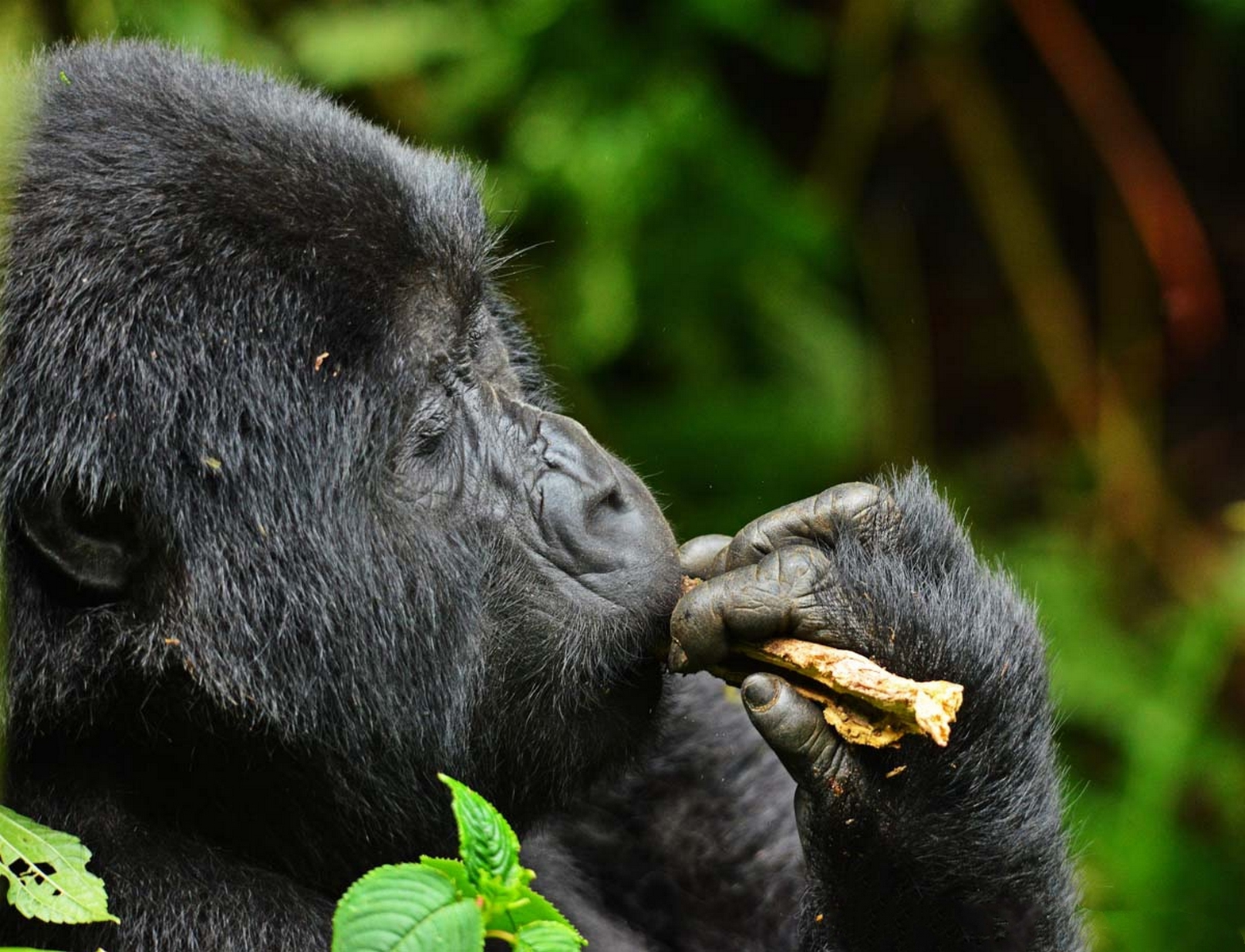
During the hour, visitors may observe feeding, resting, grooming, play and movement. Particular behaviors and clear photographs are never guaranteed. Dense vegetation, low forest light and the gorillas’ chosen positions all influence visibility.
Flash photography is not permitted. Remain quiet, stay together, avoid sudden movements and follow the ranger’s instructions concerning distance and positioning. If a gorilla moves closer, do not attempt to touch it or move independently; the ranger will direct the group.
What Is the Difference Between Gorilla Trekking and Habituation Duration?
| Feature | Standard gorilla trekking | Gorilla Habituation Experience |
|---|---|---|
| Time near gorillas | Up to one hour | Up to four hours |
| Gorilla family | Fully habituated tourism family | Family undergoing habituation |
| Total day | Variable; commonly several hours | Potentially a longer, full-day forest experience |
| Physical preparation | Moderate fitness recommended | Moderate-to-good endurance recommended |
| Best suited to | Most first-time visitors and broader safari itineraries | Travelers seeking extended observation and research context |
If extended observation interests you, read our guide explaining how long visitors spend with gorillas during habituation.
How Fit Should You Be for a Gorilla Trek?
Moderate fitness is enough for many travelers, but stronger endurance makes a long or steep trek more comfortable. You should be able to walk for several hours on uneven ground, manage slopes and remain steady in humid or muddy conditions.
Prepare with regular walking for at least four weeks. Gradually increase distance, include hills or stairs and practice wearing the boots and light daypack intended for Uganda. Training on mixed surfaces improves balance and reduces the surprise of natural forest terrain.
Age alone does not determine suitability. Active older travelers often complete gorilla treks successfully, while younger travelers without walking fitness may struggle. Anyone with heart, respiratory, joint, balance or mobility conditions should seek medical advice and discuss the activity before paying for a permit.
Hiring a porter is strongly recommended. Porters carry your daypack and may provide practical support on difficult sections, while the fee supplies direct income to people living near the park. Using a porter is sensible preparation, not a sign of weakness.
What Should You Wear and Carry?
- Waterproof hiking boots: choose strong grip and comfortable ankle support.
- Long trousers and long sleeves: protect skin from vegetation and insects.
- Light rain jacket or poncho: rainfall is possible throughout the year.
- Gardening-style gloves: useful when steadying yourself near vegetation.
- Drinking water and packed food: carry what your operator recommends for a potentially long day.
- Small waterproof daypack: keep your belongings protected and hands free.
- Camera without flash: prepare low-light settings and bring spare batteries.
- Personal medication: keep essential items accessible and protected from rain.
Do not wear new boots for the first time on trekking day. Break them in during training, and pack important trekking gear in hand luggage in case checked baggage is delayed.
When Is the Best Time for a More Comfortable Trek?
Gorilla trekking operates throughout the year. The periods from June to September and December to February are often described as generally drier, and trails may be firmer. However, Bwindi and Mgahinga are rainforest and mountain environments where rain can occur at any time.
Wetter months can bring muddier conditions, but they also offer lush scenery and may suit travelers combining the trek with Uganda birding experiences. Season alone cannot predict how far a gorilla family will move or how long the search will take.
Permit availability and suitable lodging may be more important than choosing a supposedly perfect weather month. Book early once your dates are known. See our guide on how far in advance to reserve a gorilla permit.
Can Gorilla Trekking Be Combined With Other Uganda Experiences?
Yes. Many travelers combine Bwindi or Mgahinga with chimpanzee tracking in Kibale National Park, game drives and a boat safari in Queen Elizabeth National Park, birding, Lake Bunyonyi and community visits.
The gorilla permit is date-specific, so it should anchor the itinerary. Add realistic transfer times and avoid placing another demanding forest activity immediately afterward. Explore our guide to combining chimpanzee tracking with gorilla trekking.
Why Plan Your Gorilla Trek With Ngeye Tours & Travel?
Ngeye Tours & Travel organizes Uganda gorilla trekking experiences around confirmed permits, appropriate accommodation and realistic travel times. Our local team matches your lodge with the correct trekking location, provides preparation guidance and leaves enough flexibility for an unpredictable forest day.
We also explain current permit rates and terms for your travel date. The previously published USD 800 foreign non-resident rate belonged to the July 2024–June 2026 tariff period; travelers booking later dates should request the applicable official tariff rather than relying on an outdated figure.
No responsible operator can guarantee how many hours you will walk or where the gorillas will be. What we can provide is careful planning, honest expectations, reliable transport and personal support from the first inquiry to the final safari day.
Frequently Asked Questions
How long does a gorilla trek usually take in Uganda?
A gorilla trek commonly takes about two to seven hours, but it may be shorter or longer depending on wildlife movement, terrain, weather and group pace.
Does the trek time include the hour with gorillas?
The overall forest experience includes the approach, up to one hour near the gorillas and the return hike. Registration, briefing and lodge transfers add more time to the day.
Can a gorilla trek take the whole day?
Yes. Although many treks finish earlier, you should keep the entire day free because the gorillas’ location and forest conditions cannot be predicted.
Is Bwindi or Mgahinga faster for gorilla trekking?
Neither park can guarantee a shorter trek. The duration depends mainly on the assigned family’s location, terrain and conditions on that particular day.
What time does gorilla trekking start?
It begins with an early-morning registration and ranger briefing. Follow the exact reporting time confirmed by your operator for the relevant sector.
How fit should I be?
Moderate fitness is recommended. You should be comfortable walking for several hours on uneven terrain and managing hills, mud and humid conditions.
Can seniors complete a gorilla trek?
Many active seniors trek successfully. Suitability depends more on health, mobility, balance and endurance than age alone. Medical advice may be appropriate.
Does dry-season travel guarantee a shorter trek?
No. Trails may be firmer during generally drier periods, but gorilla movement—not the season alone—is the biggest influence on trekking duration.