How Long Should I Stay in Tsavo Parks?
How long should I stay in Tsavo parks? For most travelers who want to experience both Tsavo East and Tsavo West without rushing, four to six nights across the two parks is an excellent choice. This duration provides enough time for several game drives, scenic stops, wildlife photography, and visits to signature attractions such as the Galana River, Mzima Springs, Shetani Lava Flow, and Tsavo’s panoramic viewpoints.
Travelers with limited time can visit one Tsavo park for two nights or combine both parks in three nights, although a shorter itinerary requires careful routing. Visitors interested in photography, birdwatching, conservation, or a slower safari should consider six or seven nights. The ideal duration ultimately depends on the selected accommodation, entry and exit gates, transport method, season, and other destinations included in the journey.
Tsavo East and Tsavo West form part of one of Kenya’s largest and most important protected wilderness landscapes, but they offer noticeably different experiences. Tsavo East is known for expansive plains, red-soil scenery, the Galana River, and impressive elephant encounters. Tsavo West is more mountainous and densely vegetated, with natural springs, volcanic formations, rocky viewpoints, and important rhino-conservation areas.
This detailed guide from Ngeye Uganda Tours explains how many days to allocate to each park, what can realistically be experienced, and how to build a balanced Tsavo itinerary as part of a wider Kenyan safari.
Quick recommendation: Allocate two or three nights to Tsavo East and two or three nights to Tsavo West. A combined four-to-six-night itinerary offers a comfortable balance of wildlife viewing, scenery, photography, and relaxation without excessive daily driving.
Recommended Tsavo Safari Durations at a Glance
| Available Time | Recommended Itinerary | Best Suited To | Main Consideration |
|---|---|---|---|
| One night | Choose either Tsavo East or Tsavo West | Travelers passing between Nairobi and the coast | Very limited safari time and strongly dependent on arrival and departure hours |
| Two nights | Explore one park properly | First-time visitors with a short schedule | Enough for an introduction but not extensive exploration |
| Three nights | One park in depth or a fast combination of both | Travelers prioritizing efficiency | Combining both parks may involve longer transfer days |
| Four to six nights | Two or three nights in each park | Most wildlife enthusiasts, couples, and families | Provides the best balance of variety and relaxation |
| Six to seven nights | Slow exploration of Tsavo East and Tsavo West | Photographers, birdwatchers, and repeat safari visitors | Higher accommodation and park-fee costs |
Why Does the Size of Tsavo Affect Your Safari Duration?
The Tsavo ecosystem covers an enormous area, and its attractions are widely distributed. Driving from one location to another can take much longer than distances on a map suggest because safari vehicles travel on park roads, stop for wildlife, and adjust to weather or surface conditions.
Attempting to see too much in a short period can transform a safari into a sequence of long transfers. Travelers may reach attractions during the hottest part of the day, miss productive morning game drives, or arrive at their accommodation with little time to relax.
A longer stay creates flexibility. If wildlife is quiet during one game drive, there will be another opportunity later. If rain affects a route or visibility is poor at a viewpoint, the itinerary can be adjusted. This flexibility is especially important because ethical safari planning cannot guarantee specific animals, weather, or road conditions.
Accommodation location also influences usable safari time. Two lodges may both be described as being in Tsavo, yet one may be far better positioned for Mzima Springs while another provides easier access to a waterhole, gate, or Tsavo East game-viewing circuit.
How Many Nights Should You Spend in Tsavo East?
Two or three nights are suitable for most visits to Tsavo East National Park. Two nights generally provide an afternoon game drive on arrival, a full day of exploration, and a final morning drive before departure. Three nights introduce an additional full day, reducing pressure and increasing the opportunity to explore more than one section of the park.
Tsavo East is characterized by expansive landscapes, red soil, seasonal rivers, and impressive wildlife habitats. Elephants often take on a reddish appearance after dusting themselves with the park’s iron-rich soil, creating one of Kenya’s most recognizable wildlife scenes.
The Galana River is a major feature of Tsavo East and attracts diverse wildlife along its banks. Other highlights can include Aruba Dam, Mudanda Rock, Lugard Falls, Yatta Plateau, open plains, and productive wildlife-viewing routes. Whether every attraction can be included depends on accommodation location, road conditions, and available time.
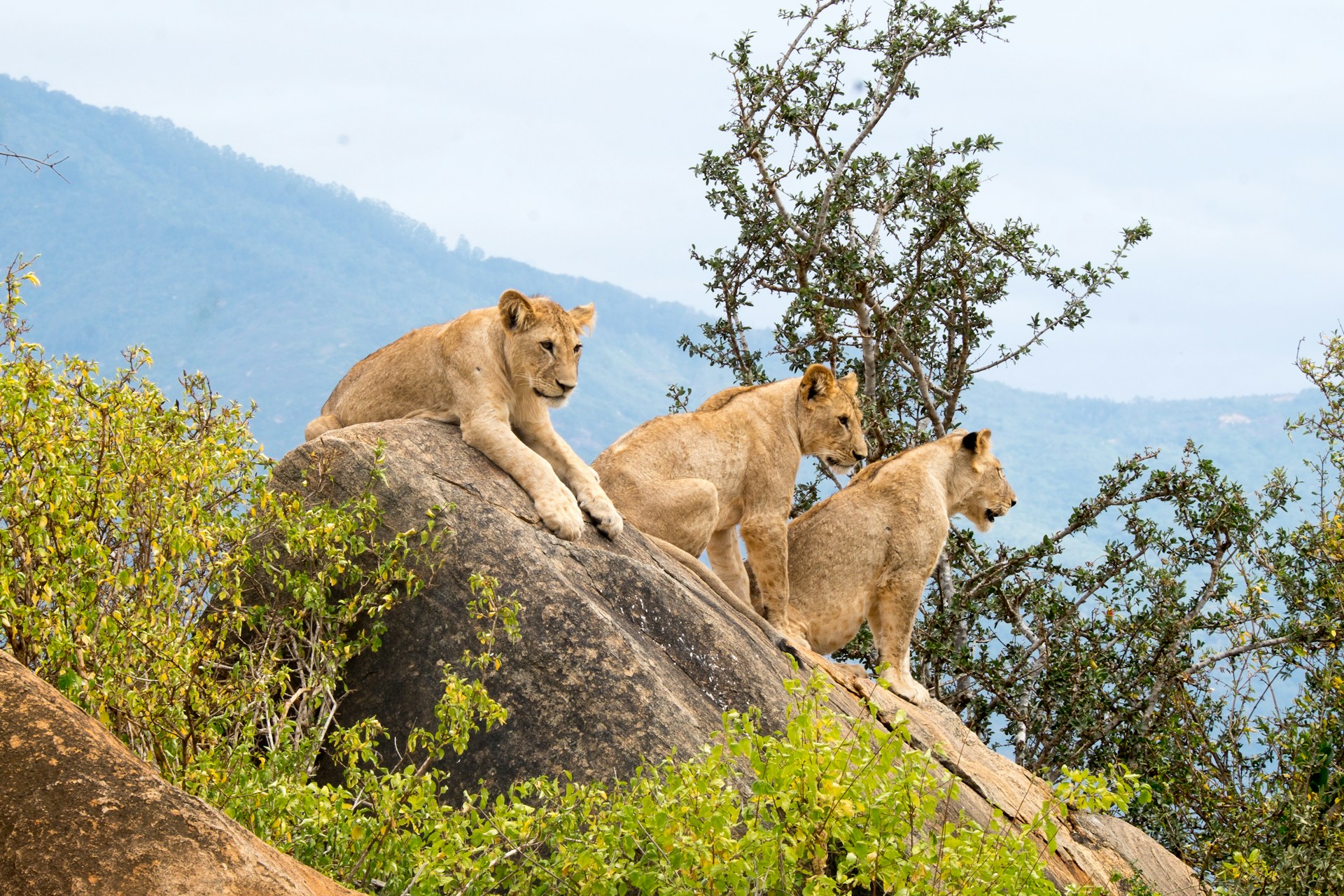
Lions, elephants, buffaloes, giraffes, zebras, antelopes, warthogs, and numerous bird species may be encountered. Leopards and cheetahs also inhabit the ecosystem but can be more difficult to find. Wildlife remains free-ranging, so sightings vary between game drives.
Is One Night in Tsavo East Enough?
One night can work as a convenient stop between Nairobi and the Kenyan coast, particularly when arrival occurs early enough for an afternoon game drive and departure allows another drive the following morning. It should, however, be considered a brief introduction rather than a complete Tsavo East experience.
A delayed arrival, long lunch stop, traffic, road conditions, or gate formalities can substantially reduce usable safari time. Travelers coming primarily for wildlife should choose at least two nights whenever their schedule permits.
Who Should Spend Three or More Nights in Tsavo East?
Photographers benefit from three or more nights because they can return to productive areas under different lighting conditions. Birdwatchers gain time to explore several habitats, while families can use a slower schedule with breaks between drives.
Travelers who dislike rushed mornings or long continuous driving will also appreciate an additional night. The longer stay allows the safari to respond to wildlife activity instead of following an inflexible checklist.
How Many Nights Should You Spend in Tsavo West?
Two or three nights are recommended for Tsavo West National Park. Although wildlife viewing is important, Tsavo West also rewards visitors with geological attractions, natural springs, hills, conservation landscapes, and elevated viewpoints.
Two nights may allow travelers to visit Mzima Springs, include one or two game drives, and stop at a volcanic or scenic attraction, depending on the selected accommodation and travel route. Three nights provide a better opportunity to explore without combining too many distant locations in one day.
Tsavo West’s vegetation is often denser than that of Tsavo East. Animals can therefore be more difficult to locate, making patience and repeat game drives valuable. The landscape itself becomes an essential part of the experience, even when wildlife is concealed by vegetation.
What Can You Experience in Tsavo West?
Tsavo West is known for Mzima Springs, where clear water emerges after traveling underground from the neighboring Chyulu Hills. Visitors may observe fish, birds, monkeys, hippos, or crocodiles, although no particular sighting or viewing condition is guaranteed.
Shetani Lava Flow reveals the region’s volcanic history through a dramatic expanse of dark, hardened rock. Chaimu Crater provides another volcanic landmark, while Roaring Rocks and Poacher’s Lookout offer broad perspectives over the surrounding wilderness when weather conditions are suitable.
Ngulia Hills and the expanded Tsavo West rhino-conservation landscape demonstrate the park’s importance for endangered black rhinos. Rhino sightings can be challenging because of the size of the habitat, dense vegetation, animal movements, and necessary security restrictions.
Lake Jipe can add wetlands, birdlife, borderland scenery, and possible aquatic wildlife encounters to longer itineraries. Its location means that it cannot always be included conveniently in a short Tsavo West visit.
Is Two Nights Enough for Tsavo West?
Two nights are sufficient for a well-planned introduction when the lodge is positioned conveniently and the itinerary focuses on selected attractions. It is not enough to explore every corner of the park.
Three nights are preferable for travelers interested in Mzima Springs, volcanic scenery, viewpoints, game drives, and unhurried lodge time. Visitors hoping to include Lake Jipe or more distant areas may require an additional night.
Is It Better to Visit Tsavo East or Tsavo West?
Neither park is universally better because they offer complementary experiences. Tsavo East is particularly rewarding for travelers who appreciate expansive scenery, red elephants, large horizons, river habitats, and classic game drives. Tsavo West appeals to visitors interested in varied terrain, springs, volcanic geology, viewpoints, conservation, and a more enclosed wilderness atmosphere.
| Safari Feature | Tsavo East | Tsavo West |
|---|---|---|
| Landscape | Broad plains, red earth, rivers, dams, and vast horizons | Hills, woodland, springs, lava fields, craters, and rocky viewpoints |
| Wildlife visibility | Often more open, although sightings still vary | Denser vegetation can make wildlife searches more challenging |
| Signature experiences | Red elephants, Galana River, Mudanda Rock, Lugard Falls, and open game drives | Mzima Springs, Shetani Lava Flow, Chaimu Crater, viewpoints, and rhino conservation |
| Recommended stay | Two to three nights | Two to three nights |
Travelers with at least four nights should consider combining both parks. Those with only two nights may obtain a better experience by selecting one park according to their route and interests rather than spending much of the visit transferring between them.
Sample Four-Night Tsavo Itinerary
Day One: Arrival in Tsavo East
Enter Tsavo East through the gate that best matches the journey from Nairobi, Mombasa, or another destination. Enjoy an introductory game drive while traveling toward the selected lodge or camp. The actual program depends on arrival time.
Day Two: Full-Day Tsavo East Exploration
Begin with an early game drive when temperatures are cooler and many animals are active. Explore selected wildlife areas and river habitats before returning to the lodge for a break or continuing with a carefully paced full-day circuit.
Day Three: Tsavo East to Tsavo West
Enjoy a final wildlife drive while leaving Tsavo East and transfer toward Tsavo West. Enter the western park and continue game viewing en route to the accommodation. Avoid adding too many distant attractions to this transfer day.
Day Four: Mzima Springs and Tsavo West
Visit Mzima Springs subject to current access conditions, then continue through selected game-viewing and volcanic landscapes. Depending on routing, Shetani Lava Flow, a viewpoint, or another nearby attraction may be incorporated.
Day Five: Final Game Drive and Departure
Take an early drive before leaving for Amboseli, Nairobi, Mombasa, or another destination. Departure timing should account for the chosen gate, road conditions, and the distance to the next stop.
Planning reminder: The itinerary above is illustrative. Park roads, gate locations, accommodation, weather, current access rules, and onward travel may require a different sequence.
When Is the Best Time for a Multi-Day Tsavo Safari?
Tsavo East and Tsavo West can be visited throughout the year. The generally drier periods from approximately June to October and January to February are popular because vegetation may be less dense, roads are often easier to navigate, and animals may concentrate near dependable water sources.
The green seasons introduce different advantages. Fresh vegetation, active birdlife, dramatic skies, fewer vehicles, and strong landscape photography can make these periods rewarding. Rain may make some roads slower or temporarily difficult, but it does not necessarily fall continuously throughout the day.
Longer stays are beneficial in every season. During drier periods, extra days allow exploration of more wildlife circuits. During greener months, additional time provides flexibility when showers or road conditions affect a particular route.
How Does Travel Style Affect the Ideal Stay?
Wildlife Photography
Photographers should consider five to seven nights across the two parks. More time provides repeated morning and afternoon sessions, different lighting conditions, and opportunities to wait patiently instead of rushing from one sighting to another.
Birdwatching
Birdwatchers benefit from at least four or five nights. Tsavo’s springs, rivers, open plains, woodlands, hills, wetlands, and seasonal migration routes support varied birdlife. A private vehicle provides the flexibility required to stop frequently.
Family Safaris
Families should generally choose four to six nights with shorter game-drive sessions and breaks at the lodge. Long drives can become tiring for younger children, making accommodation location and family facilities particularly important.
Honeymoons and Luxury Travel
Couples seeking privacy and relaxation may prefer five or six nights. This allows time for leisurely meals, lodge facilities, private drives, scenic stops, and rest between activities.
Budget-Conscious Safaris
Travelers controlling costs can select two nights in one park or three nights across a carefully designed route. Reducing repeated transfers and choosing accommodation strategically can protect safari quality while managing expenses.
Can Tsavo Be Combined with Amboseli or the Kenyan Coast?
Tsavo works particularly well in itineraries connecting Nairobi with Kenya’s coast. Travelers can begin with wildlife viewing and finish with several nights near the Indian Ocean, or reverse the sequence.
Amboseli can be added for elephant encounters, wetlands, open plains, and weather-dependent views of Mount Kilimanjaro. A broader southern Kenya itinerary might include Amboseli, Tsavo West, Tsavo East, and the coast.
Travelers can explore more destinations through our guide to Kenya’s national parks or review available journeys on the Ngeye safari packages page.
Where Should You Stay in the Tsavo Parks?
Tsavo East and Tsavo West offer lodges, permanent tented camps, and different comfort categories. The right property should be selected according to route, gate, desired attractions, available budget, and onward destination.
A centrally positioned property can support efficient game drives, while a remote camp may provide privacy and access to quieter areas. Neither choice is automatically better; suitability depends on the traveler’s priorities.
Staying inside or close to the park can improve access to early and late wildlife-viewing periods. Nevertheless, travelers should confirm gate times, park-entry arrangements, and the actual distance between the accommodation and priority attractions.
Ngeye Uganda Tours helps travelers compare suitable accommodation instead of assuming one lodge will work for every itinerary.
What Should You Pack for a Multi-Day Tsavo Safari?
Pack lightweight, breathable clothing in neutral colors, together with a warm layer for cooler mornings and evenings. Comfortable closed shoes, a hat, sunglasses, sunscreen, and insect repellent are useful throughout the journey.
Binoculars significantly improve wildlife and bird observation. Photographers should carry spare batteries, memory cards, lens-cleaning equipment, and secure protection from dust.
A reusable water bottle, personal medication, travel documents, chargers, and a small day bag should remain easily accessible. Soft-sided luggage may be required when using small safari aircraft, and travelers should confirm applicable weight restrictions before departure.
Why Plan Your Tsavo Safari with Ngeye Uganda Tours?
The ideal Tsavo itinerary depends on more than the number of nights. Park gates, driving distances, attraction locations, accommodation, season, wildlife interests, family requirements, and the next destination all affect the final route.
Ngeye Uganda Tours creates personalized safari itineraries that balance wildlife viewing with realistic travel times. We help travelers decide whether to explore one Tsavo park deeply or combine both as part of a wider Kenyan journey.
Our planning process considers comfort level, budget, preferred pace, photographic interests, group size, and available travel dates. Learn more about Ngeye Uganda Tours, browse our safari packages, or contact our team for a personalized recommendation.
Plan the Right Tsavo Safari Duration
Let us create a balanced itinerary combining Tsavo East, Tsavo West, Amboseli, Nairobi, or the Kenyan coast according to your time and interests.
Frequently Asked Questions About How Long to Stay in Tsavo
How many days are ideal for Tsavo East and Tsavo West?
Most travelers should allocate four to six nights across the two parks. This allows approximately two or three nights in each destination and provides a comfortable balance of game drives, attractions, transfers, and rest.
Can I visit both Tsavo parks in three days?
It is possible, but the itinerary will be fast-paced and dependent on carefully selected accommodation and gates. Travelers seeking a relaxed experience should allocate at least four nights.
Is one night in Tsavo worthwhile?
One night can provide a brief introduction for travelers passing between Nairobi and the coast. However, delays or a late arrival can significantly reduce game-viewing time, so two nights are preferable.
Which park needs more time, Tsavo East or Tsavo West?
Both parks deserve approximately two or three nights. Tsavo East requires time because of its immense open landscapes, while Tsavo West requires time because its attractions are varied and wildlife may be more concealed by vegetation.
Is four nights enough for both Tsavo parks?
Yes. Four nights can produce a balanced safari when the itinerary includes two nights in each park and accommodation is chosen according to the travel route.
How long should photographers stay in Tsavo?
Wildlife and landscape photographers should consider five to seven nights. The additional time creates opportunities for different lighting, repeat game drives, patient observation, and changing weather conditions.
Can Tsavo be combined with a beach holiday?
Yes. The parks can be incorporated into an itinerary connecting Nairobi with Mombasa and other coastal areas. Exact journey times depend on gates, accommodation, traffic, and road conditions.
What is the best time to visit the Tsavo parks?
Tsavo can be visited year-round. Drier periods may improve wildlife visibility and road access, while greener periods provide lush scenery, active birdlife, dramatic skies, and potentially fewer visitors.
Are wildlife sightings guaranteed during a longer stay?
No. A longer visit increases the number of wildlife-viewing opportunities but cannot guarantee a particular species. Animal movements depend on water, weather, vegetation, season, and natural behavior.