Is Amboseli Suitable for Family Safaris?
Yes, Amboseli National Park is an excellent destination for many families. Its open landscapes make wildlife relatively easy to observe, elephant encounters can hold a child’s attention, and the park can be reached from Nairobi by road or scheduled flight.
However, a successful family safari depends less on the park’s reputation and more on the details: the children’s ages, game-drive length, vehicle occupancy, accommodation design, health preparation and how much rest is built into the itinerary.
Some children can happily watch elephants for an hour, while others become uncomfortable after a long morning in a vehicle. Some lodges offer family rooms and children’s activities; others are designed for quiet adult travel or apply minimum-age rules.
This guide helps parents decide whether Amboseli National Park fits their family and explains how to plan an enjoyable, age-appropriate Kenya safari.
Why Does Amboseli Work Well for Families?
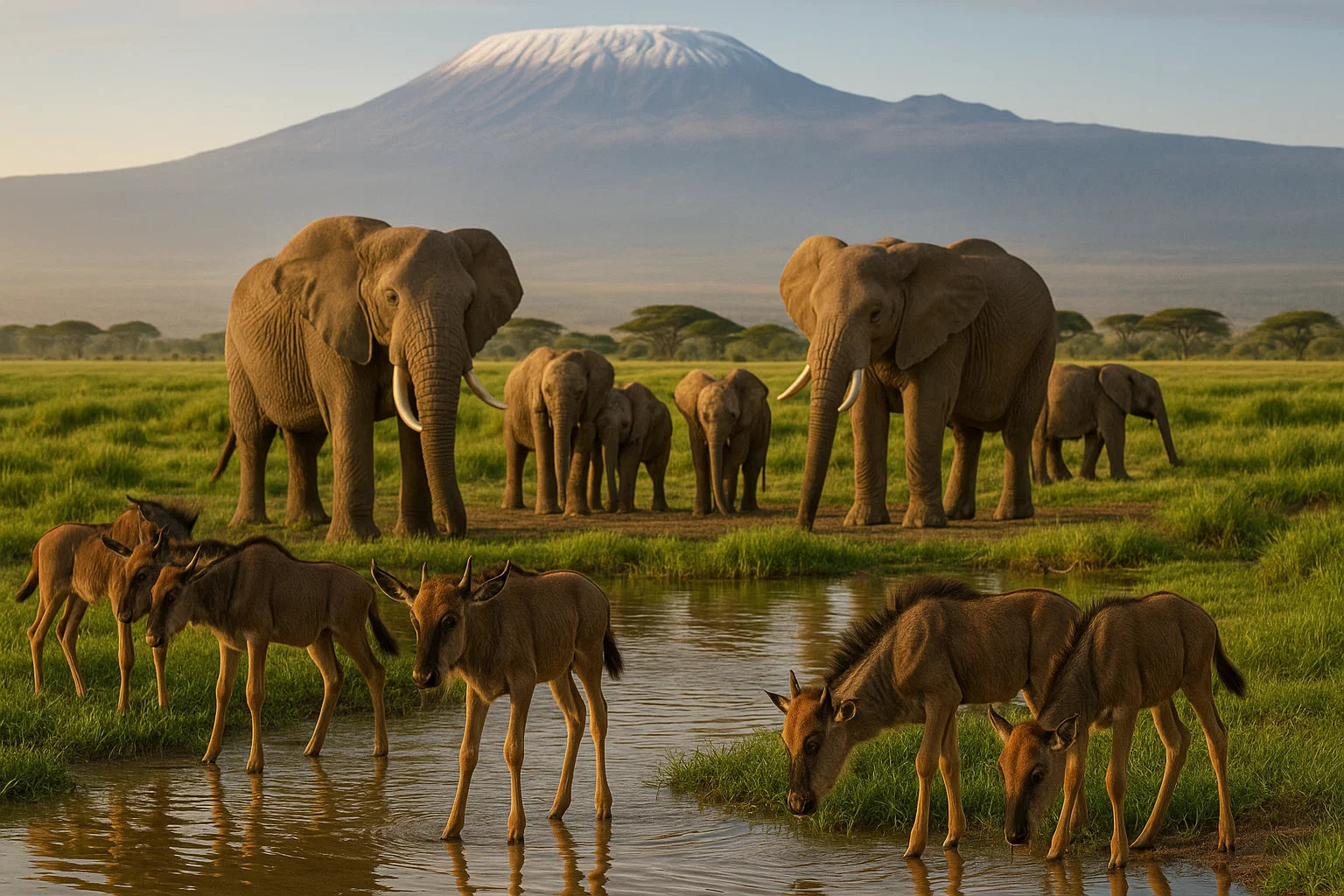
Amboseli combines memorable wildlife with a landscape that children can understand visually. Open plains, wetlands and scattered woodland make animals easier to notice than in heavily forested environments.
Elephants are the principal attraction. Watching a calf follow its mother, juveniles play or a family move in formation can introduce children to animal behavior without requiring hours of difficult tracking.
Wildlife Is Often Visible Across Open Country
Children can search for elephants, giraffes, zebras, wildebeests, buffaloes, gazelles, hippos and birds while remaining safely inside the vehicle. Lions and cheetahs occur in the ecosystem but are less predictable.
Wildlife should never be promised. Turning the drive into a discovery activity rather than a checklist helps children remain interested even when a particular animal does not appear.
The Park Offers More Than Large Mammals
Amboseli supports more than 400 recorded bird species. Children may enjoy spotting ostriches, crowned cranes, pelicans, fish eagles and brightly colored starlings.
Families with a strong nature interest can include a slower birdwatching experience rather than making every outing about the largest animals.
Mount Kilimanjaro Adds a Sense of Adventure
When conditions are clear, Mount Kilimanjaro rises beyond the plains and gives children an immediate sense of scale. Families should understand that the mountain is located in Tanzania and that cloud can hide it during any season.
Early morning commonly provides the best opportunity for a clear view, but no operator should guarantee that the summit will appear.
Is Amboseli Suitable for Every Age Group?
There is no universal minimum age for an ordinary game drive, but lodges, camps and specialist activities may apply their own restrictions. Parents should confirm each property’s policy before paying a deposit.
| Age group | Planning considerations | Helpful approach |
|---|---|---|
| Infants and toddlers | Heat, disrupted sleep, long drives, feeding and limited medical access | Private vehicle, short outings and accommodation with strong family support |
| Ages 4–7 | Short attention span and difficulty remaining quiet for extended periods | Two- or three-hour drives, wildlife games and regular breaks |
| Ages 8–12 | Generally ready for longer drives but still benefit from variety | Mix game drives with birds, culture, Observation Hill and lodge time |
| Teenagers | May want independence, photography or deeper conservation information | Offer creative responsibility and involve them in daily choices |
| Multigenerational groups | Different mobility, rest and dining requirements | Flexible itinerary, private vehicle and accessible rooms |
Are Babies and Toddlers Ready for an Amboseli Safari?
Traveling with a baby or toddler is possible, but it requires much more preparation than traveling with school-age children.
Parents must consider heat, dust, insects, car-seat arrangements, food storage, nap schedules and the distance to advanced medical care. A long road transfer followed by an extended game drive may be unrealistic for a very young child.
Some camps do not accept young children, while others cannot provide cots, bottle-warming facilities or babysitting. Confirm every requirement in writing before booking.
A private vehicle is strongly recommended. It allows the family to return to the lodge when a child becomes tired without affecting other guests.
Why Is a Private Safari Vehicle Better for Families?
A private vehicle gives parents control over departure times, drive duration, toilet breaks and the amount of time spent at each sighting.
Children do not need to compete with unrelated guests for window access, and the guide can adjust explanations to their age and interests.
Flexible mornings: Families can depart after breakfast if a pre-dawn start would leave young children exhausted.
Shorter drives: The outing can end when concentration disappears rather than following a fixed group schedule.
Personalized interpretation: Guides can use stories, tracks and identification games to make wildlife understandable.
Better seating: Every family member can have appropriate viewing space.
Control over noise and pace: Parents can manage excitement without disturbing other passengers.
A shared vehicle may cost less, but parents should confirm the number of passengers, seating arrangement, drive schedule and whether young children are accepted.
How Long Should Family Game Drives Last?
Young children generally enjoy shorter, productive outings more than full days in a vehicle. Two to three hours may be enough for ages four to seven, while older children and teenagers may enjoy longer drives.
Morning and late afternoon provide cooler conditions and potentially active wildlife. Returning to the lodge around midday allows time for lunch, swimming, rest or quiet activities.
A full-day game drive can work for teenagers and wildlife-focused families but may be demanding for younger children. Discuss toilet arrangements, picnic stops and expected driving time before departure.
Which Activities Can Families Enjoy Besides Game Drives?
Observation Hill
Observation Hill provides an elevated view over the wetlands and surrounding plains. The short climb gives children a chance to leave the vehicle in an authorized location and understand how water supports the ecosystem.
Parents should supervise children closely and carry drinking water and sun protection.
Birdwatching
Birding can turn quiet periods between mammal sightings into an engaging activity. Children can search for colors, bill shapes, flight patterns and calls rather than memorizing every species name.
Responsible Maasai Cultural Visits
Community-led cultural experiences can introduce families to Maasai heritage, contemporary life, livestock traditions, beadwork and conservation.
Visits should be arranged in advance, respect community schedules and follow clear photography-consent guidelines. Children should understand that a community is someone’s home rather than a theme park.
Guided Nature Activities
Selected lodges and surrounding conservancies may provide child-appropriate nature walks, tracking demonstrations or junior ranger activities. These are not automatically available at every property.
Minimum ages and safety rules vary. Walking activities should only take place in authorized areas with qualified guides.
Lodge Activities and Swimming
A swimming pool can be valuable during the warm middle of the day, but parents must supervise children because lifeguards may not be present.
Some properties offer activity books, storytelling, cooking, crafts or children’s nature programs. Confirm whether these are included, seasonal or available only by advance request.
How Do You Choose a Family-Friendly Amboseli Lodge?
A property described as “family-friendly” may simply mean that children are accepted. Parents should investigate the practical facilities rather than relying on the label.
Room configuration: Confirm whether family rooms are interconnected, under one roof or separated by an outdoor walkway.
Child policy: Ask about minimum ages, child rates, meal charges and permitted activities.
Fencing: Establish whether wildlife can move through the property and whether children require an escort after dark.
Dining: Confirm flexible meal times, familiar food options and support for allergies or dietary requirements.
Swimming pool: Ask whether the pool is fenced, heated or supervised.
Babysitting: Confirm availability, staff qualifications, notice requirements and additional charges.
Medical response: Ask about first aid, communication, evacuation procedures and the nearest appropriate medical facility.
Park access: A conveniently located property reduces the time children spend driving between the room and wildlife-viewing areas.
Is Amboseli Safe for Children?
Amboseli can be visited safely by families using reputable operators and following park and lodge rules. However, it is a wildlife destination rather than a controlled zoo environment.
Animals can enter unfenced accommodation areas. Children must not wander alone, approach wildlife or leave the vehicle except where a guide confirms that it is permitted.
Essential Family Safety Rules
Remain inside the vehicle: Never allow children to stand outside, sit on the roof or leave the vehicle without authorization.
Keep noise controlled: Sudden shouting can disturb animals and interfere with other visitors.
Supervise children at the lodge: Wildlife, open water and unfenced areas create risks.
Follow night-escort rules: Use lodge escorts whenever requested after dark.
Do not feed animals: Feeding changes natural behavior and can create dangerous interactions.
Listen to the guide: The guide’s safety instructions override the desire to take a photograph or move closer.
No safari operator can eliminate every travel risk. Parents should review current government travel advice, understand the itinerary and purchase suitable insurance.
What Health Preparations Do Families Need?
Parents should consult a qualified travel-health professional well before departure. Recommendations depend on the family’s medical history, children’s ages, travel route, season and countries visited before entering Kenya.
Official travel-health guidance identifies mosquito-borne diseases, including malaria, among the risks travelers should assess for Kenya. Families may need advice on preventive medication, repellents, suitable clothing and mosquito nets.
Routine vaccinations should be current, and any destination-specific vaccines or entry certificates should be discussed with a medical professional.
Pack an adequate supply of prescribed medication in original packaging. Carry oral rehydration supplies, basic first-aid items, sunscreen and child-appropriate insect repellent according to professional advice.
Travel insurance should include treatment and emergency medical evacuation. Nairobi’s advanced facilities should not be described as immediately accessible from the park, so an evacuation plan is important.
Current health requirements and recommendations can change. Families should check official guidance close to departure rather than relying solely on a safari article.
What Travel Documents Do Children Need for Kenya?
Under Kenya’s current Electronic Travel Authorisation system, visitors—including infants and children—generally require an approved eTA before beginning their journey unless they qualify for an exemption.
Parents should consult the official Kenyan eTA website for current requirements. Applications normally require a valid passport, photograph, itinerary and accommodation information.
A parent applying for a child may also need to provide parental consent. Families with one parent traveling alone, different surnames or complex custody arrangements should verify whether additional documents are required by immigration authorities and airlines.
Requirements may change, so applications should be based on current official instructions rather than old visa information.
Should Families Drive or Fly from Nairobi?
Traveling by Road
A road safari allows families to observe the countryside and can be economical for several travelers. However, the journey occupies much of the day and can become longer because of traffic, road conditions and stops.
Families should use a comfortable vehicle with working seat belts, sufficient drinking water and planned breaks. Parents requiring child restraints should discuss availability before arrival rather than assuming a safari vehicle carries the correct seat.
Flying to Amboseli
Scheduled flights greatly reduce travel time and can suit families with very young children or a limited itinerary. The total journey still includes airport procedures and an airstrip transfer.
Small aircraft may apply strict baggage limits. Families carrying strollers, child equipment or substantial luggage must confirm the allowance before travel.
How Many Days Should a Family Spend in Amboseli?
Three days and two nights suit many families. This allows several wildlife drives without keeping children on safari for too long.
| Safari length | Family experience |
|---|---|
| 2 days and 1 night | Possible but rushed when traveling by road |
| 3 days and 2 nights | Balanced introduction with wildlife drives and rest |
| 4 days and 3 nights | Better for young children, photographers and multigenerational groups |
| 5 days or longer | Suitable when adding conservancy activities or slow travel |
When Is the Best Time for a Family Safari?
The generally drier periods from June to October and January to February offer accessible roads, shorter vegetation and potentially concentrated wildlife around dependable water.
These periods can be busy and prices may be higher, particularly around international school holidays.
The greener months bring active birdlife, fresh landscapes and potentially fewer vehicles. Rain can make some roads muddy, so families should keep the itinerary flexible.
The best time may ultimately be determined by school schedules, children’s tolerance for heat and rain, budget and the family’s wider East African route.
Can Amboseli Be Combined with Another Family Destination?
Amboseli can be combined with the Masai Mara National Reserve for a more varied Kenyan safari. The Mara adds different scenery and strong predator-viewing opportunities.
Families with older children may also explore the seasonal story of the Great Wildlife Migration, although river crossings and herd locations cannot be guaranteed.
A longer regional journey can include Uganda safaris or Rwanda safaris. Families should note that activities such as gorilla trekking and chimpanzee tracking have minimum-age rules that must be checked before building the itinerary around children.
Why Plan a Family Safari with Ngeye Uganda Tours?
A family safari should not be an adult itinerary with children simply added to the booking. Drive lengths, meals, rooms, activities, health preparation and rest must reflect each traveler’s age and needs.
Ngeye Uganda Tours creates customized Kenya wildlife safaris for families, private groups and multigenerational travelers.
Our planning considers room configuration, vehicle occupancy, child policies, activity restrictions, transport, dietary needs and suitable game-drive schedules. We can also design regional journeys connecting Kenya with Uganda or Rwanda.
The objective is not to fill every hour. It is to create a safe, comfortable rhythm in which children remain curious, parents can relax and the whole family experiences the landscape together.
Plan a Safari Your Whole Family Can Enjoy
Tell us your children’s ages, preferred travel dates and interests, and we will design an age-appropriate Amboseli adventure.
Frequently Asked Questions About Amboseli Family Safaris
Is Amboseli suitable for children?
Yes. Its elephants, visible wildlife and open scenery can be rewarding for children. The schedule, lodge and vehicle should be selected according to their ages.
Is there a minimum age for an Amboseli safari?
There is no single minimum age for an ordinary game drive, but individual lodges and specialist activities may apply age restrictions.
How many days should a family spend in Amboseli?
Three days and two nights suit many families. Four days and three nights create a slower, more flexible experience.
Are family rooms available near Amboseli?
Yes, selected lodges and camps offer family rooms, suites or interconnected accommodation. Configurations and child policies vary and should be confirmed.
Can children join nature walks?
Possibly, depending on their ages and the operator’s rules. Walks must take place in authorized areas with qualified guides.
Do children need a Kenyan eTA?
Current official guidance states that visitors, including infants and children, generally need an approved eTA unless exempt. Requirements should be checked on the official website.
Is malaria prevention needed for Amboseli?
Families should consult a travel-health professional because advice depends on age, medical history, route and current official recommendations.