What Makes Hell’s Gate National Park Unique?
What makes Hell’s Gate National Park unique? Its remarkable combination of dramatic volcanic landscapes, geothermal activity, wildlife, birdlife and opportunities to explore designated routes on foot or by bicycle distinguishes it from many traditional safari destinations in Kenya. Instead of experiencing every attraction through the window of a safari vehicle, visitors can engage more closely with the landscape while following current park regulations and ranger instructions.
Located near Lake Naivasha on the floor of Kenya’s Great Rift Valley, Hell’s Gate National Park covers a relatively compact area filled with imposing cliffs, volcanic towers, grasslands, geothermal steam and panoramic viewpoints. Its accessibility from Nairobi and proximity to Lake Naivasha make it an excellent addition to both short getaways and longer Kenya national park safaris.
The park is particularly appealing to active travelers, photographers, birdwatchers, families and visitors who want a different kind of African safari. While it is not a high-density Big Five destination, its landscapes and outdoor activities create an experience that cannot easily be replicated in larger wildlife reserves.
Travelers can include Hell’s Gate in a professionally organized itinerary such as the 5-Day Kenya Wildlife Budget Safari or combine it with Lake Naivasha, Lake Nakuru and the Maasai Mara through the 5-Day Kenya Wildlife Safari.
Quick answer: Hell’s Gate is unique because it combines walking and cycling opportunities with volcanic geology, geothermal features, scenic cliffs, wildlife, birdwatching and easy access to Lake Naivasha. All activities depend on current weather, wildlife movements and Kenya Wildlife Service regulations.
Why Is Hell’s Gate Different from Other Kenyan National Parks?
Many Kenyan safari destinations are best explored in a vehicle because they support large predators and cover extensive wilderness areas. Hell’s Gate offers a different experience. Its network of designated roads and nature trails allows visitors to explore selected areas on foot, by bicycle or in a safari vehicle.
This freedom creates a stronger connection with the surroundings. Cyclists can feel the changing gradient of the Rift Valley floor, walkers can examine volcanic rocks and animal tracks, and photographers can stop to compose landscape images without always remaining inside a vehicle.
That does not mean the park is free from risk. Buffaloes and other wild animals occur within Hell’s Gate, while weather and trail conditions can change quickly. Visitors must maintain responsible distances, avoid blocking animals and follow instructions issued by park staff.
The park’s compact size is another advantage. A full day can include several different experiences without long transfers between them. Travelers can explore Hell’s Gate during the day and spend the night near Lake Naivasha, creating a balanced combination of activity and relaxation.
What Geological Features Make Hell’s Gate Unique?
Hell’s Gate lies within the geologically active Great Rift Valley, where volcanic forces and tectonic movement have shaped an extraordinary landscape. Towering rock formations, cliffs, volcanic remnants, obsidian deposits and geothermal activity reveal the natural processes that have influenced the region over thousands of years.
Fischer’s Tower
Fischer’s Tower is one of the park’s most recognizable landmarks. Rising approximately 25 metres above the surrounding landscape, the rugged volcanic formation is a popular photography subject and is associated with Maasai oral tradition.
Rock climbing may be available at authorized locations, but visitors should never climb independently without confirming current permission. A qualified provider, suitable equipment and appropriate safety procedures are essential.
Central Tower and the Rift Valley Cliffs
Central Tower and the surrounding cliffs create a dramatic sense of scale. These formations are part of the visual identity of Hell’s Gate and provide important habitats for birds and other wildlife.
The cliffs also create excellent photographic opportunities throughout the day. Early morning light can bring out the texture of the rock, while changing afternoon conditions may produce dramatic contrasts across the valley.
Geothermal Landscapes
Steam rising from the landscape provides visible evidence of the powerful geothermal forces below the surface. The wider Olkaria area is important to Kenya’s geothermal-energy industry, giving visitors an unusual opportunity to see how natural geological resources contribute to electricity generation.
Steam vents, hot water and restricted geothermal zones must always be treated carefully. Visitors should remain on approved routes and avoid touching or entering unfamiliar pools, vents or areas closed by park authorities.
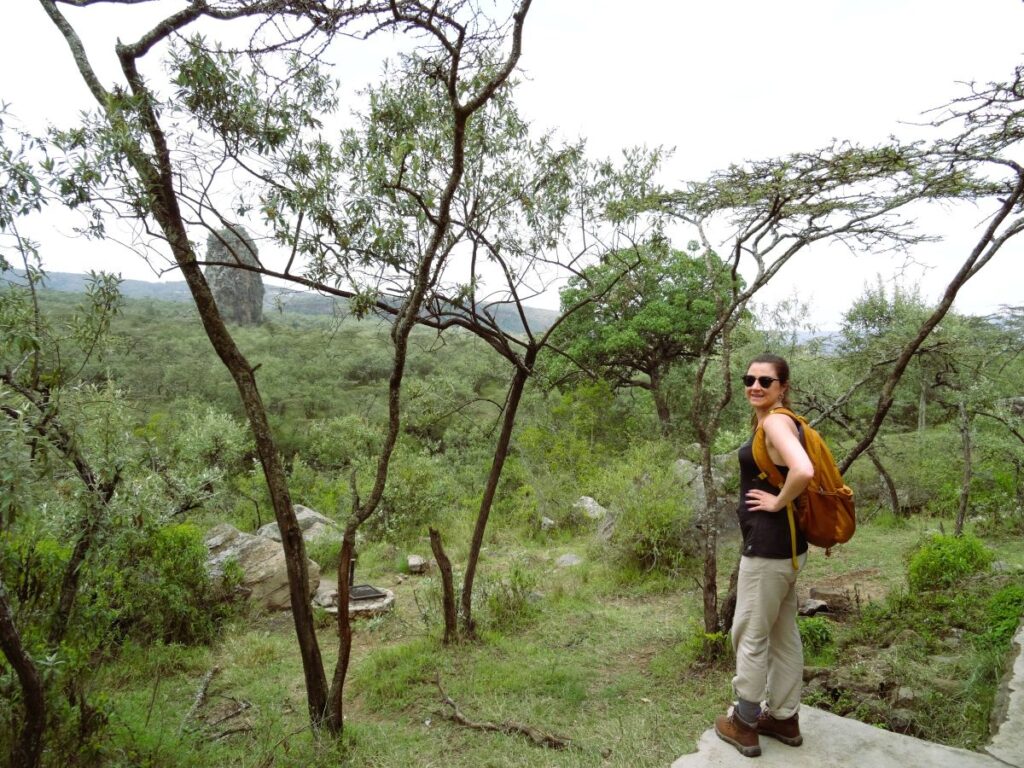
Why Can Visitors Walk and Cycle in Hell’s Gate?
Walking and cycling on designated routes are among the experiences that make Hell’s Gate unusual. The Kenya Wildlife Service permits these activities, and bicycles may be available for hire near the park entrance. A guide or security escort can also be requested for selected experiences.
Cycling allows visitors to explore at a personal pace while enjoying views of the cliffs, grasslands and wildlife. Depending on the route and physical ability, a cycling experience can take several hours. Visitors should use a well-maintained bicycle, wear suitable protective equipment and carry enough water.
Walking creates a slower experience that draws attention to animal tracks, plants, rocks, insects and birds that might be overlooked from a vehicle. Travelers can learn more through our guide explaining whether walking safaris are allowed in Hell’s Gate.
Neither cycling nor walking should be described as automatically safe. Buffaloes are potentially dangerous, weather can change, and routes may be restricted because of wildlife or environmental conditions. Visitors must confirm accessible areas at the gate and follow all ranger instructions.
| Experience | What Makes It Special | Important Consideration |
|---|---|---|
| Cycling | Active exploration through open Rift Valley landscapes | Use approved routes and maintain a safe wildlife distance |
| Guided walking | Closer observation of geology, plants, tracks and birds | Confirm route availability with park authorities |
| Scenic game drive | Comfortable access to viewpoints and wildlife habitats | Wildlife sightings are natural and never guaranteed |
| Birdwatching | Opportunities to observe raptors and grassland birds | Binoculars and an experienced guide improve the experience |
What Wildlife Can Be Seen in Hell’s Gate?
Hell’s Gate supports a range of animals adapted to its grasslands, rocky slopes and volcanic terrain. Species that may be encountered include zebras, giraffes, elands, hartebeests, Thomson’s gazelles, klipspringers, warthogs, baboons and buffaloes.
Secretive predators, including serval, hyena and leopard, have been recorded in the wider ecosystem, but they are rarely observed and should never be promised as expected sightings. Hell’s Gate is better appreciated for its scenery, active exploration and herbivore viewing than for major predator encounters.
The open terrain can provide excellent opportunities to photograph grazing animals against volcanic cliffs. However, wildlife remains free to move, and the number and location of animals vary with weather, vegetation, water availability and the time of day.
Travelers looking for a more traditional wildlife safari can combine Hell’s Gate with destinations such as Lake Nakuru and the Maasai Mara. The 5-Day Lake Nakuru and Maasai Mara Safari offers a useful extension for visitors seeking a broader range of habitats and animals.
What Makes Hell’s Gate Special for Birdwatching?
Hell’s Gate has recorded more than 100 bird species, making it a rewarding destination for birdwatchers who appreciate cliff, grassland and open-country habitats. Raptors are particularly associated with the park because its cliffs, rocky formations and thermal air currents create suitable conditions for soaring and nesting.
Depending on the season and conditions, visitors may observe eagles, vultures, buzzards and smaller grassland birds. Every sighting remains subject to natural bird movements, so responsible safari content should avoid promising particular species.
The park’s compact area makes it possible to combine birdwatching with cycling, walking and landscape photography during the same visit. Dedicated birdwatchers may prefer an early start, when bird activity and calls can be easier to detect.
Travelers planning a specialist journey can discover additional destinations in our Kenya Birding Safaris guide. A knowledgeable guide can help identify birds by their calls, flight patterns, habitat and physical characteristics.
Is Ol Njorowa Gorge Part of the Hell’s Gate Experience?
Ol Njorowa Gorge has historically been closely associated with Hell’s Gate National Park. Its narrow rock walls and water-carved passages helped establish the park’s reputation as an adventurous hiking destination.
However, access to the gorge must never be assumed. Serious flash-flood incidents have led to restrictions, and official access conditions can change. Travelers must obtain current information directly from the Kenya Wildlife Service when entering the park.
Important safety information: Never enter Ol Njorowa Gorge or another restricted canyon without official authorization. Flash flooding can occur even when rain is not falling at the visitor’s exact location. Previous itineraries, online photographs and advice from unauthorized individuals cannot override an official closure.
If the gorge is unavailable, Hell’s Gate still offers nature trails, viewpoints, cycling routes, picnic locations, rock formations, birdwatching and scenic drives. The park’s uniqueness does not depend on accessing a single attraction.
How Does Geothermal Energy Add to the Park’s Character?
Hell’s Gate presents an unusual meeting point between conservation, geology and renewable-energy production. The Olkaria geothermal installations demonstrate how underground heat within the Rift Valley is harnessed to generate electricity.
Seeing geothermal steam rising from the landscape gives visitors a more complete understanding of the powerful natural processes beneath the region. It also provides an educational dimension that makes the park particularly interesting to students, families and travelers interested in earth science.
Because the park contains active infrastructure and potentially hazardous geothermal features, visitors should respect all barriers, signs and restricted areas. Guided interpretation can help explain the landscape without encouraging unsafe access.
Can Hell’s Gate Be Combined with Lake Naivasha?
Proximity to Lake Naivasha is one of Hell’s Gate’s greatest advantages. Visitors can enjoy an active day of cycling, walking or sightseeing in the park and then relax beside the lake. A boat excursion may offer views of waterbirds and hippos when conducted responsibly by an established operator.
A one-night stay in the Naivasha area is suitable for travelers with limited time, while two nights provide a more relaxed schedule for birdwatching, photography and additional nature activities.
Boat operators should provide properly fitted life jackets and maintain a responsible distance from hippos. Hippos are powerful wild animals and must never be approached for photographs.
Visitors interested in including the wider Great Rift Valley in their journey can consider the 13-Day Kenya Diverse Ecosystems Safari or the 14-Day Kenya Premium Safari.
When Is the Best Time to Visit Hell’s Gate?
Hell’s Gate National Park can be visited throughout the year, but weather affects cycling, walking, photography and road conditions. Drier periods often offer firmer surfaces and more convenient conditions for outdoor activities. Early morning is generally comfortable because temperatures are cooler and wildlife may be more active.
Rainy periods bring greener scenery and may increase bird activity, but trails can become muddy or slippery. Rain falling elsewhere in a catchment can also contribute to flash-flood risk in narrow channels.
Visitors should check the day’s weather, activity availability and route restrictions before entering the park. A flexible itinerary makes it easier to adjust safely when conditions change.
How Long Should I Spend at Hell’s Gate?
Most travelers should allow six to eight hours for Hell’s Gate. This provides enough time for a selected cycle or walk, scenery, wildlife observation, photography and rest stops without rushing.
A shorter visit of three to four hours can cover a scenic drive and selected viewpoints. However, visitors combining several activities should dedicate a full day. One or two nights near Lake Naivasha allow the park to be combined with a lake excursion and additional birdwatching.
The ideal duration depends on fitness, interests, weather and the wider safari route. Travelers can review our detailed guide to how long to stay in Hell’s Gate after that article has been published and its URL confirmed. Until then, this proposed internal link should remain unpublished or be removed.
What Should I Carry for a Hell’s Gate Adventure?
Comfortable closed footwear, breathable clothing, a hat and sun protection are essential for active exploration. Visitors should carry sufficient drinking water, energy snacks, insect repellent, personal medication and a lightweight waterproof layer.
Binoculars improve birdwatching, while a camera with a suitable zoom lens helps capture wildlife without approaching too closely. Cyclists should confirm that their bicycle is in good condition before departing and use appropriate protective equipment.
A small first-aid kit can be useful, but it does not replace professional assistance. Travelers should understand emergency procedures and remain within authorized areas throughout the visit.
Why Choose Ngeye Uganda Tours for Hell’s Gate National Park?
Ngeye Uganda Tours creates personalized East African itineraries that combine adventure, wildlife, culture and relaxation. Our safari planners help travelers include Hell’s Gate within a realistic route based on available time, activity preferences, fitness and budget.
We coordinate transportation, suitable accommodation and professionally guided experiences while allowing sufficient time for the park and nearby Lake Naivasha. We also help travelers understand what Hell’s Gate offers compared with high-density wildlife destinations, creating clear expectations before the journey begins.
Our broader selection of East African safari packages can connect Hell’s Gate with Lake Nakuru, the Maasai Mara, Amboseli and other remarkable destinations. Travelers can also learn more about Ngeye Uganda Tours and our approach to personalized safari planning.
Experience the Unique Landscapes of Hell’s Gate
Let our safari specialists create a customized Hell’s Gate and Lake Naivasha itinerary that matches your travel dates, interests and preferred comfort level.
Frequently Asked Questions About Hell’s Gate National Park
What makes Hell’s Gate National Park unique?
Hell’s Gate is distinguished by its volcanic landscape, geothermal features, cliffs, wildlife and opportunities to explore approved routes on foot or by bicycle. Its location near Lake Naivasha makes it easy to combine adventure with relaxation.
Can visitors walk inside Hell’s Gate National Park?
Walking is permitted on designated routes, subject to current park regulations, weather and wildlife conditions. Visitors should confirm accessible areas with park staff and consider using a qualified guide.
Can visitors cycle inside Hell’s Gate?
Yes. Cycling is allowed on designated routes, and bicycles may be available near the entrance. Cyclists must follow park instructions and keep a safe distance from wildlife.
Is Hell’s Gate a Big Five safari destination?
No. Hell’s Gate is not primarily a Big Five destination. It is better known for dramatic scenery, geology, cycling, walking, birdwatching and sightings of herbivores such as zebras, giraffes, gazelles and elands.
Is Ol Njorowa Gorge open?
Access should not be assumed. Visitors must confirm the gorge’s official status with the Kenya Wildlife Service on the day of their visit and must not enter any restricted route.
How much time is needed for Hell’s Gate?
Approximately six to eight hours is suitable for most visitors. Spending one or two nights near Lake Naivasha allows for a more relaxed combined experience.
Can Hell’s Gate and Lake Naivasha be visited together?
Yes. Their proximity makes them an excellent combination. Travelers can explore Hell’s Gate during the day and enjoy a responsibly operated Lake Naivasha boat excursion or birdwatching activity during the same short stay.