What Makes Nairobi Unique for Safaris?
What makes Nairobi unique for safaris? Nairobi offers something few major cities can match: access to a genuine protected wildlife ecosystem within a short drive of international airports, hotels, museums and business districts. Visitors can watch lions, endangered rhinos, giraffes and zebras in the morning before returning to the city for lunch, a museum visit or an onward flight.
Nairobi National Park creates the city’s defining safari experience. Established in 1946 as Kenya’s first national park, it protects approximately 117 square kilometres of grassland, acacia woodland, wetlands and seasonal waterways beside the capital. On clear days, visitors may photograph wild animals with Nairobi’s skyline in the distance, creating one of East Africa’s most recognizable wildlife scenes.
The city’s value extends beyond one park. Nairobi is Kenya’s principal international gateway and a major regional transport hub. Travelers can connect with the Maasai Mara, Amboseli, Lake Nakuru, Samburu, Tsavo and destinations across Uganda, Rwanda and Tanzania. Museums, conservation centres, restaurants, markets and cultural attractions can also be combined with game drives.
This unusual mixture of wildlife, connectivity, culture and convenience makes Nairobi suitable for first-time safari travelers, families, business visitors, photographers, birdwatchers and passengers with carefully planned stopovers. Ngeye Uganda Tours can include Nairobi as a short introduction or a meaningful stage within a longer East African journey.
Nairobi’s Safari Advantages at a Glance
| Distinctive Feature | Why It Matters |
|---|---|
| Wildlife beside a capital city | Travelers can enjoy an authentic game drive without first undertaking a long overland transfer. |
| Rhino conservation | Both black and white rhinos may be observed in the national park. |
| Short-safari flexibility | Half-day and full-day excursions can fit around flights, meetings or city stays. |
| Bird diversity | More than 400 resident and migratory species have been recorded in the park environment. |
| Regional connectivity | Road and air connections link Nairobi with Kenya’s major parks and wider East Africa. |
| Culture and history | Museums, galleries, cuisine, markets and cultural attractions deepen the safari experience. |
| Accommodation choice | Visitors can select from airport hotels, city properties, boutique stays and accommodation near the park. |
Nairobi National Park: A Genuine Safari Beside the City
Nairobi National Park is the most important answer to the question, “What makes Nairobi unique for safaris?” The protected area lies on the city’s southern edge, allowing visitors to move from an urban environment into open wildlife habitat within a relatively short time.
The park is not a zoo or enclosed visitor attraction. It supports natural predator-prey relationships, seasonal wildlife movements and varied habitats. Animal sightings depend on weather, vegetation, water availability and wildlife behavior.
Open plains support zebras, hartebeests, elands and hunting predators. Acacia woodland provides food for giraffes and other browsers. Wetlands and dams attract waterbirds and animals seeking water, while riverine vegetation provides cover for more secretive species.
The contrast between grassland and distant buildings is visually striking, but the city backdrop should never overshadow the park’s ecological importance. It protects vital habitat while demonstrating the opportunities and challenges involved in conserving wildlife beside a rapidly growing urban centre.
What Wildlife Can You See on a Nairobi Safari?
Nairobi National Park supports a surprisingly varied wildlife community for its size. Possible sightings include lions, black and white rhinos, African buffaloes, Masai giraffes, plains zebras, elands, hartebeests, impalas, gazelles, waterbucks and warthogs.
Lions and Other Predators
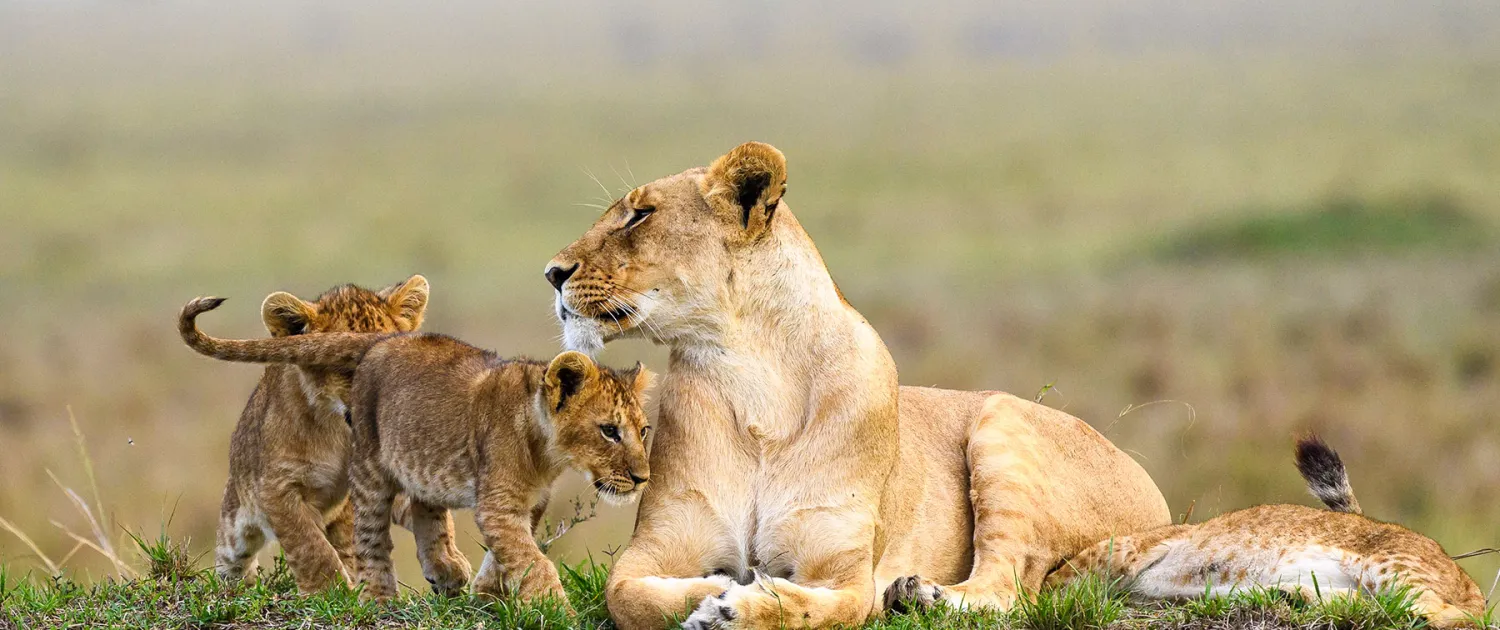
Lions may be observed resting in the grasslands, patrolling their territories or watching herds. Early morning can be rewarding because predators may still be active following the night.
Spotted hyenas and black-backed jackals also occur. Leopards, cheetahs and servals inhabit the wider ecosystem but are more elusive. They should be regarded as special sightings rather than expected features of every excursion.
Black and White Rhinos
The park is especially important for rhinoceros conservation. Both black and white rhinos may be encountered, although their feeding behavior and preferred habitats differ.
Black rhinos are browsers that feed on shrubs, leaves and shoots. White rhinos are predominantly grazers and may be associated with more open habitat. Despite their names, both species are grey.
No rhino encounter is guaranteed, but Nairobi National Park provides a meaningful opportunity to learn about threatened species and the importance of protected habitat.
Giraffes, Zebras and Antelopes
Masai giraffes browsing beneath acacia trees and plains zebras grazing with antelopes create classic safari scenes. Elands, hartebeests, impalas, gazelles and waterbucks contribute to the park’s herbivore diversity.
These animals support the wider ecosystem through grazing, browsing, seed dispersal and their relationships with predators.
Are There Elephants in Nairobi National Park?
Wild elephants are not normally resident in Nairobi National Park. Consequently, the park is generally regarded as a Big Four rather than a complete Big Five destination. Lions, leopards, buffaloes and rhinos occur, while elephants should be sought in destinations such as Amboseli, Tsavo, Samburu or the Maasai Mara.
Important distinction: The Sheldrick Wildlife Trust’s Nairobi nursery cares for orphaned young elephants nearby, but it is a separate conservation facility. Its presence does not mean that wild elephants normally live in Nairobi National Park.
Why Is Nairobi Important for Rhino Safaris?
Rhinos are among Nairobi National Park’s most important conservation attractions. Observing these animals within sight of a modern city illustrates both Kenya’s conservation achievements and the pressures facing wildlife habitats.
A professionally guided visit can explain the differences between black and white rhinos, their feeding ecology and the threats that have caused population decline. Visitors may also learn how monitoring, veterinary work, habitat management and anti-poaching programs support rhino protection.
Responsible viewing remains essential. Vehicles should maintain an appropriate distance, avoid surrounding animals and never block their direction of movement.
Can You Really See Wildlife Against Nairobi’s Skyline?
Yes, skyline wildlife photographs are possible from selected parts of the park. Giraffes, zebras, rhinos, buffaloes and even lions may sometimes be positioned with city buildings visible behind them.
However, these photographs depend on visibility, light, weather, vegetation, route and the location of the animals. A visitor should not expect every game drive to produce the perfect skyline image.
The scene carries a deeper message than its photographic appeal. It demonstrates how close wildlife habitat lies to urban development and why responsible land-use planning is vital to the park’s future.
Why Is Nairobi Suitable for a Half-Day Safari?
Many major African safari destinations require lengthy road transfers or domestic flights. Nairobi National Park allows visitors to experience a game drive within a limited schedule.
A typical half-day excursion may require approximately four to six hours, including transfers and entrance procedures. Actual duration depends on the hotel, selected gate, traffic and route inside the park.
Early morning is generally preferred because temperatures are cooler and wildlife may be more active. An afternoon drive is possible for travelers with morning commitments, although the return journey may coincide with city traffic.
A half-day safari cannot cover every habitat or guarantee all major animals. It remains an introduction rather than a replacement for a multi-day wilderness journey.
Can Nairobi National Park Be Visited During a Layover?
A layover safari may be possible when the connection is comfortably long. However, geographical proximity to Jomo Kenyatta International Airport does not remove the need to consider immigration, baggage, customs, traffic and airline check-in requirements.
The operator should know the flight numbers, terminals, arrival and departure times, traveler nationality and whether luggage must be collected. A generous buffer must remain for returning to the airport.
Travelers with short connections should remain at the airport. Missing an onward flight is not justified by attempting to force a safari into an unsuitable schedule.
Birdwatching Makes Nairobi More Than a Big-Game Destination
Nairobi National Park has recorded more than 400 resident and migratory bird species across its grasslands, wetlands, woodland and seasonal waterways. This diversity gives birdwatchers a rewarding experience close to the city.
Possible sightings include secretarybirds, ostriches, grey crowned cranes, martial eagles, augur buzzards, herons, egrets, kingfishers and numerous grassland birds.
Nairobi’s wider urban environment adds other birding habitats. Karura Forest and Nairobi Arboretum provide woodland settings that can complement the park’s open-country species.
Early morning generally offers increased activity and cooler conditions. Specialist birdwatchers may prefer a private excursion that allows slower movement and longer stops.
Nairobi Connects Wildlife with Conservation Education
The city offers several conservation-focused attractions that can deepen a visitor’s understanding of wildlife protection. These experiences are separate from Nairobi National Park and may require reservations and individual entrance fees.
Sheldrick Wildlife Trust Nairobi Nursery
The nursery cares for orphaned young elephants and other rescued animals as part of wider rehabilitation programs. Visitor access can be controlled, and advance reservations may be necessary.
The experience should be approached as conservation education rather than entertainment. Current arrangements must be confirmed before building an itinerary around a visit.
Giraffe Centre
The Giraffe Centre focuses on conservation education associated with the endangered Rothschild’s giraffe. Its raised platform allows controlled observation at giraffe height.
This differs from observing free-ranging Masai giraffes in Nairobi National Park. Combining both experiences can help visitors understand the difference between managed conservation education and wildlife viewing in a protected ecosystem.
Culture Makes Nairobi a More Complete Safari Gateway
Nairobi adds cultural and historical depth to a wildlife journey. Visitors can explore Nairobi National Museum, Karen Blixen Museum, Nairobi Gallery, Bomas of Kenya, craft workshops, food experiences and selected markets.
Nairobi National Museum introduces Kenya’s communities, history, human origins, art and natural heritage. Karen Blixen Museum explores literary history and colonial-era life, while Nairobi Gallery presents art and the history of a significant city building.
Bomas of Kenya introduces traditional architecture, music and dance through a curated cultural presentation. It should be understood as a cultural centre rather than a visit to one living rural community.
Food also tells Nairobi’s story. Kenyan regional traditions combine with Indian, Arab, European and other African influences across the city’s restaurants and markets.
Nairobi Is a Strategic Gateway to Kenya’s Safari Circuit
Nairobi provides road and air connections to many of Kenya’s leading wildlife regions. This makes it possible to begin with a short city safari and continue into a larger, more remote ecosystem.
Amboseli National Park
Amboseli is renowned for elephants and views of Mount Kilimanjaro when weather conditions are favorable. It provides an appropriate contrast with Nairobi National Park, where elephants are normally absent.
Lake Nakuru National Park
Lake Nakuru adds Rift Valley scenery, birdlife and further rhino-viewing opportunities. It can form part of an overland circuit connecting Nairobi with the Maasai Mara.
Samburu National Reserve
Samburu introduces travelers to northern Kenya’s dry landscapes and distinctive animals, including Grevy’s zebras, reticulated giraffes, gerenuks, Beisa oryx and Somali ostriches.
Tsavo East and Tsavo West
The Tsavo ecosystem offers extensive wilderness, red-dusted elephants, volcanic landscapes and diverse habitats. Its scale contrasts strongly with Nairobi National Park’s compact accessibility.
Maasai Mara National Reserve
The Maasai Mara is famous for open plains, predator encounters and the seasonal movement of wildebeests and zebras through the wider Mara–Serengeti ecosystem.
Explore these destinations through our verified Kenya national parks guide.
Nairobi as a Gateway to Uganda, Rwanda and Tanzania
Nairobi’s international and regional flight connections make it useful for multi-country East African journeys. Travelers can connect with Uganda for gorilla trekking, chimpanzee tracking and savannah safaris; Rwanda for gorillas and Akagera wildlife; or Tanzania for the Serengeti, Ngorongoro and other northern-circuit destinations.
A multi-country itinerary should be designed around available time rather than the desire to collect destinations. Border formalities, visas, flight schedules, luggage limits and health requirements must be considered carefully.
Flying between countries can save time, while overland travel may provide greater landscape and cultural context. The right choice depends on the route, budget and number of travel days.
When Is the Best Time for a Nairobi Safari?
Nairobi National Park can be visited throughout the year. Drier conditions commonly occur from June to October and from January to February. Vegetation may be shorter during these periods, making certain animals easier to locate.
Rainfall commonly increases between March and May and again around November and December. The landscape becomes greener, migratory birds may increase diversity and dramatic skies can enhance photography.
Heavy rain can affect some tracks, while taller vegetation may conceal wildlife. Nevertheless, the green season can provide beautiful scenery and fewer vehicles.
Weather patterns vary, and no season guarantees wildlife sightings or clear skyline views.
What Should You Pack for a Nairobi Safari?
Morning temperatures may be cool, so lightweight layers and a warm jacket are useful. Bring comfortable neutral-colored clothing, a hat, sunscreen, sunglasses and a reusable water bottle.
Binoculars improve wildlife and bird observation. Photographers should carry charged batteries, sufficient memory cards and a telephoto lens. A small cover can protect equipment from dust or unexpected rain.
Personal medication, insect repellent and a compact rain jacket should also be considered. Avoid taking disposable packaging into the park, and never feed wild animals.
Responsible Safari Practices in Nairobi
Visitors should remain inside their vehicles except at officially authorized locations. Animals must never be called, fed, chased, surrounded or pressured to move for photographs.
Drivers should maintain a respectful distance and avoid blocking an animal’s direction of travel. Noise should be kept low, particularly near resting predators and nervous herbivores.
Nairobi National Park faces pressure from urban development, roads, fencing and changes in surrounding land use. Protecting wildlife movement and habitat requires responsible planning beyond the park boundary.
Visitors can support conservation by following regulations, avoiding litter and choosing responsible operators.
Is Nairobi Suitable for First-Time Safari Travelers?
Nairobi is an excellent introduction for first-time visitors because it combines wildlife with the services of a major city. Travelers can adjust to the time zone, recover from an international flight and begin learning about African wildlife before traveling into more remote areas.
The park’s compact size also makes it suitable for families and visitors uncertain about spending an entire day on a game drive. A half-day excursion allows them to experience a safari vehicle and wildlife-viewing routine without a long commitment.
However, Nairobi National Park should not be viewed as a complete replacement for Kenya’s larger wilderness destinations. Its greatest strength lies in accessibility and contrast rather than scale.
Why Choose Ngeye Uganda Tours for a Nairobi Safari?
Ngeye Uganda Tours creates personalized safari itineraries across Kenya, Uganda, Rwanda and Tanzania. Nairobi National Park can be organized as a private half-day excursion, full-day experience, carefully assessed layover safari or introduction to a longer journey.
An experienced guide adds value by interpreting animal behavior, identifying birds, recognizing tracks and selecting routes according to current conditions. Careful planning also accounts for city traffic, entrance procedures, airport requirements and attraction reservations.
No responsible operator can guarantee specific animals, perfect weather or skyline photographs. Our approach focuses on honest expectations, suitable transportation and respectful wildlife viewing.
Browse our safari packages or contact Ngeye Uganda Tours to request a customized Nairobi and East Africa itinerary.
Frequently Asked Questions About Nairobi Safaris
What makes Nairobi unique for safaris?
Nairobi combines a genuine national park with the airports, hotels, museums and services of a major capital. Visitors can experience wildlife without first traveling to a remote reserve.
What animals can I see in Nairobi National Park?
Possible sightings include lions, black and white rhinos, buffaloes, giraffes, zebras, elands, hartebeests, impalas, warthogs, hyenas and numerous birds.
Are there elephants in Nairobi National Park?
Wild elephants are not normally resident. The park is generally regarded as a Big Four destination rather than a complete Big Five destination.
Can I do a half-day safari in Nairobi?
Yes. A half-day excursion generally requires approximately four to six hours, including transfers and entrance procedures.
Can I see the city skyline from Nairobi National Park?
The skyline is visible from selected areas under favorable conditions. The exact view depends on weather, visibility, route and animal location.
Is Nairobi National Park good for birdwatching?
Yes. More than 400 resident and migratory bird species have been recorded in the park environment.
Can I visit the park during an airport layover?
It may be possible during a sufficiently long connection. Immigration, baggage, traffic and airport check-in requirements must be carefully assessed.
What is the best time for a Nairobi safari?
The park is accessible year-round. Drier periods may offer shorter vegetation, while wetter months provide green scenery and rewarding birdwatching.
How far is Nairobi National Park from the city?
The park’s northern boundary lies approximately 7 kilometres south of Nairobi’s central business district, although actual driving time depends on traffic and the selected gate.
Are wildlife sightings guaranteed?
No. Nairobi National Park is a natural ecosystem, and sightings depend on wildlife movement, weather, vegetation and time of day.