What Makes Samburu Landscapes Different?
What makes Samburu landscapes different? The answer lies in their remarkable combination of semi-arid plains, rust-colored earth, rocky hills, dry river channels, acacia woodland, doum palms and the life-sustaining Ewaso Ng’iro River. Together, these features create one of the most distinctive safari environments in northern Kenya.
Unlike the broad green grasslands commonly associated with the Maasai Mara, Samburu National Reserve has a rugged and elemental character. The landscape appears shaped by intense sunlight, seasonal rainfall and the constant challenge of finding water. Yet this seemingly harsh environment supports elephants, lions, leopards, Grevy’s zebras, reticulated giraffes, gerenuks, Beisa oryxes and abundant birdlife.
Samburu’s beauty does not depend on endless greenery. Its appeal comes from contrast: a line of palm trees beside a dry plain, elephants crossing a sandy riverbank, dark storm clouds building over distant hills or a reticulated giraffe standing against a pale northern sky. These combinations give the destination a visual identity unlike Kenya’s better-known southern reserves.
This detailed guide from Ngeye Uganda Tours explains the natural forces, wildlife adaptations and cultural connections that make Samburu’s landscapes exceptional. Travelers can also explore our African safari packages and discover additional destinations through our Kenya national parks guide.
Quick answer: Samburu is different because it combines arid northern scenery, rocky ridges, open scrubland, distinctive palm-lined riverbanks and wildlife adapted to dry conditions. The Ewaso Ng’iro River adds an important ecological and visual contrast, although its flow and water level vary with rainfall, drought and upstream conditions.
Samburu’s Landscapes at a Glance
| Landscape feature | Visual character | Ecological importance |
|---|---|---|
| Semi-arid plains | Open, sunlit country with warm earth tones | Supports dry-country grazers, browsers and predators |
| Ewaso Ng’iro River | A winding river corridor edged by greener vegetation | Provides water and riverine habitat when conditions permit |
| Rocky hills and ridges | Rugged formations creating depth and dramatic horizons | Provides lookout points, shelter and varied habitat |
| Acacia and scrub woodland | Scattered trees and thorny vegetation across dry ground | Food and cover for giraffes, gerenuks, birds and predators |
| Doum palms | Distinctive branching palms beside riverine areas | Shade, food and structural diversity within the ecosystem |
| Seasonal luggas | Dry channels that may carry water after rainfall | Channels runoff and creates changing movement corridors |
A Northern Kenyan Landscape Shaped by Climate
Samburu’s semi-arid climate is one of the principal forces shaping its appearance. Rainfall is less dependable than in many greener safari regions, and extended dry conditions influence everything from vegetation density to wildlife movement.
Plants growing in this environment must tolerate heat, limited moisture and periods of drought. Thorny shrubs, acacias and drought-resistant grasses create an open landscape rather than dense forest. This openness often provides wide views across the reserve, although animals can still disappear remarkably well within scrub and riverine vegetation.
The ground changes color with light, moisture and soil type. Golden grasses, reddish tracks, pale sand and dark rocky formations create natural layers that are especially attractive during early morning and late afternoon.
The dry landscape should not be mistaken for an empty one. It supports a complex ecosystem in which wildlife has developed behavioral and physical adaptations to cope with unpredictable water and food availability.
The Ewaso Ng’iro River: Samburu’s Ecological Lifeline
The Ewaso Ng’iro River is one of the defining features of the Samburu landscape. Its course creates a greener corridor through the dry country, supporting riverine vegetation and providing water for wildlife when flow and pools are available.
Elephants, antelopes, giraffes and other animals may gather near the river, particularly during dry conditions. Predators may also use the vegetation along the riverbank as shade, cover or a place to search for prey.
Doum palms and riverine trees create a dramatic visual contrast with the surrounding plains. Their shapes are immediately recognizable in photographs and have become closely associated with the identity of northern Kenya.
However, the river is not a permanently predictable resource. Water levels can fluctuate because of rainfall, drought and upstream water use. During severe dry periods, sections may become shallow or fragmented into pools. Safari articles should therefore avoid promising a full, flowing river throughout the year.
The changing river demonstrates both the resilience and vulnerability of the Samburu ecosystem. Wildlife survival depends not only on what happens inside the reserve but also on environmental conditions across the wider river basin.
Rocky Outcrops, Hills and Distant Horizons
Samburu is not simply a flat plain. Rocky outcrops, low hills and ridges interrupt the landscape, adding depth to views and creating varied wildlife habitat.
Elevated areas can provide animals with visibility across their surroundings. Predators may use ridges or mounds to observe movement, while smaller animals use rocky spaces for shelter.
For photographers, these formations prevent backgrounds from appearing repetitive. A giraffe framed against a distant ridge produces a very different image from the same animal beside a palm-lined riverbank.
Beyond the reserve, northern Kenya’s wider landscape includes imposing mountains and escarpments. Their presence contributes to Samburu’s sense of remoteness and geological scale, even when they are not part of an ordinary game-drive route.
Acacia Trees, Scrubland and Doum Palms
Samburu’s vegetation reflects the demands of a dry environment. Acacias and other thorn-bearing plants protect their leaves from browsing animals, while deep roots help certain species reach moisture below the surface.
Reticulated giraffes feed high among the trees, while gerenuks can stand on their hind legs to reach leaves above the level used by many smaller antelopes. These different feeding strategies reduce direct competition.
Doum palms are among the most visually distinctive plants along the Ewaso Ng’iro. Unlike many palms with one unbranched trunk, doum palms can divide into multiple branches, creating recognizable silhouettes.
Vegetation becomes thicker around some watercourses and drainage areas. These greener sections provide shade and concealment, reminding visitors that Samburu’s apparently open landscape contains many smaller habitats.
How the Landscape Shapes the Samburu Special Five
The “Samburu Special Five” refers to five northern species strongly associated with the region: Grevy’s zebra, reticulated giraffe, gerenuk, Beisa oryx and Somali ostrich. Their presence is one of the clearest examples of how landscape and wildlife identity are connected.
| Species | Distinctive feature | Dry-country adaptation |
|---|---|---|
| Grevy’s zebra | Narrow stripes, large rounded ears and pale belly | Can travel considerable distances between grazing and water |
| Reticulated giraffe | Bold polygonal coat pattern divided by pale lines | Browses high vegetation unavailable to shorter herbivores |
| Gerenuk | Long neck, slender body and delicate head | May stand upright to reach higher shrubs and leaves |
| Beisa oryx | Long straight horns and strong facial markings | Physiological and behavioral adaptations help it manage heat |
| Somali ostrich | Blue-grey neck and legs in adult males | Powerful running ability suits open, dry terrain |
These animals are not guaranteed on every drive, but knowledgeable guides understand the habitats and feeding areas in which they may be found. Allowing several drives improves the opportunity to appreciate both the species and the landscapes that support them.
Elephants and the River Landscape
Elephants are an important part of the wider Samburu ecosystem. Family groups may move between riverine woodland, open plains and other feeding areas according to water and vegetation conditions.
The Ewaso Ng’iro and its riverbank habitats influence elephant movement, particularly during dry periods. Elephants may dig in sandy riverbeds to access subsurface water when conditions allow, sometimes creating water access later used by other species.
The interaction between elephants and vegetation also reshapes the landscape. By feeding on branches, pushing over trees and dispersing seeds, elephants influence habitat structure over time.
Visitors should remain at a respectful distance, particularly around calves. A professional guide can interpret ear position, posture and group movement, helping travelers understand when elephants are relaxed or uncomfortable.
Predators Within the Samburu Landscape
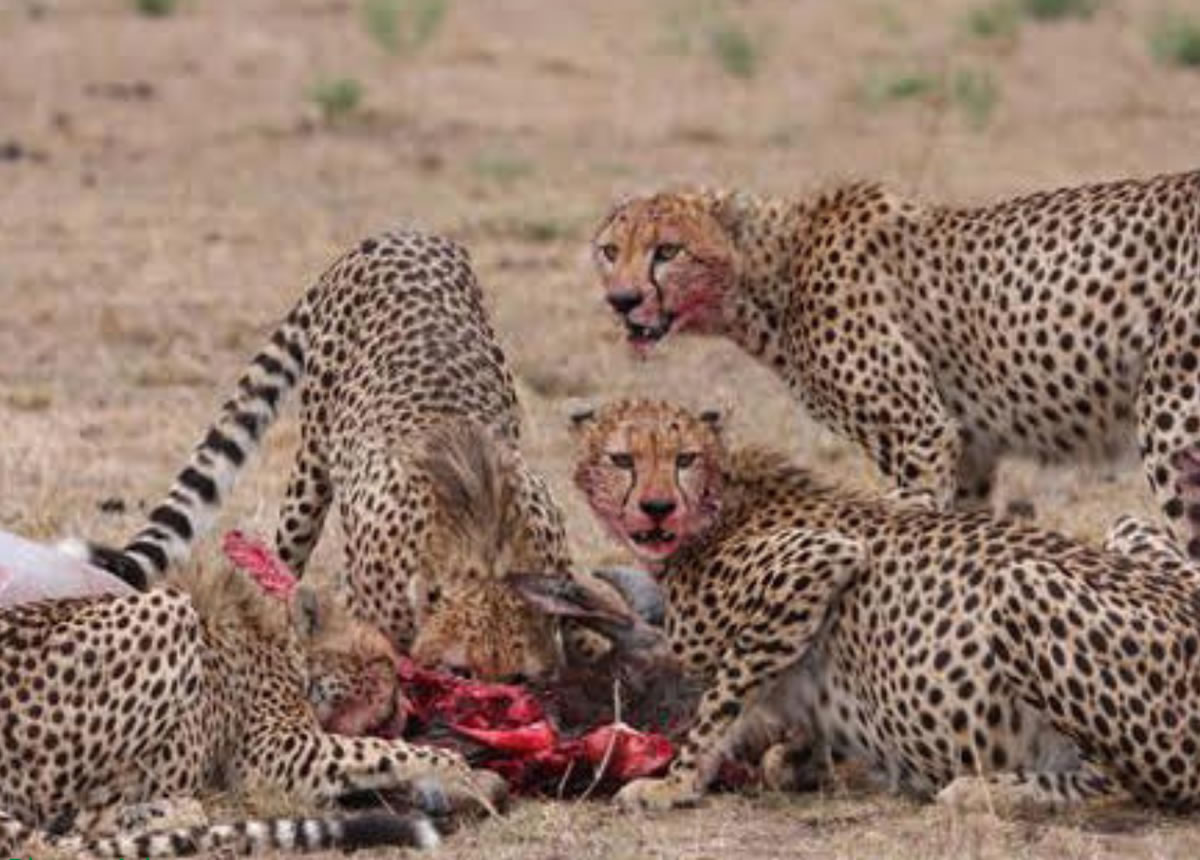
Lions, leopards, cheetahs and spotted hyenas occur within the Samburu ecosystem. Each predator uses the landscape differently, demonstrating how open plains, rocky country and riverine vegetation create varied hunting conditions.
Lions may rest in shade during warm hours before becoming more active as temperatures fall. Leopards use vegetation and rocky cover to remain concealed, while cheetahs generally benefit from visibility across more open areas.
Hyenas play the dual role of hunter and scavenger. Their powerful jaws and adaptable feeding behavior help recycle nutrients and remove carcasses from the environment.
Predator sightings are unpredictable and should never be guaranteed. The excitement comes from reading tracks, listening for alarm calls and exploring the landscape with an experienced guide.
Why Samburu Is Exceptional for Landscape Photography
Samburu is particularly rewarding for travelers who want images that show animals within their environment rather than tightly cropped wildlife portraits. Open horizons, palm-lined riverbanks, dust, rock formations and changing skies provide strong visual context.
Morning light can produce soft colors and long shadows, while late afternoon often warms the earth and vegetation. Storm clouds during greener periods create another photographic mood, contrasting dark skies with sunlit plains.
Dust can become part of the composition when animals move across dry tracks, but photographers must protect equipment carefully. A cloth, blower and sealed camera bag help reduce dust exposure.
A private safari vehicle gives photographers greater control over positioning and time. Nevertheless, vehicles must remain on permitted routes and avoid blocking animals or damaging vegetation for the sake of an image.
How Samburu Changes with the Seasons
Samburu’s scenery changes substantially with rainfall. During drier periods, vegetation becomes sparse, earth tones dominate and animals may concentrate near remaining sources of water. Visibility across open country can be excellent, although dust and daytime heat may increase.
After rain, fresh grass and leaves can transform parts of the reserve. Dark clouds, green vegetation and reflective water create excellent landscape photography, while bird activity may become especially interesting.
The commonly mentioned drier windows include approximately June to October and January to February, while wetter conditions are often associated with March to May and parts of October or November. These patterns are not fixed guarantees.
Northern Kenya experiences climatic variability, and rainfall can arrive earlier, later or in smaller quantities than expected. Travelers should select dates according to their priorities while remaining prepared for changing conditions.
| General period | Landscape character | Potential advantage | Possible challenge |
|---|---|---|---|
| Drier conditions | Open, dusty and dominated by warm earth tones | Wide visibility and wildlife activity around available water | Heat, dust and high demand during popular months |
| Greener conditions | Fresh vegetation, dramatic clouds and richer color | Landscape photography, birding and fewer visitors | Rain and occasional road difficulties |
The Cultural Landscape of Samburu
Samburu is also a living cultural landscape shaped by pastoral communities whose knowledge of livestock, water, weather and vegetation has developed over generations.
Respectfully organized community experiences can introduce travelers to local traditions, beadwork, music, social structures and the importance of cattle. These visits should be community-led and designed to provide genuine local benefit.
Visitors should ask before photographing anyone, particularly children. Participation in songs, ceremonies or household visits should always be voluntary, and local people should never be treated as decorative additions to a safari.
A professional itinerary should explain what the community receives from the visit and avoid presenting daily life as a staged spectacle. Respect creates more meaningful cultural understanding for both visitors and hosts.
How Many Days Are Ideal for Samburu?
Three days and two nights provide a strong introduction, usually allowing several game drives at different times of day. This gives travelers opportunities to explore the river, open plains and woodland habitats without rushing continuously.
Four days and three nights are preferable for photographers, birdwatchers and travelers who want a slower pace. Extra time can also accommodate a respectfully arranged community experience and breaks during the warmest hours.
Samburu combines well with Ol Pejeta, Mount Kenya, Lake Nakuru and the Maasai Mara. The contrast between northern dry-country scenery and the grasslands of southern Kenya creates an especially varied itinerary.
Travelers planning a longer journey can explore the 13-Day Kenya Diverse Ecosystems Safari, 14-Day Kenya National Parks Safari or 14-Day Kenya Premium Safari.
What Should You Pack for Samburu?
Pack breathable, neutral-colored clothing for daytime activities and a warm layer for early morning and evening game drives. Although afternoons may be hot, temperatures can feel cooler in an open vehicle before sunrise.
A wide-brimmed hat, high-protection sunscreen, sunglasses and reusable water bottle are especially valuable in the strong northern sunlight. Closed shoes provide comfort and protection around camps and during authorized walking activities.
Binoculars help visitors observe both wildlife and birds, while a camera with a zoom lens is useful for responsible photography. Bring spare batteries, a power bank and suitable storage because electricity may be limited at smaller camps.
A light rain jacket is useful even when visiting during a generally dry period. Travelers using domestic flights should also confirm baggage limits before packing.
Responsible Travel in Samburu’s Fragile Landscape
Semi-arid environments can recover slowly from physical damage. Safari vehicles must remain on approved routes and should never drive across sensitive vegetation simply to obtain a closer view.
Visitors should not feed wildlife, remove plants or stones, leave litter or encourage animals to approach vehicles. Quiet observation produces more natural behavior and reduces disturbance.
Water should be used thoughtfully at lodges and camps because it is a limited resource in the wider region. Travelers can also support responsible properties that manage waste, energy and water carefully.
Cultural interactions should follow the same principle of respect. Ask permission, follow local guidance and select experiences that clearly benefit participating communities.
Why Choose Ngeye Uganda Tours for a Samburu Safari?
Ngeye Uganda Tours creates personalized East African safaris designed around wildlife interests, photography goals, preferred accommodation and available travel time.
Our itineraries consider road distances, seasonal conditions and the amount of time required to appreciate Samburu’s different habitats. We can arrange private vehicles, professional guides, domestic flights and accommodation ranging from comfortable camps to premium safari lodges.
Photographers can request additional time in the field, while families receive guidance on suitable rooms and age-appropriate experiences. Travelers interested in culture can include community-led visits arranged with respect and transparency.
Explore our safari packages, learn more about Ngeye Uganda Tours or request a personalized itinerary through our contact page.
Experience Samburu’s Extraordinary Landscapes
Discover northern Kenya’s river corridors, rugged plains, rare wildlife and cultural heritage on a personalized safari designed by local specialists.
Frequently Asked Questions About Samburu’s Landscapes
What makes Samburu landscapes different?
Samburu combines semi-arid plains, rocky formations, thorny woodland, doum palms, seasonal channels and the Ewaso Ng’iro River, creating scenery distinct from Kenya’s greener southern reserves.
Is Samburu a desert?
Samburu is better described as semi-arid rather than a true desert. It receives seasonal rainfall and supports grassland, scrub, woodland and riverine habitats.
Why is the Ewaso Ng’iro River important?
The river provides water and riverine habitat within an otherwise dry landscape. Its flow and water levels vary with rainfall, drought and upstream conditions.
What are the Samburu Special Five?
They are the Grevy’s zebra, reticulated giraffe, gerenuk, Beisa oryx and Somali ostrich—five northern species strongly associated with the Samburu ecosystem.
Is Samburu good for photography?
Yes. Open views, warm earth tones, distinctive vegetation, wildlife and dramatic skies make Samburu excellent for landscape and wildlife photography.
When is the best time to see Samburu’s landscapes?
Drier periods offer open, earth-toned scenery and broad visibility, while greener periods provide fresh vegetation, dramatic skies and interesting birdlife. Conditions vary from year to year.
How many days should I spend in Samburu?
Three days and two nights provide a strong introduction. Four days and three nights are better for photographers, birdwatchers and travelers seeking a relaxed pace.
Can Samburu be combined with the Maasai Mara?
Yes. Combining Samburu with the Maasai Mara creates a highly varied journey contrasting northern semi-arid landscapes and specialized wildlife with the Mara’s expansive grasslands.