What Makes Samburu National Reserve Unique?
What makes Samburu National Reserve unique? Its combination of dramatic semi-arid scenery, northern Kenya’s specialized wildlife, the life-sustaining Ewaso Ng’iro River, dry-country birdlife and Samburu cultural heritage creates an experience unlike Kenya’s more familiar southern safari circuit.
Located in northern Kenya, Samburu National Reserve introduces travelers to a rugged landscape of open plains, acacia scrub, rocky hills, doum palms and riverine woodland. The environment appears harsh, yet it supports an extraordinary variety of animals adapted to seasonal rainfall, intense heat and limited water.
The reserve is particularly famous for the Samburu Special Five: Grevy’s zebra, reticulated giraffe, gerenuk, Beisa oryx and Somali ostrich. These animals give Samburu a distinctive wildlife identity and provide compelling reasons to travel beyond better-known destinations such as the Maasai Mara.
Samburu can be visited independently or incorporated into a longer journey through several Kenya national parks and reserves. A well-planned itinerary may connect northern Kenya with Laikipia, Lake Nakuru, Amboseli or the Maasai Mara, revealing the country’s remarkable ecological variety.
Quick answer: Samburu National Reserve is unique because it combines rare northern wildlife, an arid landscape, productive riverine habitat, excellent birdwatching, striking photography and opportunities for respectful engagement with Samburu communities.
Where Is Samburu National Reserve Located?
Samburu National Reserve lies in Samburu County in northern Kenya. It forms part of a wider wildlife landscape that includes neighboring protected areas, community conservancies and pastoral land.
The reserve is situated along the Ewaso Ng’iro River, which supports a ribbon of woodland through the otherwise dry environment. Wildlife may move across boundaries according to water, food, breeding behavior and seasonal conditions.
This wider ecological connection is important because wild animals do not recognize administrative borders. Protecting movement routes outside the reserve contributes to the survival of species that depend on large, connected landscapes.
How Are Samburu’s Landscapes Different?
Samburu’s landscape is one of its most distinctive characteristics. Instead of the sweeping green grasslands often associated with the Maasai Mara, visitors encounter muted earth tones, thorny scrub, rocky outcrops and distant hills.
Doum palms and riverine trees introduce bands of green along the Ewaso Ng’iro River. These areas contrast beautifully with the surrounding semi-arid plains and provide shade, food and shelter for wildlife.
The landscape changes with rainfall. Dry periods can produce golden grasses, dusty tracks and concentrated activity around dependable water. Wetter periods encourage fresh vegetation, dramatic skies and greener photographic backgrounds.
Neither season guarantees particular conditions. Northern Kenya’s rainfall can be variable, and every visit reveals a slightly different version of the landscape.
Why Is the Ewaso Ng’iro River Important?
The Ewaso Ng’iro River is central to the Samburu ecosystem. It supports riverine woodland and provides water for elephants, antelopes, primates, predators, birds and other wildlife.
During dry conditions, animals may visit the river or remaining pools to drink. This can create rewarding wildlife-viewing opportunities, although no particular scene or species can be guaranteed.
The river also supports crocodiles, while hippos may occur in suitable sections depending on water depth and local conditions. Visitors should never approach the riverbank independently unless the area has been confirmed as safe.
River levels vary because of rainfall, drought, upstream water use and other environmental influences. Samburu should therefore not be advertised as having identical river or wildlife conditions throughout the year.
What Are the Samburu Special Five?
The Samburu Special Five are five animals associated with northern Kenya’s dry environments. They are among the reserve’s most sought-after wildlife sightings and distinguish Samburu from many southern safari destinations.
| Special Five Species | Distinctive Characteristic | Typical Habitat |
|---|---|---|
| Grevy’s zebra | Narrow stripes, large rounded ears and a white belly | Open plains and dry grazing areas |
| Reticulated giraffe | Geometric chestnut patches separated by white lines | Acacia woodland and riverine habitat |
| Gerenuk | Long neck and ability to browse while standing upright | Dry scrub and bushland |
| Beisa oryx | Long straight horns and bold facial markings | Open semi-arid plains |
| Somali ostrich | Blue-grey neck and thighs, especially in adult males | Open plains and dry scrub |
The five species may be present throughout the year, but seeing all of them during one safari cannot be guaranteed. Their movements depend on food, water, weather and natural behavior.
Why Is Grevy’s Zebra an Important Samburu Species?
Grevy’s zebra is the largest living wild zebra and one of northern Kenya’s most recognizable animals. Its narrow stripes, white belly and large ears distinguish it from the plains zebra found in many other Kenyan reserves.
Grevy’s zebras use dry grassland and scrub, traveling between grazing areas and water. Their association with northern Kenya makes Samburu an important destination for visitors who want to understand the country’s less familiar wildlife.
Responsible wildlife viewing protects these animals from disturbance. Safari vehicles should avoid blocking their direction of travel or separating adults from young animals.
What Makes the Reticulated Giraffe Special?
The reticulated giraffe is distinguished by sharp-edged reddish-brown patches separated by bright white lines. Its geometric coat differs from the more irregular pattern of the Masai giraffe.
These giraffes browse trees and shrubs in acacia woodland, scrub and riverine habitat. Their feeding behavior helps influence vegetation and contributes to seed movement within the ecosystem.
They are among Samburu’s most striking photographic subjects, particularly when seen against the reserve’s muted earth tones and rugged hills.
How Is the Gerenuk Adapted to Dry Habitats?
The gerenuk is a slender antelope with an unusually long neck. It is famous for standing upright on its hind legs to reach leaves, shoots and flowers that shorter antelopes cannot access.
This browsing behavior helps the gerenuk survive in dry scrub where ground-level grass may be limited. Males have horns, while females do not.
Gerenuks can blend easily into brown vegetation. An experienced guide may recognize their shape, movement and favored habitat before an untrained observer notices them.
What Makes the Beisa Oryx Distinctive?
The Beisa oryx has a pale coat, dark facial markings and long, nearly straight horns. Both males and females carry horns, creating an elegant silhouette against Samburu’s open plains.
The species can tolerate hot and dry environments by conserving water and adjusting its activity. However, it would be inaccurate to claim that oryx never require water. Their needs depend on temperature, food moisture and environmental conditions.
Why Is the Somali Ostrich Different?
The Somali ostrich is a large flightless bird found within the Horn of Africa and northern East Africa. Adult males are especially recognizable by the blue-grey coloration of the neck and thighs.
The bird differs from the common ostrich in coloration and geographical distribution. Its inclusion among the Special Five demonstrates that Samburu’s uniqueness extends beyond mammals.
Birdwatchers may also encounter vulturine guineafowl, golden-breasted starlings, hornbills, bee-eaters, secretarybirds and various raptors.
What Other Wildlife Makes Samburu Special?
Samburu supports far more than the Special Five. Elephants are among its signature animals and may be observed moving between feeding areas and the Ewaso Ng’iro River.
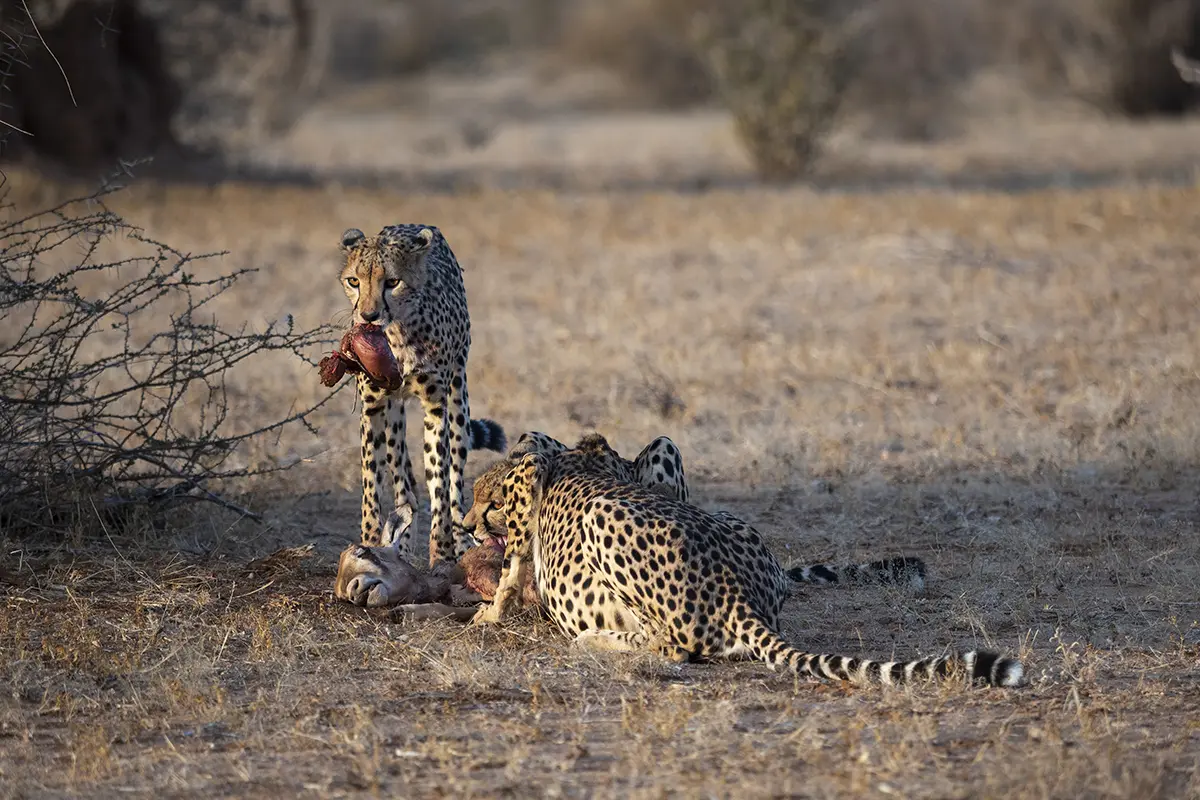
Lions, leopards and cheetahs also occur, although predator sightings remain unpredictable. Leopards can remain concealed in riverine vegetation, while cheetahs may range widely across open habitats.
Other possible sightings include buffaloes, impalas, dik-diks, Grant’s gazelles, waterbucks, elands, warthogs, olive baboons and vervet monkeys. African wild dogs are an uncommon possibility within the wider northern ecosystem rather than an expected sighting.
Samburu is not normally promoted as a complete Big Five destination because rhinos are not standard sightings inside the reserve. Travelers can add a suitable rhino-conservation destination if rhino viewing is a priority.
Why Is Samburu Important for Birdwatching?
Samburu and the wider northern Kenya ecosystem support hundreds of bird species associated with dry scrub, riverine woodland, open plains and rocky habitats.
Dry-country specialties give the reserve a birding identity that differs from Kenya’s lakes, forests and southern grasslands. The Somali ostrich and vulturine guineafowl are among the most recognizable species, while raptors add excitement above the open landscape.
Birdwatching is possible throughout the year. Seasonal migrants may add diversity during parts of the year, while resident species remain present across seasons.
Travelers interested in a specialist itinerary can explore our guide to Kenya Birding Safaris.
Why Is Samburu Excellent for Photography?
Samburu’s wildlife appears against a distinctive background of red-brown earth, thorny scrub, doum palms, rocky hills and distant mountains. These visual elements help photographers create environmental images rather than isolated animal portraits.
Early-morning and late-afternoon light can enrich the colors of the landscape and soften shadows. Midday conditions may produce heat haze and stronger contrast but can still be useful for documenting animal behavior.
Wetter periods bring fresh vegetation and dramatic skies, while dry conditions create warm tones and activity around limited water. Both seasons can produce compelling photography.
Visitors interested in a dedicated photographic journey can review the 12-Day Kenya Photography Expedition.
Is Samburu Less Crowded Than the Maasai Mara?
Samburu often receives fewer visitors than Kenya’s most internationally famous reserve, the Maasai Mara. This can create a quieter atmosphere, particularly outside popular holiday periods.
However, visitor numbers vary by season, accommodation demand and the location of noteworthy wildlife sightings. Several vehicles may still gather around a predator or unusual event.
A quieter reserve does not give visitors permission to approach wildlife too closely. Guides and travelers must respect vehicle limits, animal space and reserve regulations.
How Does Samburu Culture Enrich the Safari?
The reserve takes its name from the Samburu people, whose pastoral heritage and relationship with northern Kenya provide important cultural context for the safari.
A respectfully arranged, community-led experience may introduce travelers to beadwork, livestock traditions, music, environmental knowledge and contemporary community life.
Cultural visits should be transparent, voluntary and designed in partnership with the community. Visitors must request permission before photographing people, homes, ceremonies or personal belongings.
Communities should never be presented as tourist displays. Meaningful cultural tourism emphasizes dignity, conversation, fair benefit and community control.
How Does Samburu Contribute to Conservation?
Samburu draws international attention to species and dryland habitats that may receive less visibility than the wildlife of southern Kenya. Tourism revenue can support protected-area management, local employment and conservation initiatives.
Conservation in northern Kenya extends beyond reserve boundaries. Wildlife movement corridors, community conservancies, pastoral land and dependable water sources all contribute to the wider ecosystem.
Visitors can support responsible conservation by selecting reputable operators, following reserve rules, avoiding single-use waste and refusing activities that disturb animals or exploit communities.
What Activities Can I Enjoy in Samburu?
Game drives are the principal activity and provide opportunities to explore several habitats at different times of day. Morning and afternoon drives may reveal different animals and behaviors.
Birdwatching and photography can be incorporated into general game drives or arranged as specialist activities. Some accommodations may offer approved nature experiences, conservation talks or community visits.
Activity availability varies according to accommodation, reserve regulations, weather and local conditions. Travelers should confirm what is included before booking.
| Samburu Experience | What Makes It Rewarding |
|---|---|
| Morning game drive | Cooler temperatures, soft light and wildlife observation |
| Afternoon game drive | Changing light and different animal movements |
| Birdwatching | Dry-country specialties, riverine birds and raptors |
| Photography | Distinctive wildlife, landscapes and changing seasonal colors |
| Community-led cultural visit | Respectful insight into Samburu heritage and contemporary life |
When Is the Best Time to Visit Samburu?
The generally drier months from June to October and January to February are commonly selected for wildlife viewing. Vegetation may be less dense, and animals may use dependable water more frequently.
Wetter periods can offer green scenery, increased bird activity, dramatic photography and fewer visitors. Rain may also affect reserve roads and transfer times.
Northern Kenya’s rainfall patterns are variable. No season guarantees clear skies, comfortable temperatures, open roads or wildlife concentrations.
How Many Days Should I Spend in Samburu?
Three days and two nights are suitable for most first-time visitors. This usually permits an arrival game drive, a complete day with morning and afternoon activities and a final morning drive.
Four days and three nights are better for photographers, birdwatchers, families seeking a slower pace and travelers adding a respectful community experience.
One night is possible but may feel rushed, particularly when traveling by road. The duration should account for transfer time rather than counting every calendar day as a complete safari day.
How Can I Reach Samburu?
Samburu can be reached by road or scheduled light-aircraft service. The road journey from Nairobi commonly requires much of the day, depending on traffic, stops, road conditions and lodge location.
Flying reduces transfer time and can preserve more hours for safari activities. Travelers should check flight schedules, luggage limitations and airstrip transfers before booking.
The best transport method depends on budget, available time and interest in seeing Kenya’s changing scenery along the road journey.
Can Samburu Be Combined with Other Destinations?
Samburu combines naturally with Laikipia and Ol Pejeta before continuing to Lake Nakuru or the Maasai Mara. This creates a varied safari featuring northern specialties, rhino-conservation areas, Rift Valley habitats and traditional savannah wildlife.
Travelers seeking a longer journey can explore the 14-Day Kenya National Parks Safari or the 13-Day Kenya Diverse Ecosystems Safari.
The itinerary should remain realistic. Adding too many destinations to a short holiday can create long transfer days and reduce the time available for wildlife observation.
What Should I Pack for Samburu?
Lightweight, breathable clothing in neutral colors is suitable for daytime game drives. A warm layer is helpful during early mornings, while a hat, sunglasses and sunscreen provide protection as temperatures rise.
Binoculars and a camera with a zoom lens support wildlife and bird observation without requiring close approaches. Travelers should also carry personal medication, insect repellent and a reusable water bottle.
Dust protection is important for cameras and electronics during dry conditions. A waterproof jacket and water-resistant equipment bag are useful during wetter periods.
Why Plan Your Samburu Safari with Ngeye Uganda Tours?
Ngeye Uganda Tours creates personalized East African safari itineraries based on travel dates, preferred wildlife, photography interests, available time, accommodation style and budget.
Our planning considers realistic transfer times, suitable game-drive schedules, seasonal conditions and opportunities to combine Samburu with other Kenyan destinations. We provide honest expectations without guaranteeing wildlife behavior or sightings.
Travelers can explore our complete collection of East African safari packages or learn more about Ngeye Uganda Tours.
Discover What Makes Samburu Unique
Let our safari specialists create a personalized northern Kenya journey focused on distinctive wildlife, dramatic landscapes, birding, photography and respectful cultural experiences.
Frequently Asked Questions About Samburu National Reserve
What makes Samburu National Reserve unique?
Samburu is distinguished by its semi-arid landscape, Ewaso Ng’iro River, Special Five wildlife, dry-country birds, photography opportunities and Samburu cultural heritage.
What are the Samburu Special Five?
They are Grevy’s zebra, reticulated giraffe, gerenuk, Beisa oryx and Somali ostrich.
Is Samburu a Big Five destination?
Samburu supports lions, leopards, elephants and buffaloes, but rhinos are not standard sightings. It should not normally be promoted as a complete Big Five reserve.
Is Samburu less crowded than the Maasai Mara?
Samburu often receives fewer visitors than the Maasai Mara, although visitor numbers vary by season, accommodation demand and notable wildlife sightings.
When is the best time to visit Samburu?
June to October and January to February are generally popular for wildlife viewing. Wetter periods can provide green scenery, bird activity and fewer visitors.
How many days should I spend in Samburu?
Three days and two nights are suitable for most visitors. Four days and three nights are better for photography, birdwatching and a slower itinerary.
Can Samburu be combined with the Maasai Mara?
Yes. The combination provides contrasting wildlife and landscapes, from northern Kenya’s semi-arid habitats to the Mara’s open grasslands.