What Wildlife Can I See in Samburu National Reserve?
What wildlife can I see in Samburu National Reserve? Visitors may encounter the famous Samburu Special Five—Grevy’s zebra, reticulated giraffe, gerenuk, Beisa oryx and Somali ostrich—alongside elephants, lions, leopards, cheetahs, buffaloes, antelopes, primates, crocodiles and numerous bird species.
Situated in the semi-arid landscapes of northern Kenya, Samburu National Reserve offers a wildlife experience that differs from the open grasslands of the Maasai Mara. Its dry plains, acacia scrub, rocky hills, doum palms and riverine woodland support animals adapted to an environment where water can be scarce.
The Ewaso Ng’iro River plays a central role in the ecosystem. Its water and surrounding vegetation attract elephants, herbivores, predators, primates and birds, particularly when conditions elsewhere in the reserve become dry.
Although Samburu offers remarkable wildlife diversity, no species or sighting can be guaranteed. Animal locations and behavior change according to water, vegetation, temperature, breeding activity and natural movement across the wider landscape.
Travelers can visit Samburu independently or include it in a longer journey through several Kenya national parks and reserves. Combining northern Kenya with Lake Nakuru or the Maasai Mara creates a varied safari featuring contrasting habitats and wildlife.
Quick answer: Samburu is especially known for the Samburu Special Five, elephants and dry-country birds. Lions, leopards and cheetahs also occur, but sightings are naturally unpredictable. The reserve is not normally promoted as a complete Big Five destination because rhinos are not a standard sighting.
What Are the Samburu Special Five?
The Samburu Special Five are animals strongly associated with the dry northern regions of Kenya. Searching for them gives a Samburu safari a distinctive identity and introduces visitors to species that may be uncommon or absent from southern safari circuits.
| Samburu Special Five | How to Recognize It | Where It May Be Observed |
|---|---|---|
| Grevy’s zebra | Narrow stripes, large rounded ears and a white belly | Open plains and dry grazing areas |
| Reticulated giraffe | Geometric chestnut patches divided by bright white lines | Acacia woodland, scrub and riverine habitat |
| Gerenuk | Long neck, slender body and an ability to browse while upright | Dry scrub and bushland |
| Beisa oryx | Long straight horns, pale coat and bold facial markings | Open dry plains and semi-arid habitat |
| Somali ostrich | Distinctive blue-grey neck and long, powerful legs | Open plains and dry scrub |
Seeing all five during one visit is possible but not guaranteed. Their movements depend on habitat conditions, food and water. Spending two or three nights provides several opportunities to explore different parts of the reserve.
Can I See Elephants in Samburu?
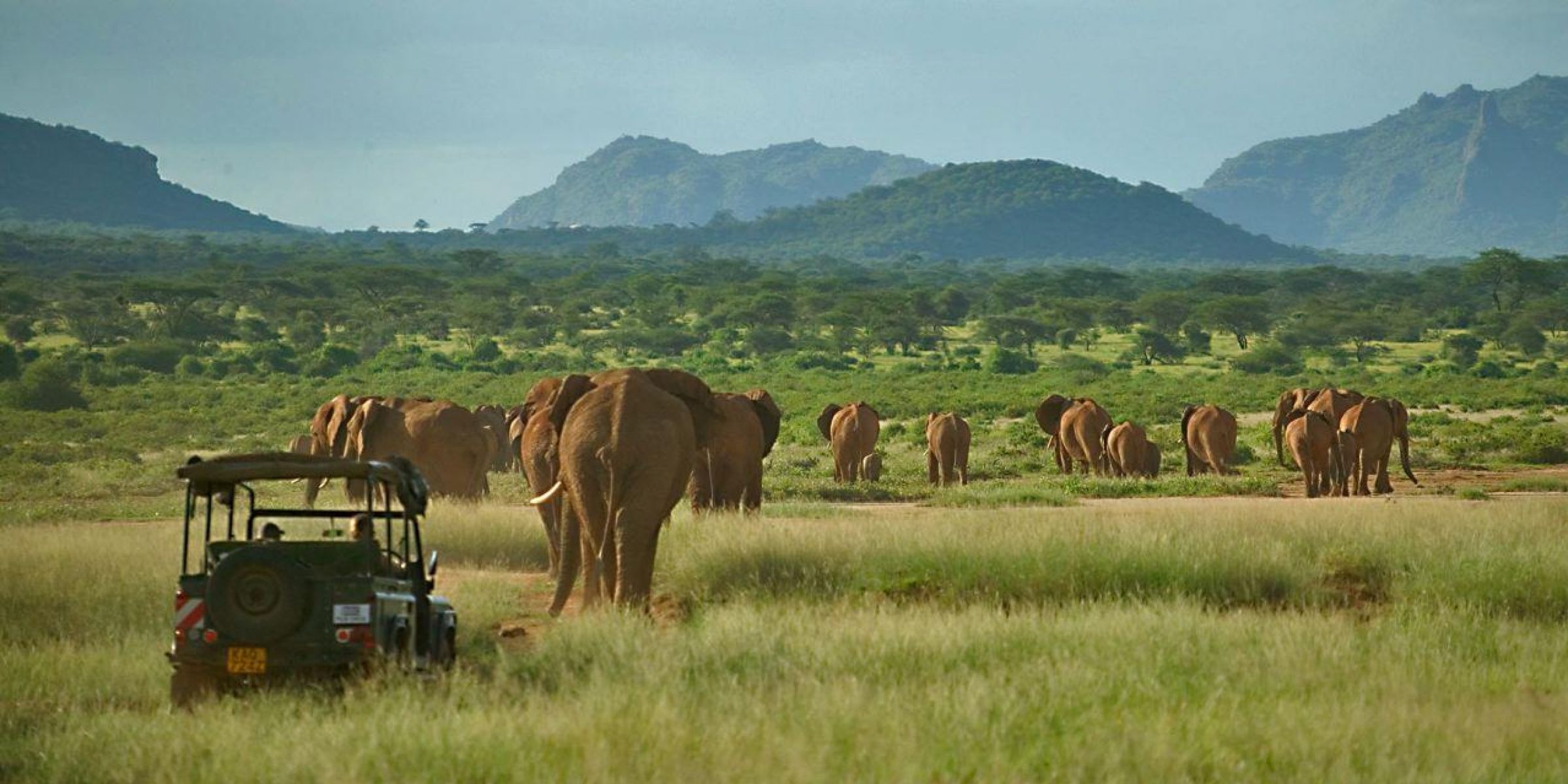
Elephants are among the most memorable animals associated with the Samburu ecosystem. Family groups may be observed moving between feeding areas and the Ewaso Ng’iro River, especially when water is limited elsewhere.
The riverine landscape provides opportunities to watch elephants drinking, feeding, dust bathing or interacting socially. These encounters can be particularly rewarding for photographers, but vehicles must maintain a responsible distance and avoid blocking the animals’ route.
Elephants are intelligent and potentially dangerous wild animals. Visitors should remain inside the safari vehicle unless they are in a location where exiting has been expressly authorized.
Are Lions Found in Samburu?
Lions occur within Samburu and the surrounding northern Kenya ecosystem. They may be observed resting in the shade, moving through open habitats or following prey, but sightings vary considerably.
Early morning and late afternoon can provide favorable conditions because temperatures are cooler and predators may be more active. However, lions can remain hidden in vegetation or rest for extended periods.
No ethical operator should guarantee a lion sighting or suggest that hunting behavior will occur during a particular game drive. A knowledgeable guide improves the search by interpreting tracks, calls and recent reports while respecting reserve regulations.
Can I See Leopards in Samburu?
Leopards are present but remain secretive and difficult to locate. Riverine woodland, rocky terrain and thick vegetation provide cover, making patience an important part of the search.
A leopard may be observed resting in a tree, moving through vegetation or near an animal it has killed. Such encounters are entirely natural and unpredictable.
Several game drives at different times of day improve the opportunity to explore suitable habitats, but even a longer stay does not guarantee a leopard sighting.
Are Cheetahs Present in Samburu?
Cheetahs occur in the Samburu ecosystem and may use open plains where visibility helps them locate prey and avoid larger predators. Their movements can cover considerable distances, so sightings are less predictable than those of many common herbivores.
When a cheetah is located, guides and visitors should avoid surrounding it or interfering with its direction of travel. Responsible vehicle positioning protects the animal and creates a better-quality observation.
Is Samburu a Big Five Destination?
Samburu supports lions, leopards, elephants and buffaloes. However, rhinos are not considered a standard wildlife sighting inside Samburu National Reserve, so the destination should not normally be promoted as a complete Big Five reserve.
Travelers who want to prioritize rhino viewing can combine Samburu with a suitable conservation area or Lake Nakuru National Park. Combining destinations creates a more complete Kenyan wildlife itinerary without misrepresenting what any single reserve offers.
The 5-Day Lake Nakuru and Maasai Mara Safari provides inspiration for travelers interested in adding traditional Big Five environments to their journey.
What Antelopes and Herbivores Can I See?
Samburu supports an impressive range of herbivores adapted to open plains, dry scrub and riverine habitats. In addition to gerenuk and Beisa oryx, visitors may encounter impalas, Grant’s gazelles, dik-diks, waterbucks, elands and other antelope species.
Warthogs are also commonly associated with open areas, where they feed close to the ground and may run with their tails raised when alarmed. Grevy’s zebras and reticulated giraffes add further diversity to game drives.
| Wildlife Group | Possible Sightings |
|---|---|
| Large herbivores | Elephants, buffaloes, giraffes, Grevy’s zebras and elands |
| Antelopes | Gerenuk, Beisa oryx, impala, dik-dik, waterbuck and Grant’s gazelle |
| Predators | Lion, leopard, cheetah and spotted hyena |
| Primates | Olive baboons and vervet monkeys |
| River wildlife | Crocodiles and, depending on location and conditions, hippos |
| Smaller mammals | Warthogs, mongooses and other small carnivores |
What Primates Live in Samburu?
Olive baboons and vervet monkeys are associated with riverine woodland and areas where trees provide food, shelter and resting places. Their social behavior can make them fascinating to observe.
Visitors should never feed primates. Feeding changes their natural behavior, creates dependence and can cause conflict around lodges and picnic areas.
Food, bags and personal belongings should be secured. Monkeys and baboons can become highly skilled at taking unattended items.
What Wildlife Lives Along the Ewaso Ng’iro River?
The Ewaso Ng’iro River supports a ribbon of vegetation through an otherwise dry landscape. Elephants, antelopes, primates, predators and birds may use the river and its surrounding woodland.
Nile crocodiles can occur in the river, while hippos may be present in suitable sections depending on water levels and local conditions. Visitors should never approach the riverbank independently unless the location has been confirmed as safe.
Water levels vary because of rainfall, drought and upstream conditions. Wildlife concentrations along the river therefore change from one season and year to another.
What Birds Can I See in Samburu?
Samburu and the wider northern Kenya ecosystem support hundreds of bird species associated with riverine woodland, dry scrub, open plains and rocky habitats. This diversity makes the area an important destination for birdwatchers.
Notable possibilities include Somali ostrich, vulturine guineafowl, martial eagle, secretarybird, golden-breasted starling, hornbills, bee-eaters, rollers and numerous raptors.
Bird sightings vary according to habitat, season and natural movement. Migratory species may add diversity during parts of the year, while resident dry-country birds provide interest throughout the seasons.
Travelers interested in a specialist itinerary can explore our guide to Kenya Birding Safaris.
Can I See African Wild Dogs in Samburu?
African wild dogs may move through parts of the wider northern Kenya ecosystem, but they are uncommon and should not be expected during a standard Samburu visit.
These highly mobile animals can travel considerable distances. A reported sighting on one day does not mean the pack will remain in the same location.
When wild dogs are encountered, the sighting is exceptional. Visitors and guides should avoid crowding them, particularly when the animals are resting, hunting or caring for young.
What Wildlife Should I Not Expect?
Rhinos are not standard sightings in Samburu National Reserve. Travelers whose main objective is rhino viewing should add a destination where established rhino-conservation populations are present.
Samburu also does not host the Great Migration spectacle associated with the Maasai Mara and Serengeti. Its value lies instead in dry-country wildlife, northern specialties, elephants, birdlife and a less conventional landscape.
Understanding these differences helps travelers choose suitable destinations and prevents unrealistic expectations.
When Is the Best Time to See Wildlife in Samburu?
The generally drier periods from June to October and January to February are often preferred for wildlife viewing. Vegetation may be less dense, and animals can spend more time near available water.
Wetter periods may produce green scenery, increased bird activity and fewer visitors. Wildlife may become more dispersed when water is widely available, while rain can affect roads and transfer times.
Seasonal patterns in northern Kenya are variable. No particular month guarantees weather, wildlife concentrations or specific sightings.
How Many Days Do I Need for Wildlife Viewing?
Three days and two nights are suitable for most first-time visitors. This normally allows several morning and afternoon game drives under different conditions.
Four days and three nights are better for photographers, birdwatchers and travelers who prefer a slower pace. One night can feel rushed, particularly when much of the arrival and departure days is spent driving.
The recommended duration also depends on transportation. Flying can preserve safari time, while traveling by road provides a broader view of Kenya’s changing landscapes.
Do Cultural Experiences Form Part of a Samburu Safari?
A respectful, community-led cultural experience can help travelers understand the people whose name the region carries. Possible topics include pastoral life, beadwork, music, livestock, environmental knowledge and contemporary community challenges.
A community experience is separate from wildlife viewing but can provide valuable context about human relationships with the landscape. Participation should be voluntary, benefits should be transparent and permission must be requested before photographing people.
Visitors should avoid treating residents, homes or ceremonies as tourist displays. Responsible cultural tourism emphasizes dignity, conversation and community control.
How Can I Improve My Chances of Wildlife Sightings?
Spending at least two nights provides several opportunities to explore different habitats. Early-morning and late-afternoon game drives may coincide with cooler temperatures and increased animal activity.
An experienced guide can interpret tracks, calls, habitat and recent sightings. Patience is equally important because animals move freely and may remain hidden for long periods.
Keeping voices low, avoiding sudden movement and following reserve regulations reduces disturbance. Visitors should never pressure a guide to approach an animal too closely or leave an authorized route.
What Should I Pack for a Samburu Wildlife Safari?
Lightweight, breathable clothing in neutral colors is suitable for game drives. A warm layer helps during early mornings, while a hat, sunglasses and sunscreen provide protection during warmer hours.
Binoculars and a camera with a zoom lens improve wildlife observation without encouraging close approaches. Travelers should also carry personal medication, insect repellent and a reusable water bottle.
Dust protection is useful for cameras and electronics. During wetter periods, add a waterproof jacket and a water-resistant equipment bag.
Can Samburu Be Combined with Other Wildlife Destinations?
Samburu combines well with Laikipia, Ol Pejeta, Lake Nakuru and the Maasai Mara. A multi-destination itinerary can add rhino viewing, different bird habitats and a more traditional grassland safari.
Travelers seeking a longer journey can explore the 14-Day Kenya National Parks Safari or the 13-Day Kenya Diverse Ecosystems Safari.
The ideal combination depends on available time, budget, transport and priority species. Adding too many destinations to a short itinerary can reduce wildlife-viewing time and make the journey unnecessarily tiring.
Why Plan a Samburu Safari with Ngeye Uganda Tours?
Ngeye Uganda Tours creates personalized safari itineraries based on preferred wildlife, travel dates, available time, budget and accommodation style.
Our planning considers realistic transfers, suitable game-drive schedules, seasonal conditions and opportunities to combine Samburu with other Kenyan destinations. We provide clear expectations without guaranteeing wildlife behavior or sightings.
Travelers can browse our complete collection of East African safari packages or learn more about Ngeye Uganda Tours.
Plan Your Samburu Wildlife Safari
Let our safari specialists design a personalized journey focused on Samburu’s Special Five, elephants, predators, birds and northern Kenyan landscapes.
Frequently Asked Questions About Samburu Wildlife
What animals are commonly seen in Samburu?
Possible sightings include elephants, Grevy’s zebras, reticulated giraffes, gerenuk, Beisa oryx, Somali ostriches, impalas, dik-diks, baboons and warthogs.
What are the Samburu Special Five?
They are Grevy’s zebra, reticulated giraffe, gerenuk, Beisa oryx and Somali ostrich.
Can I see lions and leopards in Samburu?
Both species occur in the reserve, but sightings are never guaranteed. Leopards are particularly secretive and can be difficult to locate.
Are there cheetahs in Samburu?
Yes. Cheetahs occur in the Samburu ecosystem, but they are highly mobile, making sightings unpredictable.
Can I see rhinos in Samburu?
Rhinos are not considered standard sightings in Samburu National Reserve. Travelers should add a suitable rhino-conservation destination if rhino viewing is a priority.
Can I see African wild dogs?
Wild dogs may move through the wider northern ecosystem, but sightings are uncommon and should be considered an exceptional possibility rather than an expectation.
How long should I stay for wildlife viewing?
Three days and two nights are suitable for most visitors. Photographers and birdwatchers may prefer four days and three nights.