What Are the Samburu Special Five?
What are the Samburu Special Five? They are the Grevy’s zebra, reticulated giraffe, gerenuk, Beisa oryx and Somali ostrich. These distinctive animals are strongly associated with the dry landscapes of northern Kenya and are among the principal wildlife highlights of Samburu National Reserve.
The term “Samburu Special Five” was created as a northern counterpart to Africa’s famous Big Five. Unlike the Big Five, which were historically grouped according to hunting difficulty, the Samburu Special Five are celebrated because of their geographical distribution, unusual appearance and adaptations to semi-arid environments.
Visitors may search for these species across Samburu’s open plains, dry scrub, acacia woodland and riverine habitats. Their ranges are not confined to the reserve, but Samburu provides one of Kenya’s most accessible and rewarding places to observe them together.
Located in northern Kenya, Samburu National Reserve forms part of a wider ecosystem influenced by the Ewaso Ng’iro River. The river and surrounding vegetation provide essential water, shade and food for wildlife living within an otherwise dry landscape.
A Samburu safari can be enjoyed independently or combined with other Kenya national parks and reserves. Connecting Samburu with Laikipia, Lake Nakuru or the Maasai Mara introduces travelers to several contrasting habitats within one itinerary.
Quick answer: The Samburu Special Five are Grevy’s zebra, reticulated giraffe, gerenuk, Beisa oryx and Somali ostrich. All five are adapted to northern Kenya’s dry habitats, but seeing every species during one safari cannot be guaranteed.
Why Are They Called the Samburu Special Five?
The animals earned the “Special Five” name because they give northern Kenya a wildlife identity that differs from the country’s better-known southern safari areas. Some have limited distributions, while others are especially well adapted to dry scrub and semi-arid plains.
Travelers visiting the Maasai Mara may encounter plains zebra and Masai giraffe. In Samburu, the Grevy’s zebra and reticulated giraffe become the recognizable regional counterparts. The gerenuk, Beisa oryx, Somali ostrich and numerous dry-country birds add further distinction.
The five species are not always found together in one location. Each uses the landscape differently, and their movements depend on food, water, temperature, disturbance and breeding behavior.
A knowledgeable guide searches suitable habitats while explaining the differences between these animals and related species elsewhere in Kenya. Spending at least two nights provides several game-drive opportunities but still cannot guarantee a complete Special Five checklist.
Which Animals Make Up the Samburu Special Five?
| Special Five Member | Scientific Name | Distinctive Feature |
|---|---|---|
| Grevy’s zebra | Equus grevyi | Narrow stripes, large ears and a white belly |
| Reticulated giraffe | Giraffa reticulata | Geometric reddish-brown patches divided by white lines |
| Gerenuk | Litocranius walleri | Long neck and upright browsing behavior |
| Beisa oryx | Oryx beisa | Long straight horns and bold facial markings |
| Somali ostrich | Struthio molybdophanes | Blue-grey neck and thighs, particularly noticeable in males |
What Makes Grevy’s Zebra Special?
Grevy’s zebra is the largest living wild zebra species and one of northern Kenya’s most recognizable animals. Its narrow, closely spaced stripes create a finer pattern than the broader markings of the plains zebra.
The species also has large rounded ears, a white belly and a more mule-like body shape. These features make identification easier when visitors understand what to look for.
Grevy’s zebras use dry grasslands and scrub where they can travel considerable distances between grazing areas and water. Their social organization differs from that of plains zebras, with adults often forming less stable groups.
Visitors may observe individuals or small groups feeding, resting or moving across open habitat. Vehicles should maintain a suitable distance and avoid separating animals from one another.
How Can I Distinguish a Grevy’s Zebra from a Plains Zebra?
| Feature | Grevy’s Zebra | Plains Zebra |
|---|---|---|
| Stripe pattern | Narrow and closely spaced | Broader and more widely spaced |
| Belly | Usually white and largely unstriped | Stripes often extend farther underneath |
| Ears | Large and rounded | Smaller and less rounded |
| Overall build | Tall, narrow and mule-like | More compact and horse-like |
Why Is the Reticulated Giraffe So Distinctive?
The reticulated giraffe is instantly recognizable by its geometric coat pattern. Large reddish-brown or chestnut patches are separated by bright white lines, creating a net-like appearance from which the word “reticulated” is derived.
Reticulated giraffes browse trees and shrubs, using their height and long tongues to reach vegetation unavailable to most herbivores. Their feeding behavior plays an important ecological role by influencing plant growth and distributing seeds.
Visitors may encounter them in acacia woodland, dry scrub and riverine habitats. Individuals can be observed feeding, walking between patches of vegetation or standing motionless while watching their surroundings.
Photographers should avoid requesting that guides drive too close. Allowing the giraffe to continue its natural behavior usually produces more authentic images and a less disruptive encounter.
How Is a Reticulated Giraffe Different from a Masai Giraffe?
The reticulated giraffe has clean-edged polygonal patches separated by pale lines. The Masai giraffe, commonly associated with southern Kenya and Tanzania, has more irregular, leaf-like or jagged markings.
Both are giraffes, but their coat patterns and principal geographical ranges help visitors distinguish them. Samburu is especially associated with the reticulated form.
What Makes the Gerenuk Unusual?
The gerenuk is one of Samburu’s most distinctive antelopes. Its name is commonly interpreted as referring to its giraffe-like neck, which gives the animal an elegant and immediately recognizable appearance.
Gerenuks feed on leaves, shoots, flowers and fruits in dry scrub. They are particularly famous for standing upright on their hind legs and stretching toward vegetation that shorter antelopes cannot reach.
This browsing posture is fascinating to observe, but it may last only briefly. Visitors should remain patient rather than asking the guide to move the vehicle repeatedly or pressure the animal into changing position.
Males carry horns, while females do not. Both sexes have long necks, slender limbs and relatively small heads suited to browsing within bushy habitats.
How Is the Beisa Oryx Adapted to Samburu?
The Beisa oryx is a powerful antelope with long, nearly straight horns and striking dark facial markings. Its pale coat reflects the muted colors of northern Kenya’s dry plains.
Beisa oryx can tolerate hot and arid environments by conserving water and adjusting their activity. However, describing them as animals that never need water would be inaccurate. Their water requirements vary with temperature, food moisture and local conditions.
The long horns are carried by both males and females. Visitors sometimes mistake a side view of the two parallel horns for a single horn, which may have contributed to legends surrounding unicorn-like animals.
Oryx may occur alone or in groups across open dry habitat. As with all wildlife, their location changes according to grazing conditions and access to water.
What Makes the Somali Ostrich Different?
The Somali ostrich is a large flightless bird associated with the Horn of Africa and northern East Africa. Mature males are especially noticeable because of the blue-grey coloration of their neck and thighs, which contrasts with dark body feathers and pale wing feathers.
Females generally have more muted brownish plumage, which helps provide camouflage. Both sexes have long, powerful legs adapted for rapid movement across open terrain.
The Somali ostrich differs from the common ostrich in coloration and distribution. A knowledgeable birding guide can explain these differences when the birds are observed at a distance.
Although the Somali ostrich is one of the Samburu Special Five, it is also an important birding highlight. Travelers interested in avian diversity can explore our guide to Kenya Birding Safaris.
Can I See All Five During One Safari?
It is possible to see all five during a Samburu safari, but a complete sighting checklist should never be guaranteed. The animals move freely, and their visibility depends on water, vegetation, weather, time of day and natural behavior.
Grevy’s zebra and reticulated giraffe may be conspicuous in open areas, while gerenuks can blend into dry scrub. Beisa oryx may travel across wider areas, and Somali ostriches may be distant or temporarily outside the route being explored.
Spending at least two nights provides morning and afternoon game-drive opportunities. Three nights are better for photographers, birdwatchers and visitors who prefer to explore without rushing.
Where Can the Samburu Special Five Be Found?
The Special Five are associated with northern Kenya and parts of the wider Horn of Africa. Their exact ranges differ, and not every species occupies precisely the same habitat.
Samburu National Reserve, Buffalo Springs National Reserve and surrounding conservation areas form an important wildlife landscape. Animals may move across administrative boundaries according to water, food and seasonal conditions.
This mobility is another reason why visitors should avoid thinking of wildlife as permanently assigned to a particular reserve. Conservation depends on connected habitats and movement corridors extending beyond tourism boundaries.
Why Are the Samburu Special Five Important for Conservation?
The Special Five help draw attention to northern Kenya’s biodiversity and the need to conserve semi-arid habitats. These landscapes may appear harsh or empty to an inexperienced observer, but they support complex communities of animals, birds, plants and people.
Water availability, land-use change, habitat fragmentation, livestock pressure and climate variability can influence wildlife populations. Conservation therefore requires cooperation among protected-area managers, communities, researchers and tourism operators.
Responsible tourism contributes by supporting conservation fees, employment and community-owned enterprises. Visitors also play a role by following reserve regulations, avoiding wildlife disturbance and selecting ethical safari operators.
What Other Wildlife Can I See Alongside the Special Five?
Samburu’s wildlife appeal extends far beyond the Special Five. Elephants are among the reserve’s signature animals and may be observed near the Ewaso Ng’iro River or moving between feeding areas.
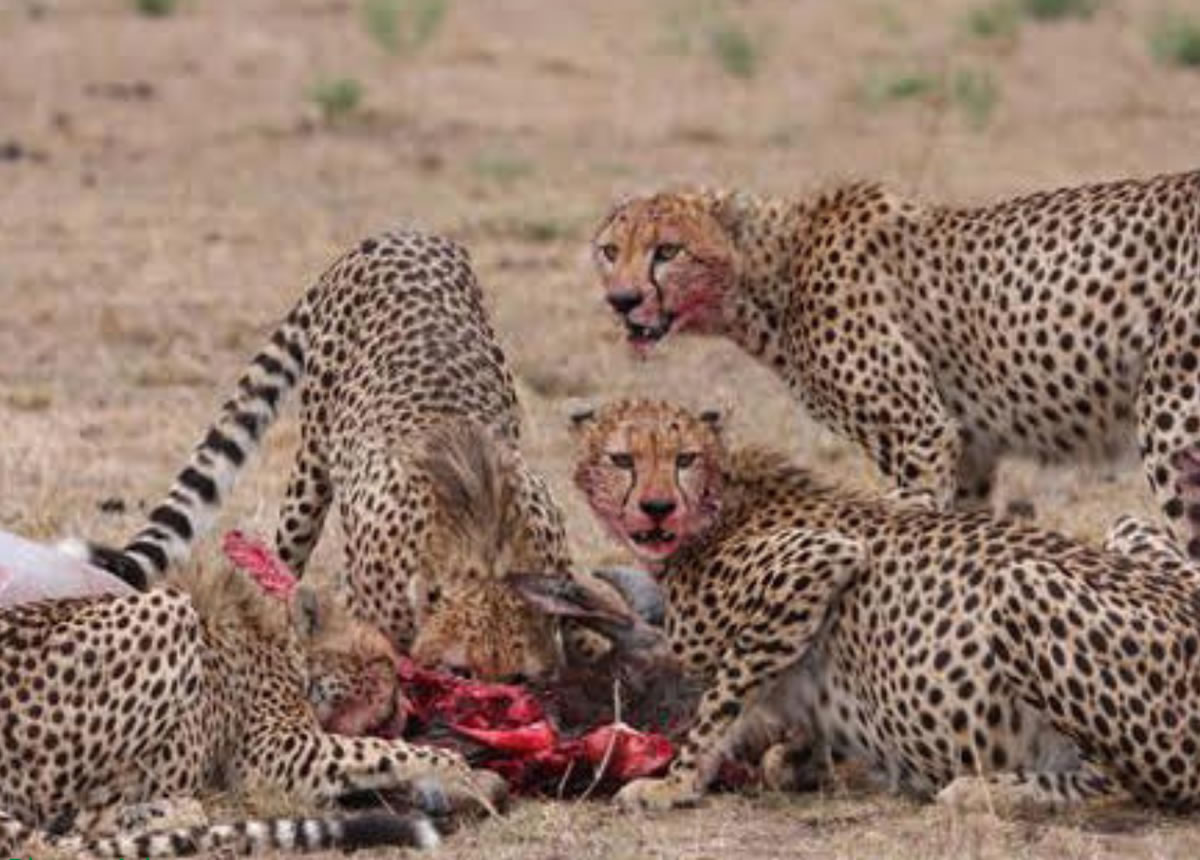
Lions, leopards and cheetahs occur within the ecosystem, although sightings are naturally unpredictable. Leopards are particularly secretive, while cheetahs may travel considerable distances across open habitats.
Other possible sightings include buffaloes, impalas, dik-diks, Grant’s gazelles, waterbucks, elands, warthogs, olive baboons and vervet monkeys. Crocodiles may occur along the river, while African wild dogs are an uncommon possibility in the wider northern ecosystem.
Travelers seeking a broader guide can review our article about what wildlife can be seen in Samburu after that article is published and its final working URL has been confirmed.
Is Samburu a Big Five Destination?
The Samburu Special Five should not be confused with the traditional African Big Five. Samburu supports lions, leopards, elephants and buffaloes, but rhinos are not considered standard sightings inside the reserve.
Travelers who want to prioritize rhino viewing can combine Samburu with a suitable conservation area or Lake Nakuru National Park. This approach creates a varied itinerary while preserving accurate expectations about each destination.
The 5-Day Lake Nakuru and Maasai Mara Safari provides additional inspiration for travelers interested in more traditional Big Five environments.
When Is the Best Time to See the Special Five?
The Samburu Special Five may be observed throughout the year. Generally drier periods from June to October and January to February can produce more open visibility when vegetation is less dense.
Animals may also spend more time near dependable water during dry conditions. However, wildlife movements remain unpredictable, and no season guarantees sightings of all five.
Wetter periods can transform the landscape, encourage fresh vegetation and create rewarding birdwatching and photography opportunities. Rain may also affect reserve roads and travel times.
What Is the Best Time of Day for Game Drives?
Early morning and late afternoon are popular because temperatures are cooler and many animals may be more active. These periods also provide softer light for photography.
Gerenuks and giraffes may feed throughout the day, while zebras and oryx adjust their movement according to heat, grazing and water. Somali ostriches may remain visible in open terrain even during warmer periods.
A complete safari should not rely on one short game drive. Multiple outings under different conditions provide a more representative understanding of the ecosystem.
How Many Days Do I Need?
Three days and two nights are suitable for most first-time visitors. This duration usually includes an arrival game drive, one complete day with morning and afternoon activities and a final morning drive before departure.
Four days and three nights provide more time for photography, birdwatching and an optional community-led cultural experience. One night may feel rushed, particularly when traveling to and from Samburu by road.
Travelers seeking a more comprehensive journey can explore the 14-Day Kenya National Parks Safari or the 13-Day Kenya Diverse Ecosystems Safari.
How Do Cultural Experiences Complement the Safari?
A respectfully arranged, community-led experience can help travelers understand Samburu heritage, pastoral life, beadwork, music, livestock and environmental knowledge.
Cultural activities should be transparent, voluntary and designed with the participating community. Visitors must request permission before photographing people, homes, ceremonies or personal belongings.
Communities should never be treated as extensions of a wildlife checklist. The most valuable encounters are based on dignity, conversation and mutual respect rather than hurried performances.
How Can I Photograph the Samburu Special Five Responsibly?
A zoom lens allows travelers to photograph wildlife without encouraging the driver to approach too closely. Vehicles should not block animal paths or surround animals with other safari vehicles.
Early-morning and late-afternoon light can enhance coat patterns and environmental portraits. Midday light may create harsher shadows and heat haze but can still document behavior.
Photographers should avoid shouting, clapping or making animal sounds to force a subject to look toward the camera. Natural behavior produces more authentic images and reduces disturbance.
What Should I Pack for a Samburu Safari?
Lightweight, breathable clothing in neutral colors is suitable for game drives. A warm layer is useful during early mornings, while a hat, sunglasses and sunscreen provide daytime protection.
Binoculars help visitors study distinctive markings, while a camera with a zoom lens supports responsible photography. Travelers should also carry personal medication, insect repellent and a reusable water bottle.
Dry conditions can create dust, so cameras and electronics should be protected. During wetter periods, add a waterproof jacket and a water-resistant equipment bag.
Why Book a Samburu Safari with Ngeye Uganda Tours?
Ngeye Uganda Tours creates personalized Kenya and East African safari itineraries based on preferred wildlife, travel dates, available time, accommodation style and budget.
Our planning considers realistic transfer times, game-drive schedules, seasonal conditions and opportunities to combine Samburu with other destinations. We provide honest expectations and never guarantee sightings of wild animals.
Travelers can explore our complete collection of East African safari packages or learn more about Ngeye Uganda Tours.
Plan Your Samburu Special Five Safari
Let our safari specialists design a personalized journey focused on northern Kenya’s distinctive wildlife, birdlife, landscapes and cultural heritage.
Frequently Asked Questions About the Samburu Special Five
What are the Samburu Special Five?
They are Grevy’s zebra, reticulated giraffe, gerenuk, Beisa oryx and Somali ostrich.
Why are they called the Special Five?
They are strongly associated with northern Kenya’s dry habitats and give Samburu a distinctive wildlife identity compared with southern safari areas.
Can I see all five during one safari?
It is possible, but not guaranteed. The animals move freely according to food, water, weather and other natural conditions.
Are the Samburu Special Five endangered?
The five species face different conservation pressures and do not all share the same conservation status. Habitat protection and connected wildlife landscapes are important to their long-term survival.
What is the difference between a Grevy’s zebra and a plains zebra?
Grevy’s zebra has narrower stripes, larger rounded ears, a white belly and a taller, more mule-like build than the plains zebra.
Is the Somali ostrich different from the common ostrich?
Yes. The Somali ostrich differs in coloration and geographical distribution. Adult males are especially recognizable by their blue-grey neck and thighs.
How long should I stay in Samburu?
Three days and two nights are suitable for most visitors. Four days and three nights are better for photographers and birdwatchers.