When Is the Best Time to Visit Lake Nakuru?
The best time to visit Lake Nakuru for general wildlife viewing is usually during the drier periods from January to February and June to October. These months often provide easier road conditions, shorter vegetation and clearer opportunities to observe rhinos, Rothschild’s giraffes, buffaloes and other mammals. However, Lake Nakuru remains a rewarding year-round destination, and the greener months offer beautiful scenery, active birdlife and fewer visitors.
The ideal season ultimately depends on what you want to experience. Wildlife photographers may appreciate the open visibility of the dry season, while birdwatchers may prefer greener periods when breeding activity and seasonal movements add variety. Travelers interested in flamingos should understand that flock sizes depend more on water levels, lake chemistry and food availability than on a fixed calendar month.
Lake Nakuru lies within Kenya’s Great Rift Valley and forms part of the UNESCO-listed Kenya Lake System. Its combination of alkaline water, wetlands, woodland, grassland and rocky escarpments supports an impressive mixture of birds and mammals within a relatively compact protected area.
Visitors planning a broader journey can explore other destinations through the verified Kenya National Parks guide or read the live article explaining what Lake Nakuru National Park is known for.
Is Lake Nakuru a Year-Round Safari Destination?
Lake Nakuru National Park can be visited throughout the year. Resident wildlife, including rhinos, giraffes, buffaloes and various antelopes, remains in the protected area through both dry and rainy periods.
Seasonal differences mainly affect road conditions, vegetation, photography, visitor numbers and the ease with which animals can be observed. Drier conditions can expose more open ground, while rainfall transforms the landscape into a vibrant green environment.
The park’s relatively compact size also makes it more manageable than larger reserves during changing weather. Nevertheless, heavy rainfall can create muddy sections, and access to particular areas may depend on current road conditions.
Travelers should select their dates according to personal interests rather than assuming that one season is universally perfect. Every period presents different advantages and trade-offs.
Why Visit Lake Nakuru During the Dry Season?
The drier periods are commonly experienced from January to February and June to October. These months are popular for wildlife-focused safaris because roads are generally easier to navigate and vegetation may be shorter.
Open visibility can help guides locate animals across grassland and around woodland edges. White rhinos may be observed grazing in open areas, while Rothschild’s giraffes browse among acacia trees. Buffaloes, zebras, waterbucks, impalas, warthogs and baboons may also be encountered.
Black rhinos can remain difficult to find because they often use bushland and woodland. Lions and leopards are similarly unpredictable. A dry-season visit may improve visibility but cannot guarantee a particular sighting.
Morning and afternoon game drives can be comfortable during these periods, although midday conditions may become warm and dusty. Visitors should carry drinking water, sun protection and a light layer for cooler mornings.
Advantages of the Dry Season
Lower rainfall generally reduces mud on internal game-drive routes.
Shorter grass and reduced foliage can make some animals easier to locate.
Dry weather lowers the likelihood of activities being interrupted by heavy showers.
Open habitats can provide unobstructed views, although dust and harsh midday light remain considerations.
What Are the Disadvantages of Visiting During the Dry Season?
Popular dry-season months can bring more safari vehicles and stronger demand for accommodation. This is especially relevant during international school holidays and other peak travel periods.
Rates may be higher, and preferred rooms or private vehicles can sell out earlier. Travelers should reserve accommodation and transportation in advance if their dates are fixed.
The landscape may appear dry or dusty compared with the vivid green scenery experienced after rain. Photographers seeking dramatic skies and saturated colors may prefer the green season.
What Is Lake Nakuru Like During the Green Season?
The principal wetter period normally occurs between March and May, while shorter rains commonly affect October or November into December. Exact rainfall patterns vary, and seasonal timing should not be treated as completely fixed.
Rain refreshes grasslands and woodland, creating lush vegetation and attractive Rift Valley scenery. Cloud formations, reflected light and vibrant colors can produce excellent landscape-photography conditions.
Fresh plant growth supports grazing and browsing wildlife. Animals remain present, although taller grass and thicker vegetation can make smaller or more secretive species difficult to locate.
Rain does not normally continue throughout every day. Showers may be followed by clear periods, but heavy rain can affect internal roads. A suitable safari vehicle and flexible itinerary are valuable during this season.
Why Birdwatchers May Prefer Greener Months
Lake Nakuru’s birdlife remains rewarding throughout the year. The green season can bring increased insect activity, breeding behavior and greater vocal activity among resident species.
Seasonal migrants may also increase the variety of birds observed at certain times. Wetland, woodland and grassland habitats introduce birdwatchers to different groups during the same safari.
Visitors may encounter pelicans, cormorants, African fish eagles, herons, egrets, storks, kingfishers, pied avocets and black-winged stilts, depending on current ecological conditions.
Serious birdwatchers should consider staying two nights to allow more time for early-morning observation. The verified 10-day Kenya Big Five and Birding Safari demonstrates how Lake Nakuru can be included in a broader birding journey.
When Is the Best Time to See Flamingos at Lake Nakuru?
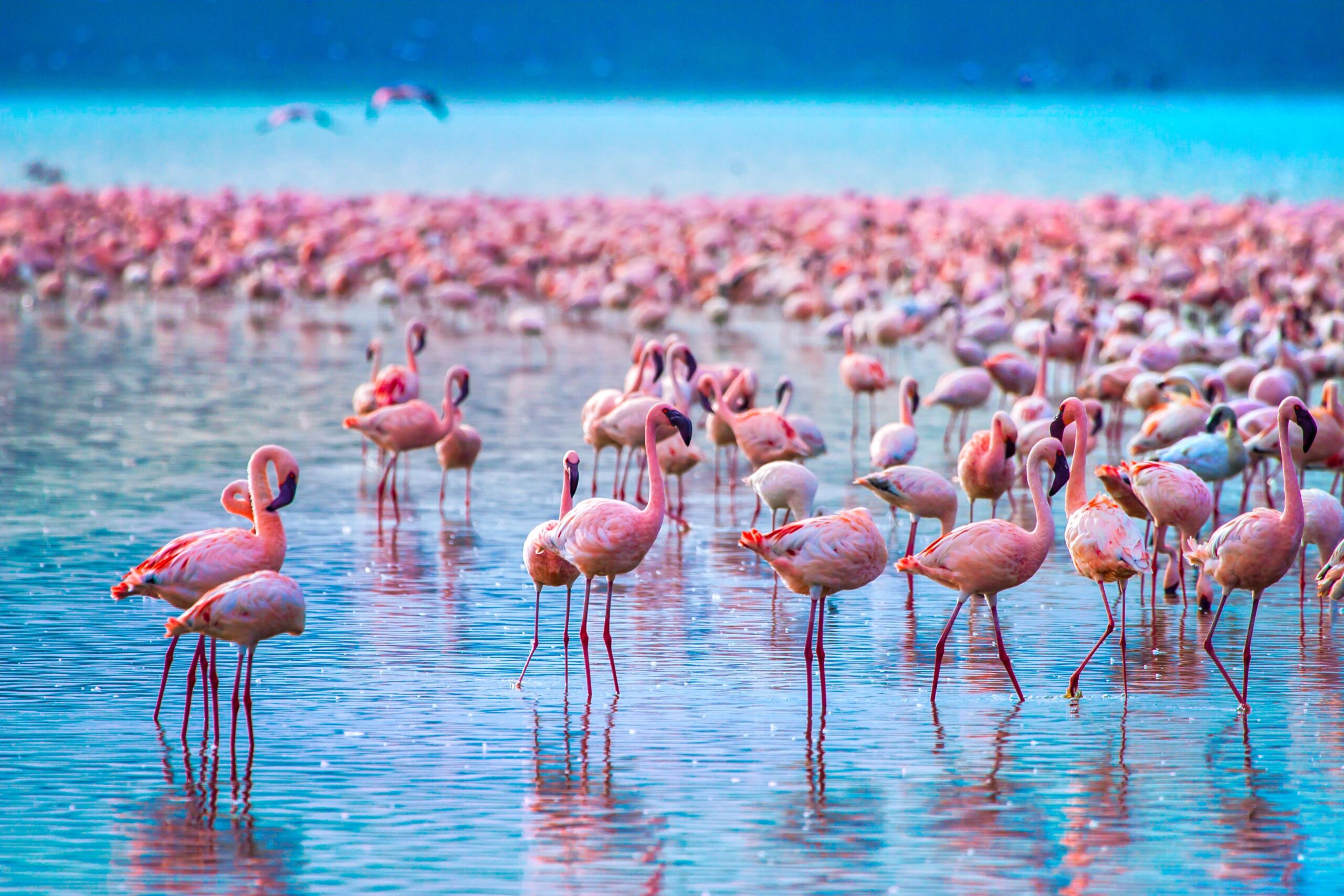
No month can guarantee large flamingo flocks. Flamingo distribution is influenced by water depth, salinity, algae and other food sources across the wider Rift Valley lake system.
When Lake Nakuru provides favorable feeding conditions, lesser and greater flamingos may gather along sections of the shoreline. When conditions change, the birds can move to Lake Bogoria, Lake Elementaita or other suitable wetlands.
Dry conditions do not automatically guarantee more flamingos, just as rainfall does not automatically mean they will be absent. Recent local observations can assist with itinerary planning but cannot promise where mobile wild birds will be on a particular day.
Travelers should visit Lake Nakuru for the complete ecosystem—rhinos, giraffes, other birds, scenery and conservation significance—rather than basing the success of the safari on one uncertain spectacle.
Which Months Are Best for Different Safari Interests?
| Travel interest | Suitable period | What to expect |
|---|---|---|
| General wildlife viewing | January–February and June–October | Generally drier roads and more open visibility |
| Green landscapes | March–May and around November | Fresh vegetation, dramatic skies and occasional rain |
| Birdwatching | Available year-round | Resident birds throughout the year and seasonal variation |
| Flamingo viewing | No guaranteed month | Numbers depend on water conditions and food availability |
| Fewer visitors | Parts of the green and shoulder seasons | Quieter roads, subject to holiday periods and weather |
| Photography | Year-round | Dry months offer open visibility; wet months offer color and dramatic light |
When Is the Best Time to See Rhinos?
Black and white rhinos are resident in Lake Nakuru National Park and may be observed throughout the year. The dry season can improve visibility when vegetation becomes shorter, but sightings still depend on the animals’ movement.
White rhinos often use open grassland and may be easier to observe. Black rhinos browse shrubs and woodland vegetation, making them more difficult to locate even during favorable weather.
Morning and late-afternoon game drives often offer comfortable temperatures and softer photographic light. Nevertheless, rhinos may appear at any time of day.
Visitors should maintain respectful distances and follow their guide’s instructions. No driver should leave approved routes or crowd an animal to obtain a photograph.
When Is the Best Time to Look for Lions and Leopards?
Lions and leopards inhabit the park but remain less predictable than prominent herbivores. Cooler morning and late-afternoon periods can provide opportunities to observe predator activity.
Lions may spend much of the day resting in grass or shade. Even a large animal can disappear almost completely when vegetation is tall.
Leopards are more elusive and may remain concealed within woodland or rocky terrain. Dry-season visibility can help, but no season guarantees a leopard sighting.
Spending two nights instead of making a rushed day trip provides more game-drive opportunities. Travelers can consult the verified guide on how long to spend in Lake Nakuru before finalizing the itinerary.
How Does the Season Affect Photography?
The dry season provides open views and lower chances of game drives being interrupted by rain. Dust, golden grass and clear skies can create a classic safari atmosphere, especially during early and late light.
The green season delivers saturated colors, fresh vegetation, dramatic clouds and reflective surfaces. Photographers may also encounter rainbows or changing light after a shower.
Each season introduces challenges. Dry-season dust can affect equipment, while rain requires waterproof protection for cameras and lenses. A beanbag can help stabilize a camera inside the safari vehicle without damaging the vehicle or restricting movement.
Photographers should bring spare batteries, memory cards and suitable protection. Wildlife must never be disturbed, surrounded or approached beyond responsible viewing distances for the sake of an image.
How Many Days Should You Spend at Lake Nakuru?
One night is sufficient for most visitors following a multi-park safari. This normally permits an afternoon game drive on arrival and another wildlife-viewing session the next morning.
Two nights are better for birdwatchers, photographers and travelers who prefer a relaxed itinerary. The additional time provides more opportunities to explore different habitats as weather, light and animal movement change.
A day trip from Nairobi is possible but can involve six to eight hours of road travel in addition to park activities. An overnight stay generally provides better value and a less exhausting experience.
Can Lake Nakuru Be Combined With the Masai Mara?
Lake Nakuru and the Masai Mara are frequently combined because they deliver contrasting but complementary experiences. Lake Nakuru offers rhino conservation, Rift Valley birdlife and scenic viewpoints, while the Masai Mara contributes expansive savannah and strong predator-viewing opportunities.
The verified five-day Lake Nakuru and Masai Mara Safari illustrates how both destinations can be included within one itinerary.
Travelers wanting additional Rift Valley scenery can include Lake Naivasha through the live five-day Lake Nakuru, Masai Mara and Lake Naivasha Safari.
Why Plan Your Lake Nakuru Safari With Ngeye Tours?
The best travel month varies according to each visitor’s expectations. Ngeye Tours & Travel considers wildlife interests, preferred scenery, budget, accommodation and wider travel plans before recommending suitable dates.
Our professional driver-guides interpret animal behavior, birdlife, habitats and conservation issues throughout the safari. This helps travelers understand the ecosystem rather than simply moving between sightings.
We communicate honestly about changing conditions. Flamingo numbers vary, predators can be elusive and weather cannot be guaranteed. Realistic information allows visitors to prepare properly and appreciate the complete destination.
Travelers can review current options through the verified safari packages page or request a journey designed specifically around their interests.
Choose the Right Time for Lake Nakuru
Share your preferred travel dates, wildlife interests, group size and accommodation level. Our safari specialists will recommend the most suitable season and prepare a personalized Kenya itinerary.
Request a Personalized SafariFrequently Asked Questions About Visiting Lake Nakuru
When is the best time to visit Lake Nakuru?
January to February and June to October generally offer drier roads and more open wildlife visibility. The park remains rewarding throughout the year.
Is Lake Nakuru open during the rainy season?
Yes. The park remains accessible, although heavy rain can make some internal roads muddy. Current road conditions should be checked before travel.
When can I see flamingos at Lake Nakuru?
Flamingos can visit the lake at different times, but no month guarantees large flocks. Their abundance depends on water level, lake chemistry and food availability.
What is the best season for seeing rhinos?
Rhinos live in the park throughout the year. Drier months may improve visibility, but sightings depend on animal movement and vegetation.
Is the green season suitable for photography?
Yes. Fresh vegetation, dramatic skies and softer light can create excellent photography conditions, although camera equipment should be protected from rain.
How many nights should I spend at Lake Nakuru?
One night is appropriate for most itineraries. Two nights are recommended for birdwatchers, photographers and visitors who prefer a slower pace.
Can Lake Nakuru be combined with the Masai Mara?
Yes. The destinations are commonly combined by road and provide complementary Rift Valley and savannah wildlife experiences.