African Lion: Behavior, Habitat, Conservation and the Best Places to See Lions
Few sounds capture the spirit of the African wilderness as powerfully as the deep roar of an African lion traveling across an open savannah before sunrise. For generations, lions have represented strength, courage, leadership, and untamed nature. Seeing one in its natural habitat remains a defining moment for travelers exploring Kenya, Uganda, Tanzania, Rwanda, and other safari destinations across Africa.
The African lion, scientifically known as Panthera leo, is one of the continent’s most recognizable animals. Its imposing appearance, complex family relationships, cooperative behavior, and position among Africa’s dominant predators have made it a central attraction on wildlife safaris. However, the animal’s fame should not hide the serious conservation pressures facing wild lion populations.
Lions have lost much of their historical range because of habitat loss, declining prey populations, human–wildlife conflict, illegal killing, poorly managed development, and the fragmentation of important wildlife corridors. A responsible lion safari should therefore offer more than an exciting photograph. It should help travelers understand the ecological importance of predators and support destinations where conservation and neighboring communities benefit from tourism.
This comprehensive guide from Ngeye Uganda Tours explores the lion’s physical features, social organization, hunting strategies, habitat, diet, reproduction, conservation challenges, and the best places to observe lions across East Africa. It also explains how to plan an ethical safari while maintaining realistic expectations about wildlife sightings.
African lion at a glance: The African lion is a highly social large cat that usually lives in a pride. Lions occupy savannahs, grasslands, open woodland, scrub, and selected semi-arid habitats. They are powerful predators, but they also scavenge when opportunities arise. Wild lions face significant conservation pressures, making responsibly managed safari tourism increasingly important.
What Is an African Lion?
The African lion belongs to the cat family, Felidae, and the genus Panthera, which also includes leopards, tigers, jaguars, and snow leopards. Most wild lions now live in fragmented populations across sub-Saharan Africa. A small, separate population of Asiatic lions survives in India.
African lions are strongly built, with muscular forequarters, powerful jaws, retractable claws, and rough tongues adapted for removing meat from bones. Their tawny coats provide camouflage in dry grass, open woodland, and dusty savannah environments.
Adult males are normally recognizable by their manes, although the length, density, and color vary considerably. Genetics, age, climate, nutrition, health, and hormone levels can all influence mane development. Some males living in particularly warm environments have relatively modest manes, while others develop thick, dark hair around the head, neck, shoulders, and chest.
Lionesses generally lack manes and are usually lighter than adult males. Their athletic bodies are well suited to stalking, acceleration, and coordinated hunting. Nevertheless, male lions are also capable hunters, particularly when living alone, traveling in coalitions, or targeting large prey.
Why Are Lions Called the Kings of the Jungle?
The popular expression “king of the jungle” is culturally powerful but ecologically misleading. Most African lions do not inhabit tropical jungles. They are more commonly associated with grasslands, savannahs, open woodland, scrub, floodplains, and semi-arid environments.
The title probably developed from the lion’s imposing physical presence, loud roar, social dominance, and historical symbolism. Lions have appeared in royal emblems, traditional stories, national identities, religious art, architecture, and literature for thousands of years.
In nature, however, lions do not “rule” an ecosystem in the human sense. They compete with other predators, defend themselves against rivals, respond to prey availability, and depend on healthy habitats. Hyenas may challenge lions at kills, crocodiles present risks around water, and elephants, buffaloes, and other large animals can seriously injure or kill a lion.
Understanding this complexity creates a richer safari experience. Lions are impressive not because they are invincible, but because they have evolved sophisticated physical and social strategies for surviving in demanding environments.
How Do Lion Prides Work?
Lions are the most social of the world’s wild cat species. A typical pride may contain related adult females, their cubs, juveniles, and one or more adult males. Pride size and composition vary according to habitat, prey availability, competition, mortality, and changes in leadership.
Related females often form the stable foundation of a pride. They may remain in or near their natal territory and cooperate in cub rearing, territorial defense, and hunting. Young females may eventually become integrated into the adult social structure, while young males commonly leave or are displaced as they mature.
Male lions sometimes form coalitions with brothers, half-brothers, or unrelated companions. Cooperation can help them acquire and defend access to a pride or territory. Coalitions may remain together for years, although relationships change as animals mature, become injured, or encounter stronger rivals.
Prides are not perfectly peaceful family units. Competition occurs around food, breeding access, territory, and cub survival. Leadership changes can be violent, and incoming males may kill young cubs that were fathered by previous males. Although distressing to witness, such behavior forms part of the lion’s natural reproductive strategy.
How Do African Lions Communicate?
The lion’s roar is one of Africa’s most powerful wildlife sounds. Roaring can advertise territory, communicate with pride members, locate separated companions, and warn competitors. Under favorable conditions, the call can carry across considerable distances.
Lions also communicate through scent marking, urine spraying, scratching, facial expressions, tail movements, posture, rubbing, licking, grunts, growls, and softer contact calls. Pride members frequently greet one another by rubbing their heads and bodies together, reinforcing scent and social bonds.
Cubs communicate hunger, discomfort, playfulness, and fear through vocalizations and body movements. Mothers recognize their young through combinations of scent, sound, and behavior.
Travelers who watch patiently may observe more communication during a quiet pride interaction than during a dramatic hunt. A knowledgeable safari guide can help interpret ear position, tail movement, scent marking, grooming, and changes in posture without claiming certainty where animal intentions remain unclear.
What Do African Lions Eat?
African lions are carnivores that hunt a wide variety of animals. Their prey differs by ecosystem but may include wildebeests, zebras, buffaloes, warthogs, antelopes, gazelles, Uganda kobs, topis, and other medium-sized or large mammals.
Lions are opportunistic and adjust their behavior according to available prey, terrain, pride size, season, and competition. They may target smaller animals when conditions allow or cooperate against larger and more dangerous prey. Attempting to kill a buffalo, giraffe, or other large animal can result in serious injury.
Although lions are effective hunters, they also scavenge. They may take over carcasses from hyenas, leopards, cheetahs, wild dogs, or other predators. Similarly, competing carnivores may feed from an abandoned lion kill.
Feeding can appear disorderly because pride members compete for access. Adult males sometimes dominate a carcass, while cubs and lower-ranking individuals wait for an opportunity. Access depends on social relationships, hunger, pride composition, and who participated in the hunt.
How Do African Lions Hunt?
Lions rely on concealment, patience, positioning, and short bursts of speed rather than prolonged pursuit. They may use tall grass, darkness, vegetation, drainage lines, wind direction, and uneven terrain to approach prey without being detected.
Lionesses often cooperate during hunts, but not every hunt involves an organized team. One lion may stalk independently, several may approach from different directions, or pride members may react opportunistically when prey moves close enough.
Lions are generally more active during cooler periods, including the night, early morning, and evening. However, hunting can occur at any time, particularly when opportunity, hunger, cloud cover, or weather conditions influence activity.
Most hunting attempts are unsuccessful. Prey animals possess strong senses, speed, defensive formations, horns, hooves, and knowledge of their environment. Witnessing a lion does not mean a hunt will occur, and seeing a stalk does not guarantee a kill.
Responsible safari reminder: A driver should never chase prey toward lions, surround a hunting animal, block an escape route, leave authorized tracks without permission, or pressure wildlife to create a dramatic sighting. Natural behavior must always take priority over photographs.
Do Lions Sleep Most of the Day?
Lions spend a substantial amount of time resting and may remain inactive for many hours, particularly during hot weather. Conserving energy is important because hunting, territorial defense, mating, and competition require intense physical effort.
Resting lions are not necessarily uninteresting. Pride members may groom one another, nurse cubs, change sleeping positions, react to distant sounds, greet returning companions, or move into shade as the temperature changes.
Travelers expecting constant action can feel disappointed when lions are sleeping. A realistic safari perspective recognizes that rest is natural behavior. Patient observation may reveal social details that are easily missed when visitors focus only on hunts.
How Do Lions Reproduce and Raise Their Cubs?
Lions do not have a single strict breeding season across every ecosystem. Females may reproduce when conditions, health, pride stability, and food availability permit. After mating and pregnancy, a lioness commonly separates from the main pride to give birth in a concealed location.
Newborn cubs are small, vulnerable, and dependent on their mother. They face threats from predators, starvation, accidents, disease, abandonment, and unrelated male lions. Cub mortality can therefore be high.
As cubs grow, they are introduced to the pride and begin learning through observation and play. Stalking games, wrestling, chasing, and interactions with adults help develop strength, coordination, social awareness, and skills later used during hunting and territorial behavior.
Females in a pride may give birth at similar times and sometimes nurse or protect one another’s cubs. This cooperative care can improve survival, although food shortages and leadership changes still create considerable risk.
What Role Do African Lions Play in the Ecosystem?
As major predators, lions influence prey behavior, movement, habitat use, and population dynamics. Their presence contributes to complex ecological relationships involving herbivores, vegetation, scavengers, smaller predators, and competing carnivores.
It is inaccurate to describe lions as simply “controlling” every herbivore population. Ecosystems are influenced by rainfall, disease, food availability, migration, drought, fire, human activity, other predators, and numerous additional factors. Nevertheless, lions form an important part of these natural systems.
Lion kills also provide food for scavengers, including hyenas, jackals, vultures, and smaller organisms. The remains of carcasses return nutrients to the environment, demonstrating how predation contributes to wider ecological processes.
Protecting lions requires protecting large areas containing prey, water, breeding habitat, movement corridors, and space for dispersing animals. Lion conservation can therefore benefit many other species that share the same landscape.
Where Do African Lions Live?
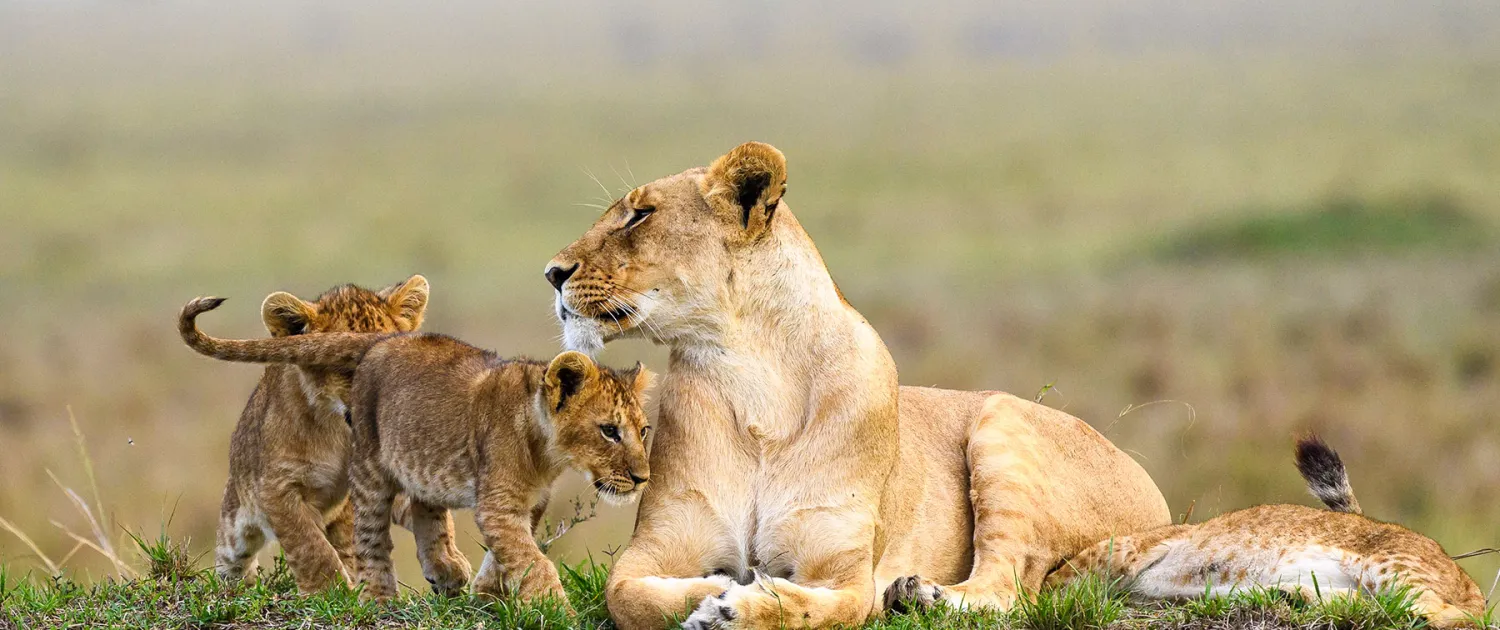
African lions occupy a range of habitats, including open grasslands, savannahs, dry woodland, bushland, floodplains, and selected semi-arid environments. Suitable lion habitat must provide sufficient prey, access to water, cover, and space away from excessive human pressure.
Wild lion populations survive in several East and Southern African countries. Important landscapes include the Serengeti–Mara ecosystem, northern Tanzania, Kenya’s Tsavo and Laikipia regions, Uganda’s savannah parks, Rwanda’s Akagera National Park, Zambia’s protected areas, Botswana, Namibia, Zimbabwe, Mozambique, and South Africa.
National boundaries do not always correspond with natural wildlife movement. Lions may travel beyond protected areas into community land, ranches, hunting concessions, forest reserves, and wildlife corridors. Conservation must therefore extend beyond park boundaries.
Maasai Mara: Where Can Travelers See Lions in Kenya?
The Maasai Mara National Reserve and surrounding conservancies are among Africa’s best-known lion-viewing destinations. Open grasslands make animals relatively visible, while substantial populations of wildebeests, zebras, antelopes, buffaloes, and other herbivores support predators.
Travelers may observe lions resting on raised ground, interacting within a pride, patrolling territories, stalking prey, or feeding at a carcass. However, neither close encounters nor hunts can be guaranteed. Animal movements change with prey distribution, weather, tourism pressure, and seasonal conditions.
During periods associated with the Great Migration, the Mara may receive large numbers of wildebeests and zebras moving from the Serengeti ecosystem. Migration timing is controlled by rainfall and grazing rather than a fixed calendar, so responsible operators avoid promising a particular crossing or predator encounter.
Explore additional destinations through the Ngeye guide to Kenya’s national parks and reserves.
Queen Elizabeth National Park: Why Are Uganda’s Tree-Climbing Lions Famous?
Queen Elizabeth National Park is one of Uganda’s most important lion destinations. Game drives across the Kasenyi Plains may reveal lions associated with concentrations of Uganda kob and other prey.
The park’s southern Ishasha sector is internationally known for lions that sometimes rest in fig trees. Tree climbing is not exclusive to Ishasha, and not every lion climbs a tree during every visit. Nevertheless, the behavior is sufficiently associated with the area to make it one of Uganda’s most distinctive wildlife experiences.
Possible explanations include avoiding heat or insects, gaining an elevated view, resting comfortably, or learned local behavior. Researchers continue to examine why tree climbing becomes more common in particular populations, so any single explanation should be treated cautiously.
Travelers can combine Queen Elizabeth National Park with gorilla trekking in Bwindi, chimpanzee tracking in Kibale, or a boat safari on the Kazinga Channel. Discover more through the Uganda national parks collection.
Serengeti National Park: How Do Lions Shape Tanzania Safaris?
Serengeti National Park and the surrounding ecosystem provide extensive habitat for African lions. The combination of open plains, woodland, rocky outcrops, seasonal water, and abundant herbivores supports complex predator–prey relationships.
Lions sometimes use rocky outcrops, known as kopjes, as resting places and vantage points. These formations may provide shade, elevation, denning areas, and opportunities to survey the surrounding plains.
During different stages of the Great Migration, shifting concentrations of wildebeests and zebras influence predator activity. Resident prey remains important throughout the year, so lion viewing is not limited to the migration season.
The Serengeti should not be presented as a wildlife performance where action occurs on demand. Some drives produce dramatic encounters, while others reveal quieter behaviors or require patient searching. Explore Tanzania’s wildlife regions through the Tanzania national parks guide.
Akagera National Park: Can Travelers See Lions in Rwanda?
Yes. Lions occur in Akagera National Park, Rwanda’s principal savannah wildlife destination. Their return followed a carefully managed reintroduction after lions had disappeared from the park.
Akagera’s recovery demonstrates how effective management, law enforcement, habitat protection, community engagement, and long-term conservation planning can help restore wildlife populations. The park contains savannah, woodland, wetlands, lakes, and other habitats supporting numerous species.
Lion sightings remain subject to movement, vegetation, weather, and guide knowledge. Akagera is not simply an addition to a gorilla-focused holiday; it offers a contrasting savannah experience that can include game drives, birdwatching, and water-based activities.
Travelers can explore possible combinations through the Rwanda national parks collection.
Which Other East African Parks Offer Lion Sightings?
| Destination | Country | Lion-Safari Character |
|---|---|---|
| Maasai Mara ecosystem | Kenya | Open grasslands, resident prey, pride interactions, and seasonal migration activity |
| Tsavo East and Tsavo West | Kenya | Immense landscapes, lower-density wildlife, and historically famous lions |
| Serengeti ecosystem | Tanzania | Expansive plains, kopjes, resident herbivores, and migration-related predator activity |
| Ngorongoro Crater | Tanzania | Compact wildlife-viewing area with resident lion prides |
| Ruaha National Park | Tanzania | Remote setting, large wilderness areas, and significant predator habitat |
| Queen Elizabeth National Park | Uganda | Kasenyi Plains and the tree-climbing lions associated with Ishasha |
| Murchison Falls National Park | Uganda | Savannah game drives combined with Nile boat experiences |
| Kidepo Valley National Park | Uganda | Remote valleys, dramatic scenery, and uncrowded wilderness |
| Akagera National Park | Rwanda | Restored lion population within a recovering savannah and wetland ecosystem |
When Is the Best Time to See African Lions?
African lions can be observed throughout the year in suitable parks, but season, temperature, vegetation, prey movement, and water availability affect viewing conditions.
Generally drier periods can make animals easier to locate because vegetation becomes shorter and prey gathers around dependable water sources. Roads may also be easier to navigate. However, popular dry-season destinations can receive more visitors and charge higher accommodation rates.
Greener periods offer different advantages. Landscapes become more colorful, birdlife can be particularly active, many herbivores give birth, and some destinations receive fewer visitors. Taller vegetation may make lions more difficult to see, but dramatic clouds and softer light can benefit photography.
Early mornings and late afternoons are usually productive because temperatures are cooler. Night drives can reveal additional behavior in destinations where they are legally permitted, but they must be undertaken with authorized guides and appropriate lighting.
No season guarantees a hunt, close encounter, roaring lion, tree-climbing behavior, or visible cubs. The best safari is planned around the quality of the entire ecosystem rather than one promised event.
How Can Travelers Photograph Lions Responsibly?
Lion photography requires patience and respect. Camera equipment should never become a reason to pressure guides into approaching too closely, surrounding an animal, blocking its path, or remaining after signs of distress.
A telephoto lens allows photographers to capture portraits without invading an animal’s space. Beanbags can provide stability inside a safari vehicle, while spare batteries and memory cards reduce interruptions. Travelers should avoid sudden movements, loud conversation, and leaning dangerously outside the vehicle.
Flash photography should be avoided where it may disturb animals, particularly during low-light or nocturnal encounters. Drone use is restricted or prohibited in many protected areas and should never occur without explicit legal authorization.
Photographers should also avoid sharing real-time locations of vulnerable animals where doing so could increase disturbance or security risks. Ethical images reflect natural behavior and responsible guiding rather than manufactured closeness.
Are African Lions Dangerous to Safari Travelers?
Lions are powerful wild predators and must always be treated with respect. Professionally operated vehicle safaris are generally designed to maintain safe viewing conditions, but visitors must follow their guide’s instructions.
Travelers should remain inside the vehicle unless a guide confirms that exiting is permitted in a designated area. Hands, heads, camera equipment, and food should not be extended carelessly from the vehicle. Standing suddenly, shouting, or attempting to attract an animal’s attention can create unnecessary risk.
At unfenced camps, lions and other wildlife may pass through the property. Guests should use an escort after dark, avoid walking alone, keep children supervised, and never approach an animal on foot.
A quiet lion may still react quickly if threatened, surprised, cornered, or protecting cubs or food. Familiarity created through photography or repeated sightings does not make a wild lion tame.
What Threats Face African Lions?
Wild lions face a combination of interconnected threats. Habitat loss reduces the amount of land available for hunting, breeding, and dispersal. Roads, settlements, agriculture, fencing, and other development can fragment remaining habitats and restrict movement.
Human–lion conflict occurs when lions kill livestock or are perceived as threats to people and livelihoods. Communities living beside protected areas may carry significant costs associated with wildlife, especially where compensation, prevention, or tourism benefits are limited.
Declining wild prey can push lions toward livestock, increasing the risk of retaliatory killing. Illegal wildlife trade, poorly regulated killing, disease transmission from domestic animals, snares, and climate-related changes can create additional pressure.
Conservation cannot succeed through law enforcement alone. It requires healthy protected areas, wildlife corridors, community participation, livestock-protection measures, fair tourism benefits, scientific monitoring, education, responsible land-use planning, and cooperation across boundaries.
How Does Responsible Tourism Support Lion Conservation?
Well-managed tourism gives wildlife an economic value that can support habitat protection, ranger operations, research, local employment, guiding, accommodation, transportation, and community enterprises.
Tourism is not automatically sustainable. Poorly controlled vehicle numbers, off-road driving, crowding, littering, noise, insensitive construction, and unequal benefit distribution can damage wildlife areas. Travelers should therefore choose operators and accommodations that follow established viewing rules and contribute meaningfully to conservation and neighboring communities.
Visitors can help by respecting their guides, avoiding wildlife harassment, refusing activities based on captive-animal exploitation, buying community products responsibly, and reporting serious unethical conduct through appropriate channels.
The most valuable lion safari leaves the animal behaving naturally and helps ensure that people living alongside wildlife receive tangible benefits from its continued survival.
What Should You Pack for an African Lion Safari?
Pack lightweight, breathable clothing in neutral colors, together with warm layers for early-morning drives and cooler highland destinations. A wide-brimmed hat, sunglasses, sunscreen, insect repellent, comfortable closed footwear, and a reusable water bottle improve comfort.
Binoculars are extremely valuable because lions may be visible at a distance or partially concealed. Photographers should bring a suitable zoom lens, spare batteries, additional memory cards, lens-cleaning equipment, and dust protection.
Travelers using light aircraft should confirm baggage limits before departure. Soft-sided luggage is commonly required, and allowances may be lower than those used by international airlines.
Medication, travel documents, insurance details, and essential personal items should remain accessible. Packing requirements vary by destination, season, accommodation, and activity, so advice should be customized for the final itinerary.
Why Choose Ngeye Uganda Tours for an African Lion Safari?
Ngeye Uganda Tours designs wildlife journeys across Kenya, Uganda, Tanzania, and Rwanda. We help travelers select destinations based on season, available time, preferred accommodation, budget, photography interests, mobility, and the wider experiences they want to combine with lion viewing.
A lion-focused journey can include the Maasai Mara and Serengeti, Queen Elizabeth National Park and Bwindi, Akagera and Volcanoes National Park, or a longer regional circuit connecting several ecosystems. Browse our African safari packages for itinerary inspiration.
Our approach emphasizes realistic expectations. We cannot guarantee a lion sighting, hunt, roar, tree-climbing encounter, or particular pride. Instead, we provide professional planning, experienced guides, suitable timing, responsible viewing, and access to landscapes where lions occur naturally.
Learn more about Ngeye Uganda Tours or speak with our team about creating a private lion and wildlife safari.
Plan Your African Lion Safari
Explore East Africa’s great lion landscapes with knowledgeable guides, responsible wildlife viewing, and an itinerary designed around your interests.
Frequently Asked Questions About African Lions
What is the scientific name of the African lion?
The lion’s scientific name is Panthera leo. African lions belong to the cat family, Felidae, and the genus Panthera.
Where do African lions live?
African lions inhabit savannahs, grasslands, open woodland, bushland, floodplains, and some semi-arid environments across fragmented parts of sub-Saharan Africa.
Do lions live in jungles?
Most African lions do not live in tropical jungles. The expression “king of the jungle” is cultural rather than an accurate description of their principal habitat.
What is a group of lions called?
A resident social group of lions is called a pride. Male lions may also live and travel together in coalitions.
Do only lionesses hunt?
No. Lionesses frequently hunt alone or cooperatively, but male lions also hunt, especially when living without a pride, traveling in a coalition, or taking advantage of suitable prey.
Why do lions roar?
Lions roar to advertise territory, communicate with companions, locate pride members, and warn competitors. They also communicate through scent, posture, touch, and other vocalizations.
Where is the best place to see African lions?
Strong East African destinations include the Maasai Mara, Serengeti, Ngorongoro, Ruaha, Tsavo, Queen Elizabeth, Murchison Falls, Kidepo Valley, and Akagera. Sightings remain dependent on nature.
Can lions climb trees?
Yes. Lions can climb trees, although the frequency of the behavior differs among individuals and populations. Uganda’s Ishasha sector is particularly associated with tree-climbing lions.
Are lions dangerous to humans?
Lions are powerful wild predators and can be dangerous. Safari travelers should remain in vehicles where required, follow guide instructions, use camp escorts, and never approach lions on foot without authorized professional supervision.
Are lion sightings guaranteed on safari?
No. Lions are free-ranging wild animals. Professional guides improve the chances of locating them, but sightings, behavior, distance, and duration can never be guaranteed.