Can I Do a Half-Day Safari in Nairobi?
Can I do a half-day safari in Nairobi? Yes. A half-day game drive in Nairobi National Park is one of the most convenient ways to experience wild African animals without traveling far from Kenya’s capital. The park’s northern boundary lies approximately 7 kilometres south of Nairobi’s central business district, making early-morning and afternoon safaris possible for visitors with limited time.
A typical half-day Nairobi safari lasts approximately four to six hours, including transfers and park-entry procedures. The precise duration depends on your hotel location, selected entrance gate, traffic and the route followed inside the park. An early-morning excursion is generally the most rewarding because temperatures are cooler, roads may be quieter and many animals are more active.
Despite its relatively compact size, Nairobi National Park protects a remarkable wildlife community. Visitors may encounter lions, black and white rhinos, buffaloes, Masai giraffes, plains zebras, elands, hartebeests, impalas, warthogs, spotted hyenas and numerous birds. Leopards, cheetahs and servals also occur but are considerably more elusive.
A short safari should be planned with realistic expectations. Nairobi National Park is a natural ecosystem rather than a zoo, so no particular animal can be guaranteed. Nevertheless, a knowledgeable guide, suitable timing and careful routing can make a half-day excursion highly rewarding. Ngeye Uganda Tours can arrange the experience as a private city excursion, an airport layover safari or the opening stage of a longer East African safari.
Half-Day Nairobi Safari at a Glance
| Planning Detail | What to Expect |
|---|---|
| Typical duration | Approximately four to six hours, depending on transfers and entrance procedures. |
| Best departure | Early morning, often before Nairobi’s busiest traffic develops. |
| Alternative | An afternoon drive can work for travelers with morning commitments. |
| Possible wildlife | Lions, rhinos, buffaloes, giraffes, zebras, antelopes, hyenas and numerous birds. |
| Big Five status | Generally regarded as a Big Four park because wild elephants are not normally resident. |
| Suitable travelers | Short-stay visitors, families, business travelers and passengers with long, carefully assessed layovers. |
Where Does a Half-Day Safari in Nairobi Take Place?
The safari takes place in Nairobi National Park, Kenya’s first national park and one of the world’s most unusual urban wildlife areas. Established in 1946, the park covers approximately 117 square kilometres of grassland, acacia woodland, wetlands, seasonal streams and riverine habitat.
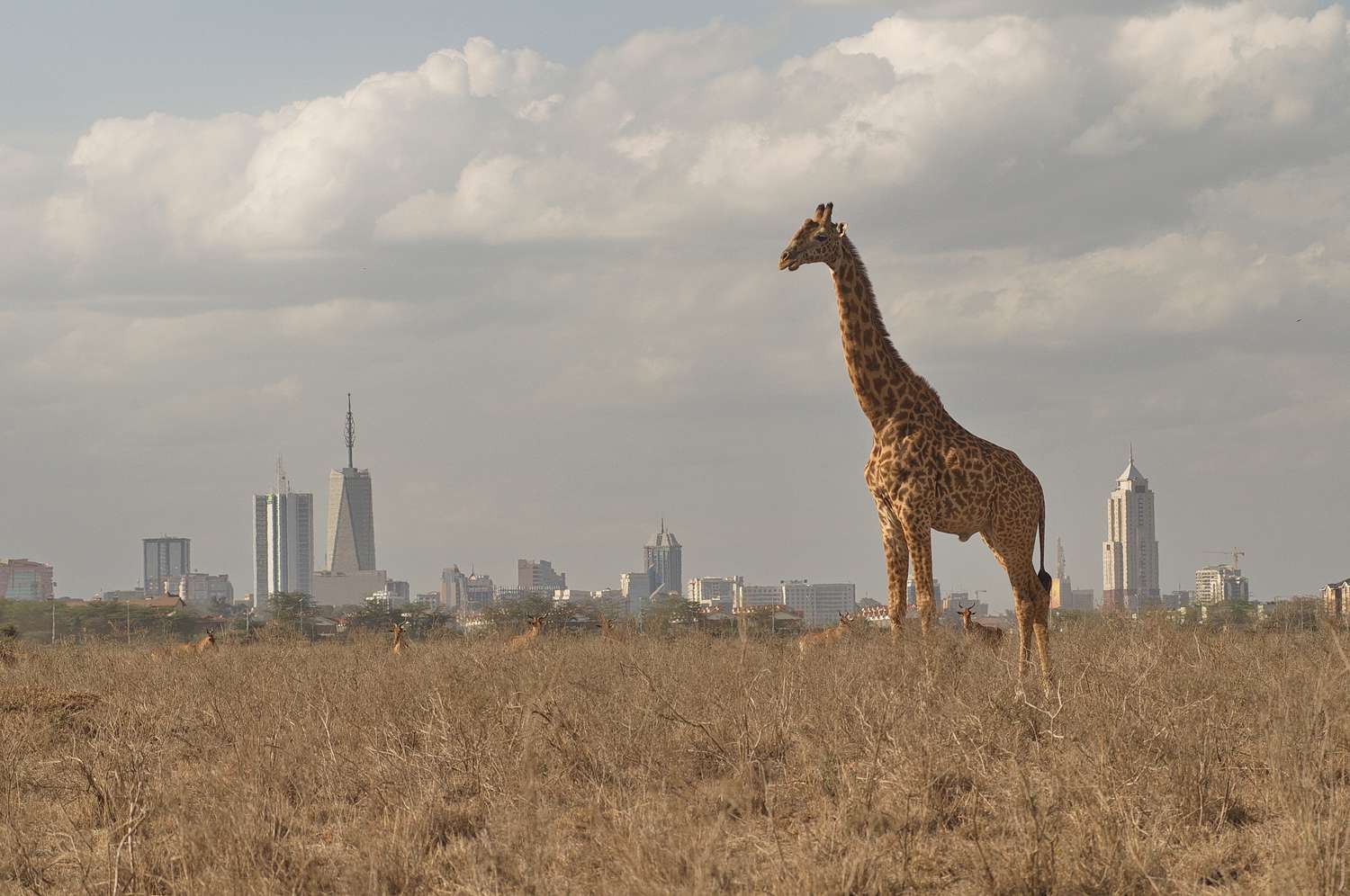
Its proximity to the city creates the extraordinary possibility of observing wildlife with Nairobi’s skyline in the distance. Depending on weather, visibility, route and the animals’ location, visitors may photograph giraffes, zebras, rhinos or lions against an urban backdrop.
The park is not simply a small tourist enclosure. It protects a functioning ecosystem in which predators, herbivores, birds, reptiles and smaller organisms interact naturally. Wildlife movements are influenced by rainfall, water, vegetation and conditions across the broader landscape.
Travelers interested in other Kenyan destinations can explore our Kenya national parks guide and combine Nairobi with Amboseli, Lake Nakuru, Samburu, Tsavo or the Maasai Mara.
What Does a Half-Day Nairobi Safari Itinerary Look Like?
The following timings are illustrative. Actual collection times, gate choice and return schedules must be adjusted according to the hotel, traffic, park regulations and the traveler’s onward arrangements.
Example Morning Safari
| Approximate Time | Activity |
|---|---|
| 5:30–6:00 a.m. | Collection from a Nairobi hotel or another agreed location. |
| 6:15–6:45 a.m. | Arrival, entrance procedures and safari briefing. |
| 6:30–10:30 a.m. | Guided wildlife drive through selected habitats. |
| 10:30–11:30 a.m. | Exit and transfer to the hotel, airport or next attraction. |
The principal advantage of a morning safari is increased wildlife activity during cooler conditions. Predators may still be moving after the night, while grazers and birds are often active shortly after sunrise. Morning light can also be favorable for photography.
Example Afternoon Safari
An afternoon safari may begin between approximately 1:30 and 2:30 p.m., depending on the pickup location and park schedule. Wildlife activity can be quieter during the warmest hours but may increase later as temperatures begin to fall.
Late-afternoon light can create attractive photographic conditions. However, the itinerary must allow sufficient time to leave before the official closing time. Nairobi traffic can also affect the return journey, particularly on weekdays.
Morning or Afternoon: Which Half-Day Safari Is Better?
| Consideration | Morning Safari | Afternoon Safari |
|---|---|---|
| Wildlife activity | Often higher during cooler early hours. | May improve as afternoon temperatures fall. |
| Photography | Soft morning light and possible clear views. | Warm late-afternoon light can be attractive. |
| Traffic | An early departure may avoid some congestion. | Return travel may coincide with evening traffic. |
| Best suited to | Wildlife enthusiasts, photographers and birdwatchers. | Travelers with morning meetings, flights or activities. |
For most first-time visitors, an early-morning safari is the strongest choice. An afternoon drive remains worthwhile when it fits the traveler’s schedule better. Neither option guarantees particular animals.
What Animals Can You See on a Half-Day Safari?
A half-day visit provides an opportunity to encounter many of Nairobi National Park’s best-known animals. The exact species seen depend on natural movements and the route selected by the guide.
Lions and Other Predators
Lions live in the park and may be observed resting, walking through grassland or watching prey. Spotted hyenas and black-backed jackals are also possible. Leopards, cheetahs and servals occur but are secretive and should be considered fortunate sightings.
Black and White Rhinos
Nairobi National Park is important for rhinoceros conservation. Both black and white rhinos may be encountered, making the park particularly appealing to travelers interested in threatened African wildlife.
Black rhinos are predominantly browsers and may favor areas with shrubs, while white rhinos are grazers more commonly associated with open grassland. Sightings remain natural and cannot be promised.
Giraffes, Zebras and Buffaloes
Masai giraffes, plains zebras and African buffaloes are among the park’s characteristic large mammals. Other possible herbivores include elands, hartebeests, impalas, gazelles, waterbucks and warthogs.
Are There Elephants?
Wild elephants are not normally resident in Nairobi National Park. Consequently, the park is commonly considered a Big Four rather than a complete Big Five destination. Travelers hoping to see elephants should add Amboseli, Tsavo, Samburu or another suitable park to their itinerary.
Can Birdwatchers Enjoy a Half-Day Nairobi Safari?
Nairobi National Park is a rewarding destination for birdwatching. More than 400 resident and migratory species have been recorded in its grasslands, wetlands, woodland and seasonal waterways.
Possible sightings include secretarybirds, ostriches, grey crowned cranes, martial eagles, augur buzzards, herons, egrets, kingfishers and numerous smaller grassland birds. Species diversity changes according to rainfall, migration patterns and water levels.
A morning excursion is especially suitable for birding because many species are active during cooler hours. Travelers whose primary interest is bird identification may prefer a private vehicle so the guide can move slowly and spend additional time around productive habitats.
Is a Half-Day Safari Enough?
A half-day safari is enough for a valuable introduction to Nairobi National Park, but it cannot provide the depth of a full-day or multi-day journey. Visitors can explore selected areas and potentially observe several major species without committing an entire day.
A full-day excursion may be more appropriate for dedicated photographers, birdwatchers and travelers who want to explore different habitats. Additional time allows the guide to respond to wildlife movements and wait patiently at productive locations.
The correct choice depends on the traveler’s priorities. Someone with one free morning in Nairobi may find a half-day safari ideal. A wildlife enthusiast with a full day available may prefer a longer visit.
Can I Do a Half-Day Safari During an Airport Layover?
A half-day safari may be possible during a sufficiently long layover at Jomo Kenyatta International Airport, but careful assessment is essential. The park’s geographical proximity to the airport does not eliminate immigration procedures, baggage collection, Nairobi traffic or airline check-in requirements.
Before confirming a layover safari, the operator should know the arrival and departure times, flight numbers, terminal arrangements, traveler nationality and whether luggage must be collected. A substantial safety margin must remain for the return to the airport.
Layover warning: Travelers with short connections should remain at the airport. A safari should only be arranged when the available time comfortably covers entry procedures, transfers, the game drive and a generous return buffer.
How Much Does a Half-Day Nairobi Safari Cost?
The cost varies according to the number of travelers, vehicle type, pickup location, park-entry fees, residency status and services included. Private safaris normally cost more per person for solo travelers or couples, while the per-person vehicle expense may decrease for a larger private group.
Park fees can change, and different rates may apply to international visitors, Kenyan citizens and eligible residents. Children may also have separate rates. Current fees should always be confirmed when requesting a quotation.
Before booking, ask whether the quoted price includes:
- Private safari vehicle and professional guide
- Hotel or airport collection and return transfer
- National park entrance fees
- Drinking water
- Taxes and administrative charges
- Any additional attraction or activity fees
Travelers should also confirm the cancellation terms, payment schedule, vehicle type and what happens if a flight delay affects a layover safari.
What Should You Pack for a Half-Day Safari?
A half-day safari does not require extensive luggage. Comfortable neutral-colored clothing, closed shoes, a hat, sunglasses and sunscreen are practical choices. Early mornings can be cool, so a light jacket or fleece is recommended.
Binoculars improve both wildlife and bird observation. Photographers should bring charged batteries, sufficient memory cards and a telephoto lens. A reusable water bottle and personal medication are also helpful.
During wet periods, include a light rain jacket. Avoid bringing loose plastic or unnecessary disposable packaging into the park, and never feed wildlife.
Can a Half-Day Safari Be Combined with Other Nairobi Attractions?
Yes, provided the itinerary remains realistic. Nairobi National Park may be combined with one or two separate attractions in the Karen or Lang’ata area. Each has its own entrance arrangements and operating schedule.
Sheldrick Wildlife Trust Nairobi Nursery
The nursery cares for orphaned young elephants and other rescued animals. Visitor access may require advance booking, and current arrangements should be confirmed. The facility is separate from Nairobi National Park.
Giraffe Centre
The Giraffe Centre provides conservation education focusing on the endangered Rothschild’s giraffe. It offers a different experience from observing free-ranging Masai giraffes inside the national park.
Karen Blixen Museum
The museum can add a historical and cultural dimension to a Nairobi itinerary. It is particularly suitable for travelers interested in combining nature and heritage.
Trying to visit the park and several city attractions within one morning usually creates a rushed experience. A more balanced plan includes a morning game drive followed by lunch and one carefully selected afternoon attraction.
Is a Half-Day Safari Safe?
A professionally guided Nairobi National Park safari is suitable for most travelers when official regulations are followed. Visitors should remain inside the vehicle except at authorized locations and listen carefully to instructions from their guide.
Wild animals must never be approached, called or fed. Vehicles should maintain a respectful distance and avoid blocking an animal’s direction of movement. Parents should supervise children throughout the drive.
Travelers should disclose mobility requirements, medical concerns and special needs before the safari. This allows the operator to recommend a suitable vehicle and plan appropriate stops.
Responsible Safari Practices
Nairobi National Park faces unique conservation pressures because it borders a rapidly growing city. Roads, fencing, development and changes in surrounding land use can affect wildlife movement and habitat.
Visitors can reduce their impact by avoiding litter, keeping noise low and respecting designated roads. Drivers should not crowd animals or pursue them for photographs. Drone operation should never be assumed to be permitted without formal authorization.
A successful safari should leave wildlife undisturbed. Responsible observation protects animals and creates a more authentic experience for everyone.
Why Choose Ngeye Uganda Tours for a Half-Day Nairobi Safari?
Ngeye Uganda Tours creates personalized East African itineraries based on travel dates, available time, group size, interests and comfort preferences. A half-day Nairobi safari can be organized as a private excursion, a carefully assessed layover experience or part of a longer regional journey.
An experienced guide adds value by interpreting animal behavior, recognizing bird calls, reading tracks and selecting routes according to current conditions. Professional planning also accounts for Nairobi traffic, airport requirements and park access procedures.
We do not promise guaranteed animals or unrealistic transfer times. Our approach focuses on responsible wildlife viewing, reliable planning and honest expectations.
Browse our safari packages or contact Ngeye Uganda Tours to request a personalized half-day Nairobi safari quotation.
Frequently Asked Questions About Half-Day Nairobi Safaris
Can I do a half-day safari in Nairobi?
Yes. Nairobi National Park is close enough to the city for a morning or afternoon wildlife drive lasting approximately four to six hours, including transfers and entrance procedures.
Is a morning or afternoon safari better?
Morning safaris are generally preferred because temperatures are cooler and wildlife may be more active. Afternoon drives remain suitable for travelers with morning commitments.
What animals might I see?
Possible sightings include lions, black and white rhinos, buffaloes, giraffes, zebras, elands, hartebeests, impalas, warthogs, hyenas and many birds.
Are there elephants in Nairobi National Park?
Wild elephants are not normally resident in the park. Nairobi National Park is therefore commonly regarded as a Big Four destination.
Can I see rhinos during a half-day safari?
Both black and white rhinos live in the park, and sightings are possible. However, their natural movements mean that no encounter can be guaranteed.
Can I take a Nairobi safari during a layover?
It may be possible during a sufficiently long connection. Immigration, baggage, traffic and the required airport return time must be evaluated before booking.
How far is the park from central Nairobi?
The park’s northern boundary is approximately 7 kilometres south of Nairobi’s central business district. Actual driving time depends on traffic, the departure point and the selected gate.
Is a half-day safari suitable for children?
It can be suitable for families because the drive is shorter than a full-day excursion. Parents should supervise children and discuss ages, vehicle requirements and seating arrangements before booking.
What should I wear?
Wear comfortable neutral-colored clothing and carry a light jacket for cool mornings. A hat, sunglasses, sunscreen and comfortable shoes are also recommended.
Are wildlife sightings guaranteed?
No. Nairobi National Park is a natural ecosystem, and sightings depend on animal movement, weather, vegetation and time of day.