Why Are Tsavo Elephants Red?
Tsavo’s red elephants are among the most recognizable wildlife sights in Kenya. Against the region’s immense plains, dry bushland, river systems, lava formations, and glowing evening light, elephants coated in rich reddish soil create images that seem almost too dramatic to be real.
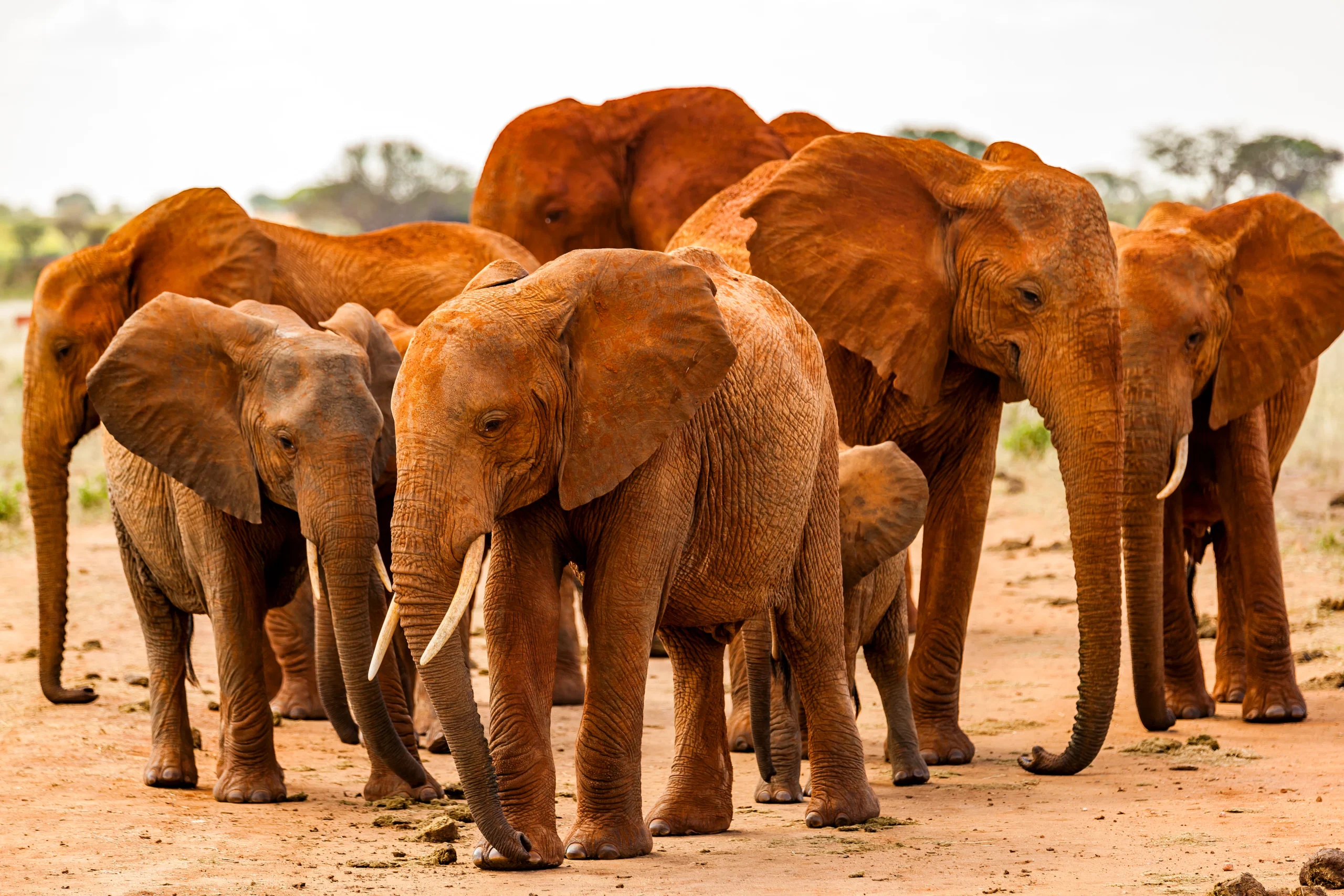
However, Tsavo elephants are not genetically red, and they do not belong to a separate red-colored elephant species. They are African savanna elephants with naturally gray skin. Their famous color develops when they spray, roll in, and rub against Tsavo’s fine iron-rich soil, leaving a temporary layer of reddish dust or mud over their bodies.
This behavior is not performed for appearance. Dust and mud bathing form part of an elephant’s natural skin-care routine. The coating can help shield sensitive skin from strong sunlight, biting insects, and moisture loss. Mud may also assist with cooling before drying into a protective layer.
The exact shade varies considerably. An elephant that has recently dusted itself may appear deep red, orange, brown, or rust-colored depending on the soil, moisture, sunlight, and thickness of the coating. Another elephant in the same herd may remain largely gray if it has recently bathed in clear water or has not yet applied dust.
This detailed guide from Ngeye Uganda Tours explains the science behind Tsavo’s red elephants, why elephants bathe in dust, whether the coloration is permanent, where travelers can observe the behavior, and how to photograph elephants responsibly.
Quick answer: Tsavo elephants look red because they coat their naturally gray skin with the ecosystem’s iron-rich red dust and mud. The color is temporary, not genetic, and can fade or wash away when an elephant bathes in water or when heavy rain removes the soil.
Are Tsavo Elephants Naturally Red?
No. Tsavo elephants are African savanna elephants, scientifically known as Loxodonta africana. Beneath the reddish layer, their skin is the same natural gray color associated with other savanna elephants across Africa.
The famous red appearance is an external coating. Elephants collect loose soil with their trunks and throw it over their backs, heads, sides, and bellies. They may also roll in dry earth, kneel in mud, rub against soil banks, or use their feet and trunks to loosen compacted ground.
As the dust settles onto the skin and becomes trapped within folds, wrinkles, and hair, the elephant gradually takes on the color of its surroundings. In Tsavo, iron-bearing soil produces the celebrated red and rust-colored appearance.
Elephants in other destinations can look pale, brown, charcoal, orange, or nearly white after dust bathing in differently colored soil. Their temporary appearance therefore reflects the geology and ground conditions of their habitat.
What Makes Tsavo’s Soil Red?
Tsavo’s landscape contains soils rich in iron-bearing minerals. Through long-term weathering and oxidation, iron compounds contribute red, orange, and reddish-brown colors to the earth.
The process is comparable to the formation of rust, in which iron reacts with oxygen. However, Tsavo’s soil is geologically and chemically complex, and it would be an oversimplification to describe every red area as purely volcanic.
Tsavo West has dramatic volcanic features, including lava flows and volcanic cones, while Tsavo East is renowned for its broad red-earth plains. The wider ecosystem has been shaped by different geological, climatic, erosional, and weathering processes.
Fine soil particles are easily lifted by wind, moving animals, and safari vehicles during dry conditions. Elephants also deliberately loosen and throw the soil onto themselves, producing a much thicker and more visible coating than passive exposure alone would create.
Why Do Elephants Take Dust Baths?
Dust bathing serves several practical purposes. Although an elephant’s skin looks extremely thick, it remains sensitive and requires regular care.
Protection from Strong Sunlight
A layer of dust or dried mud can provide a physical barrier between elephant skin and direct sunlight. This is valuable in the Tsavo ecosystem, where daytime conditions can become hot and exposed.
Elephants also seek shade, flap their ears, drink, bathe, and adjust their activity according to temperature. Dusting forms one part of a wider range of behaviors used to cope with environmental conditions.
Protection from Insects
Dust and mud can help reduce irritation from biting insects and other small organisms. Soil may cover sensitive areas and make it more difficult for insects to reach the skin.
Elephants often pay particular attention to their backs, bellies, sides, heads, and the areas behind their ears. They may use trunks, feet, branches, trees, and soil banks as part of their skin-care behavior.
Moisture Retention
After water or mud bathing, an elephant may cover itself with dry soil. This coating can slow moisture loss and protect the skin as it dries.
Relief from Skin Irritation
Soil, mud, rubbing, scratching, and water bathing may help remove parasites, loose skin, and sources of irritation. Elephants frequently rub their bodies against trees, rocks, termite mounds, or soil banks after bathing.
Cooling and Comfort
Wet mud can provide temporary cooling as moisture evaporates. Dry dust itself should not be described as a complete cooling system, but it works alongside water bathing, shade seeking, ear flapping, reduced midday activity, and movement toward suitable habitat.
How Does an Elephant Give Itself a Dust Bath?
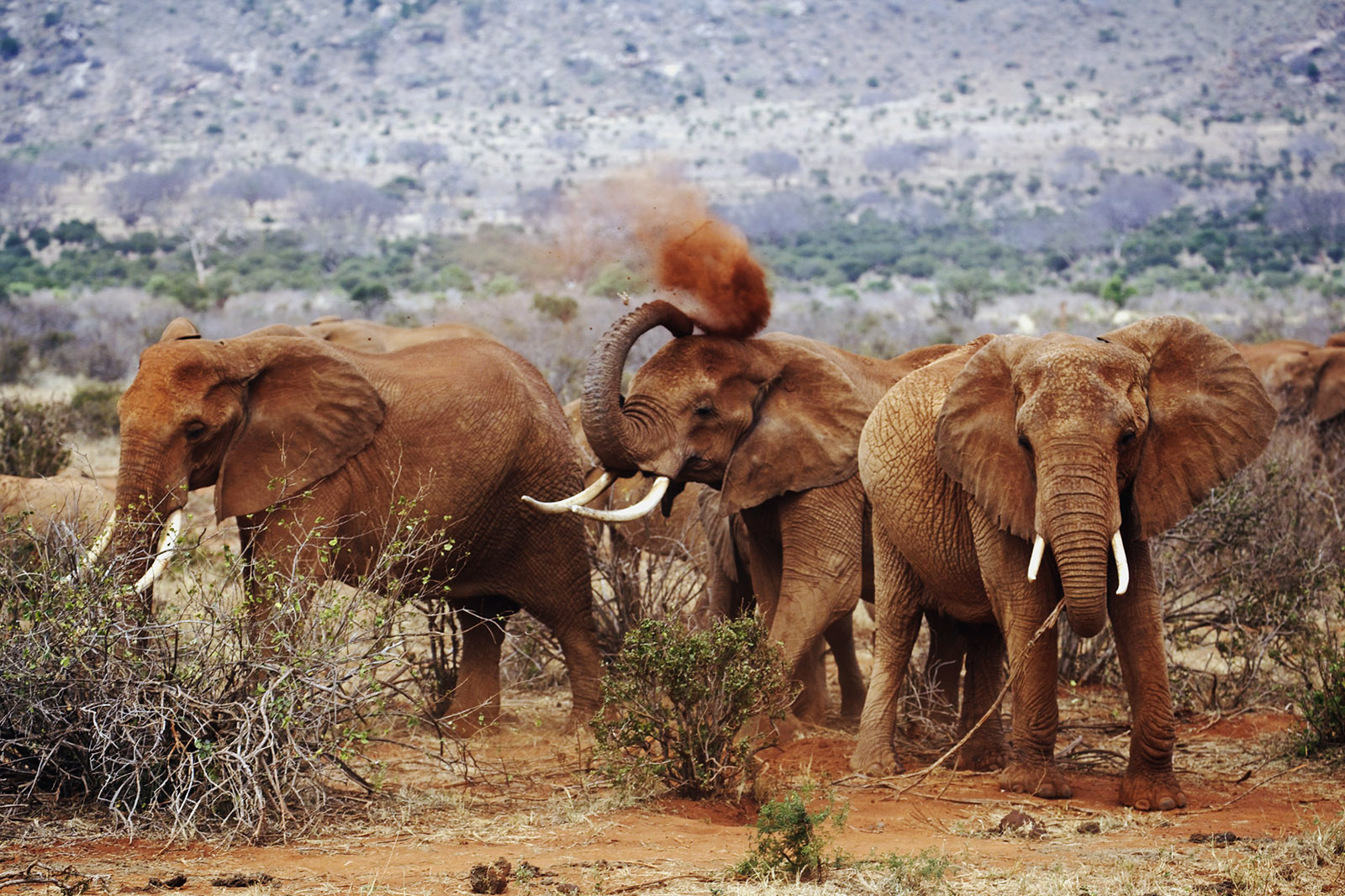
An elephant uses its trunk to collect loose soil from the ground. The animal may scrape the surface with a foot or tusk before curling its trunk into the loosened material.
It then raises the trunk and blows or throws the soil across its body. Repeated applications create visible clouds of dust and gradually build the protective coating.
An elephant cannot easily reach every part of its body with its trunk. It may therefore roll, kneel, lie on one side, rub against a bank, or use a tree to distribute the soil and scratch difficult areas.
Calves learn by watching and participating. Young elephants may imitate adults, play in dust, roll in mud, and throw soil with less accuracy while developing control of their trunks.
Dust bathing can occur individually or while several family members use the same area. A relaxed group dusting together can provide a beautiful opportunity to observe elephant social behavior.
Is the Red Color Permanent?
No. The color is temporary because it consists of soil coating the surface of the skin. It can fade through movement, brushing against vegetation, additional dust bathing, rain, swimming, or water spraying.
An elephant may appear bright red one day and largely gray after bathing. It can then restore the red coating by dusting itself again.
The thickness of the soil also influences the shade. A light coating produces a subtle rusty tint, while repeated dusting on damp skin can create an intense red or orange appearance.
Different family members may display different colors during the same sighting. This does not indicate separate elephant types, ages, or subspecies. It generally reflects their recent bathing and dusting activity.
Are Tsavo’s Elephants a Separate Species?
Tsavo’s elephants are African savanna elephants and are not classified as a separate red species. Their scientific name is Loxodonta africana.
Africa has two recognized elephant species: the African savanna elephant and the smaller African forest elephant. Forest elephants primarily inhabit dense forests in Central and West Africa and differ in size, genetics, tusk structure, and skeletal characteristics.
The elephants living in Tsavo East and Tsavo West belong to the savanna species. Their red appearance is environmental and behavioral rather than a permanent biological characteristic.
Do Elephants in Other Parts of Africa Change Color?
Yes. Elephants across Africa cover themselves with local soil, dust, sand, or mud. Because earth colors differ between ecosystems, elephants can temporarily take on shades ranging from white and pale gray to brown, orange, red, or nearly black.
In areas with light-colored sand, elephants may appear almost white. Dark volcanic mud can make them look charcoal-colored, while orange or ochre soils produce warmer shades.
Tsavo’s elephants are especially famous because the color is intense, the landscape is extensive, and the contrast between red soil, gray skin, green vegetation, and blue sky creates powerful photographs.
Why Is Tsavo East Most Famous for Red Elephants?
Both Tsavo East and Tsavo West contain elephants that may acquire reddish soil coatings. However, Tsavo East is more strongly associated with the red-elephant image because of its vast open plains, exposed red soil, large wilderness views, and famous elephant habitat.
The park’s open character can make elephants visible across longer distances. Herds moving through red-earth plains create the classic photographs widely associated with Tsavo.
Tsavo East also includes the Galana River, Aruba Dam, Mudanda Rock, Lugard Falls, and other areas where travelers may encounter elephants or signs of their movement.
The park is enormous, and elephants are not evenly distributed. Their location changes according to water, vegetation, rainfall, disturbance, and seasonal movement. A visit to Tsavo East does not guarantee close elephant encounters.
Can You See Red Elephants in Tsavo West?
Yes. Elephants in Tsavo West also dust themselves with reddish soil. The western park offers a different visual setting containing hills, woodland, springs, rocky terrain, volcanic cones, and lava formations.
Vegetation and broken terrain may make wildlife more challenging to locate than on some of Tsavo East’s open plains. However, an elephant emerging from woodland or moving across a volcanic landscape can create an equally memorable encounter.
Tsavo West also contains attractions such as Mzima Springs, the Shetani Lava Flow, Chaimu Crater, Ngulia Hills, and scenic viewpoints. This makes it particularly attractive to travelers who want landscape and geological variety alongside wildlife.
Tsavo East vs Tsavo West for Red-Elephant Viewing
| Safari Feature | Tsavo East | Tsavo West |
|---|---|---|
| Red-elephant reputation | The destination most strongly associated with Kenya’s red elephants | Red-dusted elephants occur but are less central to the park’s tourism identity |
| Landscape | Open red-earth plains, scrub, rivers, and broad horizons | Woodland, hills, springs, lava flows, and volcanic terrain |
| Wildlife visibility | Open terrain can make elephants easier to observe from a distance | Thicker vegetation may conceal elephants until they are closer |
| Photography style | Expansive herds, dust clouds, red plains, and environmental portraits | Elephants against hills, woodland, springs, and volcanic formations |
| Best suited to | Travelers prioritizing elephants and classic game viewing | Travelers wanting elephants, scenic diversity, and geological attractions |
When Is the Best Time to See Tsavo’s Red Elephants?
Red elephants may be seen throughout the year because dust and mud bathing are regular parts of elephant behavior. Nevertheless, the intensity of the color and the ease of wildlife viewing change with weather and season.
During generally drier periods, loose soil and dust become more abundant. Elephants using exposed red earth may develop particularly vivid coatings, while animals may gather around dependable water sources.
Dry conditions can also bring intense heat, airborne dust, and hazy skies. Elephants may move widely in search of food and water, and a particular waterhole cannot guarantee a sighting.
Rain may wash dust from elephant skin, making some individuals appear grayer. However, wet red mud can also produce deep and striking colors when elephants bathe and then coat themselves again.
Green periods offer fresh vegetation, dramatic skies, fewer visitors in some areas, and beautiful color contrasts. Travelers should therefore choose a season based on their complete safari interests rather than assuming red elephants are visible only during dry months.
What Time of Day Is Best for Elephant Photography?
Early morning and late afternoon generally provide softer and warmer light than the middle of the day. Low-angle light can emphasize dust clouds, skin texture, silhouettes, and the rich color of the soil.
Midday light is harsher, but it may produce interesting high-contrast images and can coincide with elephants resting, drinking, or visiting water. Heat haze may affect photographs taken across long distances.
Sunrise and sunset photography depends on gate times, lodge location, road access, weather, and the unpredictable position of elephants. A safari itinerary should never promise a herd in a particular photographic location.
A private vehicle can give photographers greater control over viewing time and positioning, but it does not provide permission to leave authorized roads or disturb wildlife.
How Can You Photograph Red Elephants Responsibly?
A powerful elephant photograph should never come at the cost of animal welfare or visitor safety. Vehicles must maintain a respectful distance and avoid blocking the direction in which elephants are moving.
Family groups require particular care. Calves may be concealed among adults, and a mother can react defensively if she believes her calf is being threatened or separated.
Drivers should not accelerate ahead of a herd repeatedly, surround elephants with several vehicles, prevent access to water, or position a vehicle between family members.
A telephoto lens allows close-looking photographs from a safe distance. Binoculars also help travelers observe social interactions without demanding a closer approach.
Flash, shouting, clapping, animal calls, and other attempts to gain attention are inappropriate. The finest photographs capture natural behavior rather than an elephant reacting to disturbance.
Ethical viewing rule: Never pressure a guide to move too close, block an elephant’s route, or separate a calf from its family. A calm elephant behaving naturally is a better sighting than a dramatic animal responding to stress.
Are Tsavo Elephants Dangerous?
Elephants are often calm and tolerant, but they are immensely powerful wild animals. They may respond defensively when surprised, crowded, injured, separated from companions, protecting calves, or prevented from reaching water.
Possible signs of tension include head lifting, ear spreading, rapid trunk movement, dust throwing, vocalization, foot movement, head shaking, or advancing toward a perceived threat. Individual behavior varies, and visitors should not attempt to decide whether an apparent charge is genuine or false.
A professional guide creates distance before a situation escalates. The vehicle should remain quiet, avoid sudden acceleration, and leave the elephant a clear route away.
Travelers must remain inside the vehicle unless they are at an authorized location where exiting is permitted. Approaching elephants on foot without qualified professional supervision is dangerous.
What Other Wildlife Can Be Seen with Tsavo’s Red Elephants?
The Tsavo ecosystem supports much more than elephants. Possible wildlife includes lions, leopards, cheetahs, spotted hyenas, African buffaloes, Masai giraffes, plains zebras, hippos, crocodiles, waterbucks, impalas, elands, lesser kudus, gerenuks, gazelles, hartebeests, dik-diks, jackals, mongooses, and baboons.
Tsavo also supports hundreds of bird species associated with dry bushland, grassland, river systems, woodland, rocky formations, and seasonal wetlands.
Wildlife sightings remain unpredictable because animals move freely across an immense landscape. The possibility of encountering other species should enrich the elephant safari rather than become a guaranteed checklist.
What Conservation Challenges Face Tsavo’s Elephants?
Tsavo is an essential landscape for African savanna elephant conservation. Protecting its elephants requires large connected habitats, reliable movement routes, effective law enforcement, scientific monitoring, and cooperation with neighboring communities.
Illegal killing for ivory has caused severe damage to elephant populations across Africa. Killing mature elephants can also remove experienced family leaders and disrupt long-established social relationships.
Habitat fragmentation presents another major challenge. Roads, railways, settlements, agriculture, fencing, and other developments can interfere with seasonal movements between water, feeding, breeding, and refuge areas.
Human–elephant conflict occurs when elephants enter farms, damage crops, threaten livelihoods, damage property, or cause injury. Communities living beside wildlife may bear substantial costs, making prevention, compensation, early-warning systems, benefit sharing, and responsible land-use planning important.
Climate variability and prolonged dry conditions can intensify competition for water and food. Conservation must therefore protect not only elephants inside parks but also the corridors and community landscapes used during wider movement.
How Does Safari Tourism Support Elephant Conservation?
Responsible tourism can help finance ranger operations, protected-area management, ecological monitoring, guiding, research, accommodation, community employment, and conservation education.
Tourism is beneficial only when it is managed carefully. Vehicle crowding, illegal off-road driving, noise, littering, blocked movement routes, and poorly planned construction can create additional pressure.
Travelers can contribute by choosing ethical operators, respecting park regulations, refusing ivory products, avoiding forced elephant interactions, supporting local businesses, and following professional guidance.
Elephant riding, bathing performances, feeding sessions, and direct-contact attractions should not be confused with natural safari encounters. Wild elephants should be observed living freely without being trained or handled for tourist entertainment.
How Many Days Should You Spend in Tsavo?
Two nights in Tsavo East provide an introduction, usually allowing an arrival drive, a full day of exploration, and a final morning activity. Three nights offer more time for elephant viewing, photography, birdwatching, and visits to key landscapes.
Travelers combining Tsavo East and Tsavo West should consider four to six nights. This allows the open red-earth plains of the east and the volcanic scenery of the west to be experienced without rushing.
A longer stay increases the time available for wildlife searching but cannot guarantee a particular herd, dust-bathing event, calf, close encounter, or photographic composition.
Where Should You Stay for a Tsavo Elephant Safari?
Tsavo East and Tsavo West offer campsites, comfortable safari lodges, intimate tented camps, and premium properties. The best choice depends on budget, travel style, route, park gate, and the areas included in the itinerary.
Some accommodations overlook waterholes, rivers, or open landscapes where elephants may occasionally appear. Such sightings are natural and should never be guaranteed.
Lodge location can be more important than luxury level. An inconvenient property may add hours of driving and reduce time available for game viewing. Travelers should confirm gate access, road distances, meal plans, included activities, family policies, and game-drive arrangements.
What Should You Pack for a Tsavo Safari?
Pack lightweight clothing in neutral colors, a wide-brimmed hat, sunglasses, sunscreen, insect repellent, comfortable closed shoes, and a light layer for cooler mornings.
Red dust can enter camera bags, vehicle compartments, clothing, and electronic equipment. Protective covers, lens-cleaning tools, sealed bags, spare batteries, and extra memory cards are valuable.
Binoculars allow travelers to observe elephants and other wildlife without requesting an unsafe approach. A reusable water bottle supports hydration during warm and dusty conditions.
Travelers using light aircraft must confirm baggage limits and may need soft-sided luggage. Essential medication, documents, and valuable equipment should remain accessible.
Can You Combine Tsavo with Other Kenya Destinations?
Tsavo East and Tsavo West form a natural combination because each park presents a different side of the ecosystem. Tsavo East emphasizes open red-earth wilderness, while Tsavo West introduces woodland, springs, hills, lava flows, and volcanic formations.
Amboseli National Park can be added for wetlands, elephant families, open plains, and possible Mount Kilimanjaro views. Clear views of the mountain remain weather-dependent.
Tsavo also fits naturally into a bush-and-beach itinerary. After the safari, travelers can continue to Mombasa, Diani, Watamu, or another coastal destination.
Explore more destinations through the Ngeye Kenya national parks guide or browse our African safari packages.
Why Choose Ngeye Uganda Tours for a Tsavo Elephant Safari?
Ngeye Uganda Tours designs personalized East African safaris according to travel dates, available time, budget, accommodation preference, photography interests, and desired pace.
Our planning considers gate access, lodge location, realistic driving times, seasonal conditions, game-drive schedules, and possible combinations with Tsavo West, Amboseli, Nairobi, or Kenya’s coast.
Professional guides explain elephant behavior, landscape ecology, soil coloration, communication, family structure, and conservation while maintaining responsible viewing distances.
We do not guarantee bright-red elephants, close encounters, large herds, dust bathing, calves, or specific wildlife behavior. Instead, we create well-planned opportunities to explore a landscape where these remarkable natural experiences may occur.
Learn more about Ngeye Uganda Tours or contact our safari specialists for a personalized Kenya itinerary.
Plan Your Tsavo Red-Elephant Safari
Explore Tsavo’s red-earth wilderness, observe elephants behaving naturally, and discover the wildlife, rivers, volcanic scenery, and conservation stories of southeastern Kenya.
Frequently Asked Questions About Tsavo’s Red Elephants
Why are Tsavo elephants red?
They coat their naturally gray skin with Tsavo’s iron-rich red soil and mud. Repeated dust bathing produces the famous reddish or rust-colored appearance.
Are Tsavo elephants born red?
No. They are born with naturally gray elephant skin. The red color develops after contact with local soil and mud.
Is the red color permanent?
No. The soil coating can fade, rub away, or wash off during rain and water bathing. Elephants can become red again after another dust or mud bath.
Are Tsavo elephants a separate species?
No. They are African savanna elephants, scientifically known as Loxodonta africana. Their red appearance is environmental rather than genetic.
Why do elephants throw dust on themselves?
Dust and mud can help protect elephant skin from sunlight, biting insects, irritation, and moisture loss. Wet mud may also provide temporary cooling.
Can I see red elephants in both Tsavo East and Tsavo West?
Yes. Red-dusted elephants occur in both parks, although Tsavo East is more strongly associated with the iconic red-elephant image because of its exposed soil and open landscapes.
When is the best time to photograph red elephants?
They may be photographed throughout the year. Drier conditions can produce stronger dust coatings, while early morning and late afternoon often provide softer photographic light.
Does rain remove the elephants’ red color?
Rain and water bathing can wash soil from the skin, making elephants appear grayer. Wet red mud can also produce a deep color when elephants bathe and dust themselves again.
Are elephant sightings guaranteed in Tsavo?
No. Tsavo is an immense natural ecosystem, and elephants move according to water, food, rainfall, season, and disturbance. No ethical operator can guarantee a particular sighting.
How many days do I need for a Tsavo elephant safari?
Two or three nights provide a useful Tsavo East experience. Four to six nights are better when combining Tsavo East and Tsavo West.