What Makes Lake Nakuru Unique?
What makes Lake Nakuru unique? The answer lies in its remarkable combination of endangered rhinos, changing flamingo populations, beautiful Rift Valley scenery, diverse habitats and rewarding wildlife encounters within a relatively compact national park. Few destinations in Kenya bring together conservation, birdwatching, landscape photography and accessible game viewing as naturally as Lake Nakuru.
Located in Kenya’s Great Rift Valley, Lake Nakuru National Park surrounds a shallow alkaline lake whose appearance changes with rainfall, evaporation, water levels and ecological conditions. Around the lake are grasslands, rocky ridges, yellow-barked acacia woodland, euphorbia forest and elevated viewpoints. These contrasting habitats support an impressive variety of mammals, birds and plant life.
Lake Nakuru is particularly important for the conservation of endangered black and white rhinos. It is also associated with Rothschild’s giraffes, buffaloes, waterbucks, lions, leopards and hundreds of bird species. Flamingos may gather along the shoreline when feeding conditions are favorable, although their numbers vary and should never be guaranteed.
Its accessibility from Nairobi and convenient position within the Great Rift Valley make Lake Nakuru easy to combine with Lake Naivasha, the Maasai Mara and other Kenyan destinations. Ngeye Tours and Travel designs personalized Kenya safaris that introduce travelers to the park’s wildlife, scenery and conservation importance while connecting it with other outstanding East African experiences.
Why Is Lake Nakuru Important for Rhino Conservation?
One of the most important qualities that makes Lake Nakuru unique is its role as a protected sanctuary for endangered black and white rhinos. Habitat protection, security and wildlife-management programs have made the park one of Kenya’s notable rhino conservation areas.
White rhinos are generally grazers and are often associated with open grasslands. Black rhinos primarily browse on shrubs and may be more difficult to locate in areas of thicker vegetation. Their names do not accurately describe their body color; the principal visual differences include their mouth shape, feeding behavior and posture.
Although sightings cannot be guaranteed, Lake Nakuru offers travelers rewarding opportunities to search for both species during guided game drives. Its comparatively compact size and network of wildlife-viewing tracks can make game viewing productive, especially with an experienced guide who understands rhino behavior and preferred habitats.
Rhino conservation gives every visit a deeper meaning. Park fees and responsible tourism contribute to the management of protected areas, while professional interpretation helps travelers understand the threats facing rhinos, including habitat loss and illegal wildlife trafficking.
Visitors interested in the park’s wider wildlife can read our guide to the animals found in Lake Nakuru besides birds.
Are Flamingos Still Part of the Lake Nakuru Experience?
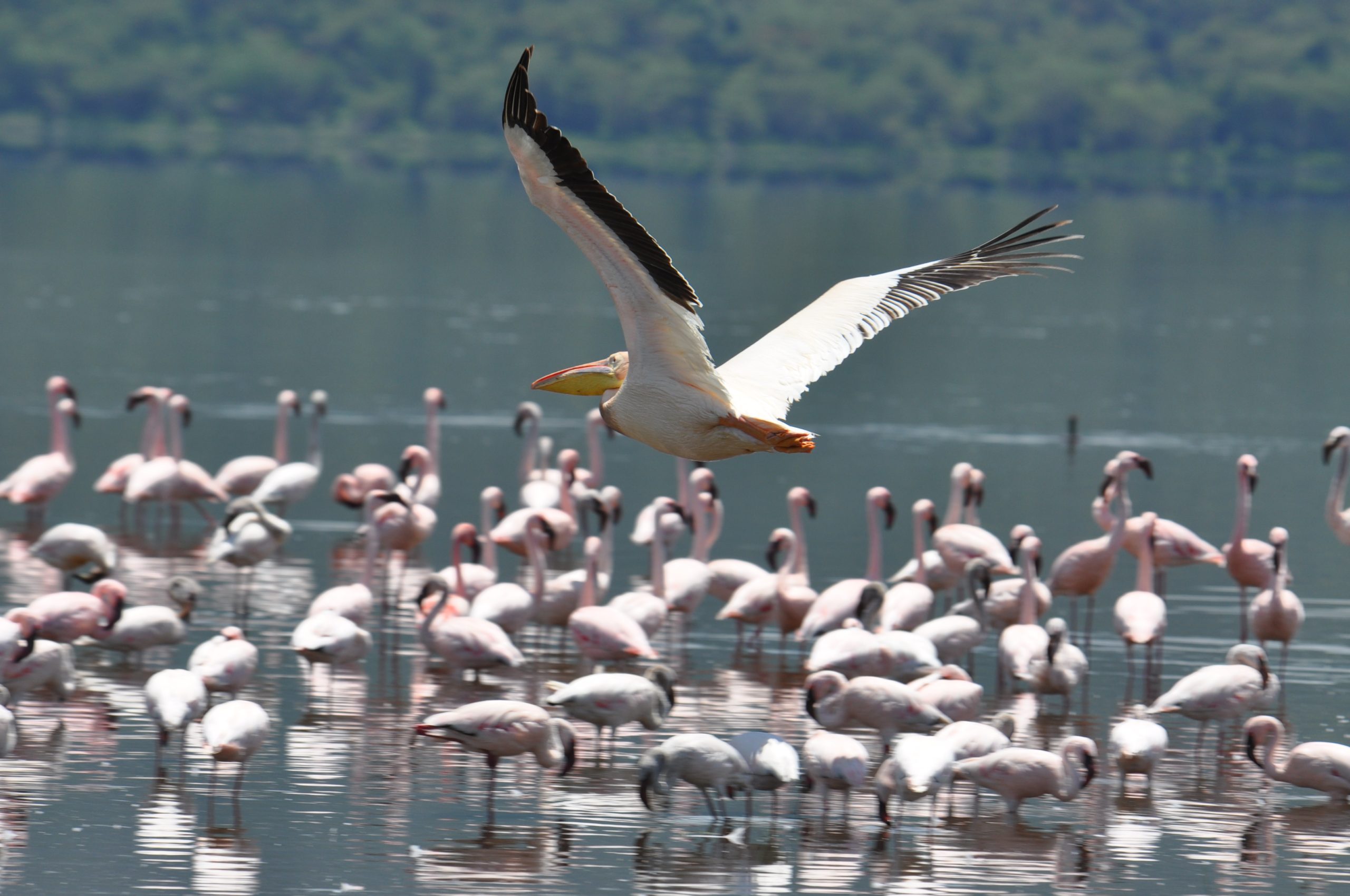
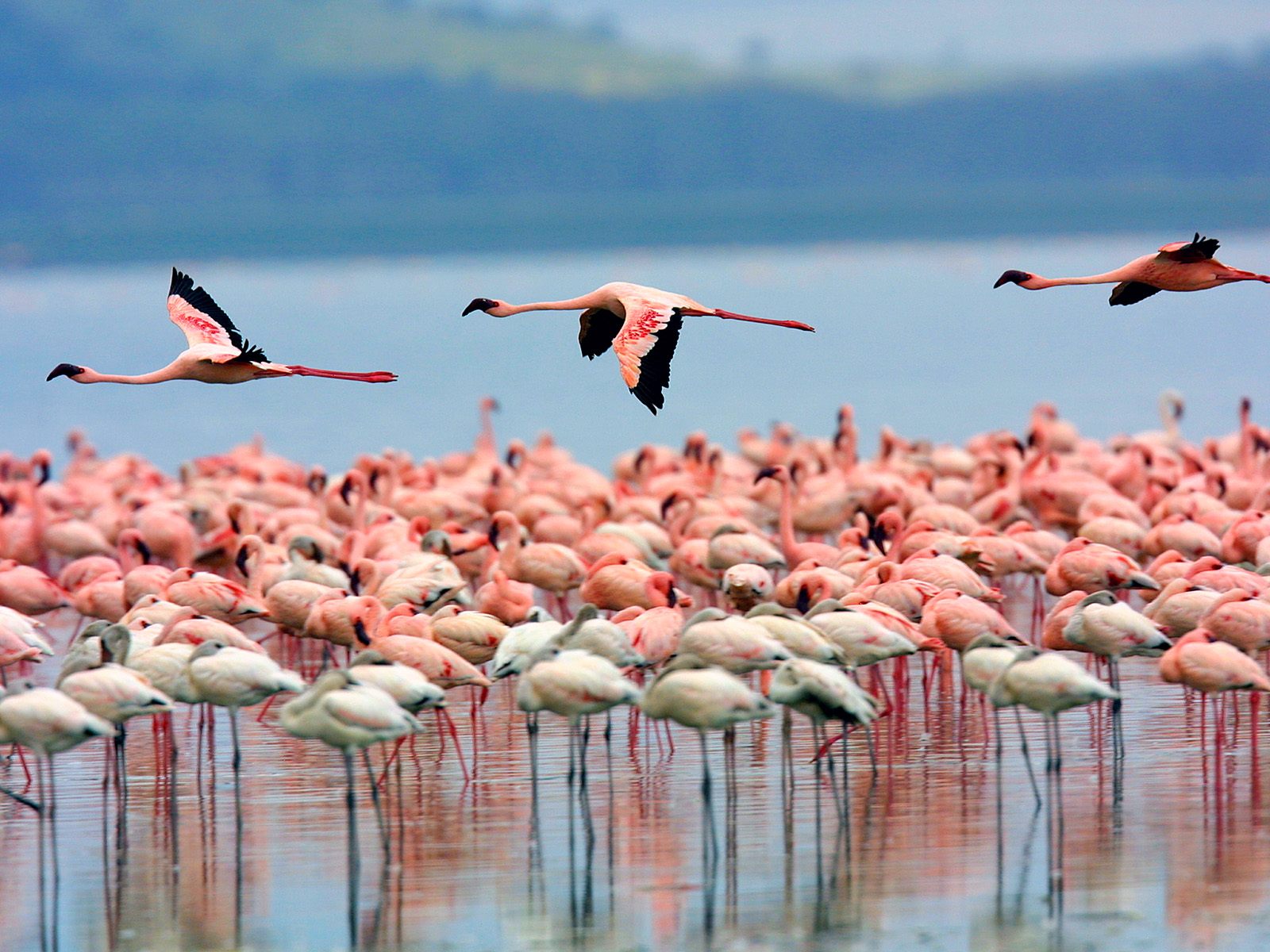
Flamingos remain an important part of Lake Nakuru’s identity, but the reality is more dynamic than the famous historical photographs suggest. The number of flamingos present changes according to water depth, salinity, algae availability and conditions across other Rift Valley lakes.
When suitable feeding conditions develop, lesser and greater flamingos may appear around the shoreline. At other times, their numbers may be smaller because the birds move between lakes in response to changing food and environmental conditions.
This natural movement means that ethical safari companies should not guarantee enormous flamingo concentrations. Lake Nakuru remains a rewarding destination even when relatively few flamingos are present because the wider park supports diverse water birds, woodland species, raptors and large mammals.
Pelicans, cormorants, herons, African fish eagles, kingfishers, storks and many other birds can contribute to a productive birdwatching experience. Migratory species add further variety during particular months.
Travelers interested in bird-focused journeys can explore our guide to Kenya birding safaris and discuss a specialist itinerary with our team.
How Do Lake Nakuru’s Changing Waters Make It Different?
Lake Nakuru is a shallow alkaline lake influenced by rainfall, evaporation and the wider hydrological conditions of the Rift Valley. Its water level, shoreline and ecological character can change over time, affecting bird distribution, vegetation and access to some lakeside areas.
This constant transformation gives each visit a slightly different character. During wetter periods, the lake may expand and surrounding vegetation becomes greener. During relatively drier periods, exposed shoreline areas and changes in water conditions can influence feeding opportunities for birds.
The lake’s changing appearance also creates varied photographic conditions. Reflections, cloud formations, shoreline patterns and the colors of the surrounding vegetation can look completely different between seasons—or even between morning and afternoon.
These variations remind visitors that Lake Nakuru is not a static attraction. It is a living ecosystem shaped by natural environmental processes. The uncertainty is part of its appeal because travelers experience the park as it exists during their visit rather than as it appeared in an old photograph.
What Wildlife Can Be Found Around Lake Nakuru?
Lake Nakuru supports much more than rhinos and flamingos. Buffaloes are commonly associated with its grasslands and woodland edges, while waterbucks, impalas, zebras and warthogs occupy different parts of the park.
Rothschild’s giraffes add another conservation dimension. These tall browsers may be seen feeding in wooded areas or moving through more open habitats. Their distinctive appearance creates excellent photographic opportunities against the park’s acacia trees and Rift Valley scenery.
Baboons and other primates can occur around roads, forests and viewpoints. Travelers should never feed them or leave food unattended because habituated baboons can become bold around vehicles and visitor areas.
Lions and leopards are present in Lake Nakuru, but they can be challenging to find. Lions may rest in grassland or shaded areas, while leopards are secretive and often associated with woodland. No operator can guarantee a predator sighting, but the possibility adds anticipation to every game drive.
Unlike some of Kenya’s larger savannah parks, Lake Nakuru is not principally an elephant destination. Travelers prioritizing elephants can combine the park with Amboseli, Samburu or the Maasai Mara for a broader wildlife experience.
Why Are Lake Nakuru’s Habitats So Remarkably Diverse?
Another feature that makes Lake Nakuru unique is the variety of habitats concentrated within a manageable area. Visitors move between lakeshore environments, grasslands, acacia woodland, rocky slopes, riverine sections and distinctive euphorbia forest.
Each habitat supports a different wildlife community. Open grasslands attract grazing animals and white rhinos, while woodland provides feeding and shelter for giraffes, primates and elusive predators. Wetland and shoreline environments support water birds, amphibians and smaller organisms essential to the ecosystem.
The euphorbia forest is visually distinctive. Tall candelabra-shaped trees create an unusual landscape that differs considerably from the broad grasslands normally associated with a Kenya safari. Their silhouettes can be particularly impressive in atmospheric light.
This habitat diversity makes game drives feel varied even though Lake Nakuru is smaller than destinations such as the Maasai Mara. Travelers can pass through several contrasting environments during a single excursion, creating a richer understanding of how plants, water, wildlife and terrain interact.
What Makes the Viewpoints of Lake Nakuru Special?
Lake Nakuru contains several elevated locations that allow visitors to appreciate the scale and structure of the park. Baboon Cliff is the best-known viewpoint and provides an extensive perspective across the lake and surrounding habitats.
Lion Hill, Out of Africa and Honeymoon Hill offer additional views, although accessibility depends on road conditions, available time and park regulations. These locations are particularly rewarding for landscape photography because they reveal how the lake, woodland, grasslands and distant escarpments fit together.
Viewpoints are also useful places to pause during a game drive. Visitors can listen to bird calls, study distant animals with binoculars and appreciate the scenery without concentrating exclusively on locating the next major animal.
Travelers should only leave their vehicles where officially permitted and after receiving guidance from their driver-guide. Food must remain secured around baboons, and visitors should avoid cliff edges, unstable rocks and undesignated areas.
Read our complete guide to the viewpoints in Lake Nakuru when planning a photography or scenic safari.
Does Lake Nakuru Have Attractions Beyond the Lake?
Yes. Although the lake is the park’s central feature, the surrounding landscape contains other attractions that add variety to a visit. Makalia Falls is a seasonal waterfall in the southern section of the park whose appearance depends on recent rainfall and water flow.
The park’s woodland, rocky ridges and scenic drives can be enjoyable even when wildlife activity is quieter. This makes Lake Nakuru suitable for travelers who value landscapes, plants and birdlife as much as large mammals.
Picnic areas and approved visitor stops may provide opportunities to pause during a game drive, subject to park regulations and wildlife conditions. Travelers must follow their guide’s instructions and never leave designated areas without authorization.
The nearby city of Nakuru also gives the park a different logistical character from remote reserves. Accommodations are available across several comfort levels, including lodges, tented properties and hotels in or around the wider area.
Why Is Lake Nakuru Convenient for First-Time Safari Travelers?
Lake Nakuru lies within practical driving distance of Nairobi, although transfer times vary with traffic, road conditions and stopping arrangements. This accessibility makes it possible to include the park in both shorter Kenya holidays and longer multi-destination safaris.
The park’s relatively compact layout can be helpful for first-time visitors because several habitats and wildlife-viewing areas can be explored without the extensive distances associated with larger reserves. However, travelers should still allow enough time to avoid turning the experience into a rushed transit stop.
One full day introduces visitors to the principal attractions, but one or two nights provide a more comfortable experience. Additional time offers flexibility for changing weather, wildlife movement and scenic stops.
Our guide explaining how long to spend in Lake Nakuru can help travelers select an appropriate itinerary.
Can Lake Nakuru Be Combined With Other Kenyan Parks?
Lake Nakuru is strategically positioned for combination with Lake Naivasha and the Maasai Mara. Together, these destinations create a rewarding circuit featuring rhinos, birdlife, freshwater scenery, possible boat excursions and savannah game drives.
The Maasai Mara adds expansive grasslands, predators and seasonal wildebeest movements. Lake Naivasha introduces a contrasting freshwater environment where guided boat activities and nature experiences may be available.
Travelers can explore our 5-Day Lake Nakuru and Maasai Mara Safari or consider the 5-Day Lake Nakuru, Maasai Mara and Lake Naivasha Safari.
Longer itineraries may include Amboseli, Samburu or other protected areas. Explore our guide explaining how to combine Lake Nakuru with other parks before selecting the most suitable route.
When Is the Best Time to Visit Lake Nakuru?
Lake Nakuru can be visited throughout the year. The most suitable period depends on whether the traveler prioritizes road conditions, wildlife visibility, birdwatching, photography or quieter travel.
The generally drier periods from January to February and June to October may provide firmer roads and thinner vegetation. These conditions can make game drives convenient, although popular travel months may bring more visitors and increased accommodation demand.
The wetter and greener months create lush vegetation, dramatic cloud formations and excellent conditions for photographing landscapes. Migratory birds may increase seasonal diversity, but rain can make some tracks muddy or temporarily inaccessible.
Flamingo abundance should not be used as the only reason for choosing a particular month because their movements depend on environmental conditions rather than a fixed tourism calendar.
For a more detailed comparison, read our guide to the best time to visit Lake Nakuru.
What Should Travelers Pack for Lake Nakuru?
Binoculars are valuable for observing birds, distant rhinos and wildlife from elevated viewpoints. Photographers may benefit from carrying both a telephoto lens for animals and a wider lens for landscapes.
Neutral-colored clothing, a hat, sunscreen and sunglasses are useful during daytime game drives. A light jacket is recommended for cool mornings, while a compact raincoat may be needed during wetter months.
Closed, comfortable shoes are suitable for approved viewpoints and picnic areas. Travelers should also carry personal medication, sufficient camera batteries and reusable drinking-water containers where practical.
Food should remain secured inside the vehicle, particularly around baboons. Visitors should never feed animals, dispose of litter in the park or attempt to attract wildlife for photographs.
Why Visit Lake Nakuru With Ngeye Tours and Travel?
Understanding what makes Lake Nakuru unique requires more than driving around the lake. A well-planned journey should balance rhino viewing, birdwatching, scenery, photography and sufficient time to appreciate the park’s different habitats.
Ngeye Tours and Travel creates locally guided safaris across Kenya, Uganda, Rwanda and Tanzania. We arrange personalized journeys for couples, families, photographers, private groups and independent travelers.
Our team assists with route planning, accommodation selection, safari transportation and multi-country extensions. Every program is adjusted to reflect the traveler’s available time, interests, comfort preferences and budget.
Experienced guides provide wildlife interpretation and conservation insights while helping visitors follow responsible viewing practices. This approach turns Lake Nakuru from a simple stop between destinations into a meaningful part of a wider East African journey.
Plan Your Lake Nakuru Safari
Would you like to experience Lake Nakuru’s rhinos, birdlife, viewpoints and beautiful Rift Valley scenery? Tell our safari planners your travel dates, group size, preferred accommodation and the other destinations you would like to visit.
Frequently Asked Questions About What Makes Lake Nakuru Unique
What is most special about Lake Nakuru?
Lake Nakuru combines endangered rhino conservation, extensive birdlife, changing alkaline waters, varied habitats and beautiful Great Rift Valley scenery within a relatively compact park.
Can I see both black and white rhinos at Lake Nakuru?
Both species occur in the park, making Lake Nakuru an important rhino sanctuary. However, wildlife sightings are natural and cannot be guaranteed during a particular game drive.
Are flamingos always present at Lake Nakuru?
Flamingos may be present, but their numbers vary according to water levels, food availability and conditions at other Rift Valley lakes. Enormous concentrations should never be guaranteed.
Does Lake Nakuru have elephants?
Lake Nakuru is not principally an elephant-viewing destination. Travelers prioritizing elephants can combine it with Amboseli, Samburu or the Maasai Mara.
How long should I spend at Lake Nakuru?
One full day can introduce the park’s principal attractions, while one or two overnight stays provide greater flexibility for wildlife viewing, photography and scenic viewpoints.
Is Lake Nakuru suitable for first-time safari travelers?
Yes. Its accessibility from Nairobi, manageable size, varied habitats and combination of mammals, birds and scenery make it particularly suitable for a first Kenya safari.